The Quantum Countdown: Decoding the White House’s Accelerated Security Mandate
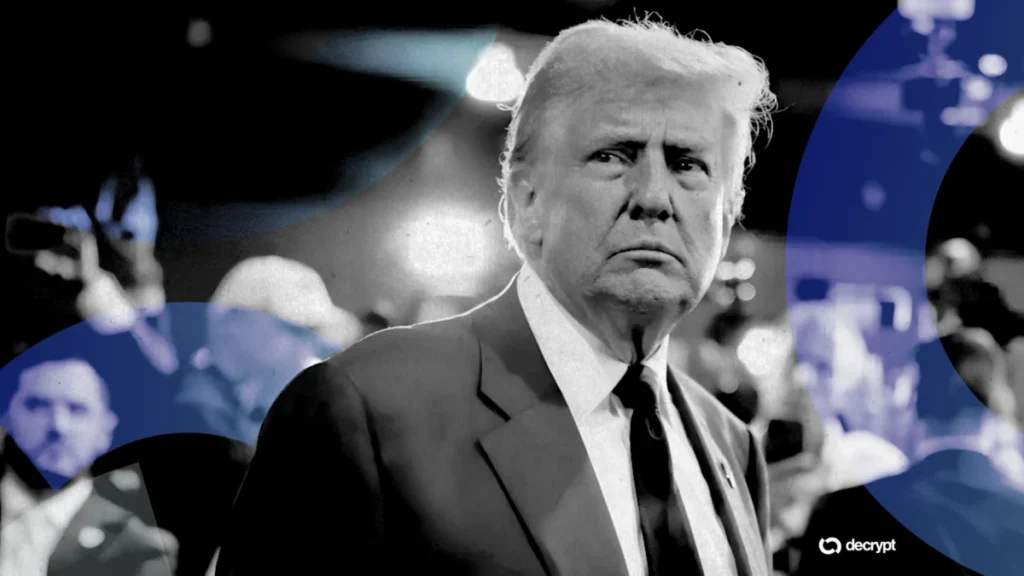
The race to secure the digital bedrock of the United States has officially shifted into a higher gear. In a move that signals a profound shift in how Washington views the trajectory of emerging technologies, President Donald Trump signed a series of executive orders this week that pull forward the federal deadline for adopting post-quantum cryptography (PQC) from 2035 to 2031.
The directive is a recognition of a sobering reality: the "quantum leap" in computing power, once viewed as a distant scientific aspiration, is rapidly converging toward a tangible threat. As global superpowers and private tech giants pour billions into quantum research, the prospect of a cryptographically relevant quantum computer (CRQC)—a machine capable of shattering current encryption standards like RSA and ECC—has moved from the realm of science fiction to a pressing national security priority.
The Chronology of a Shifting Landscape
The timeline for quantum readiness has undergone a radical compression over the last 24 months. Just a few years ago, the consensus among researchers suggested that a machine capable of decrypting current internet traffic was at least two decades away. Today, that window has shrunk significantly.
- 2022–2023: Initial government guidelines were drafted under the assumption of a mid-2030s arrival for quantum supremacy.
- 2024: Global alarm bells began to ring as nations, including France, began aggressively updating their own national cybersecurity timelines to account for quantum threats.
- Early 2025: Private industry leaders, including Google, publicly targeted 2029 as the year they aim to achieve significant quantum milestones, effectively outpacing federal projections.
- Monday: The White House formalizes the 2031 deadline, creating a new "North Star" for federal agencies and, by extension, the broader defense industrial base.
This acceleration reflects a "convergence of roadmaps." According to Paul Stimers, partner at Holland & Knight and executive director of the Quantum Industry Coalition, the industry is no longer guessing about the "if," but rather the "when." "Quantum industry roadmaps are beginning to converge around the 2028-2030 timeframe," Stimers noted, though he cautioned that the public data likely underestimates the progress of classified, state-sponsored quantum programs.
The "Harvest Now, Decrypt Later" Threat
One of the primary drivers behind the White House’s sense of urgency is a phenomenon known as "Harvest Now, Decrypt Later" (HNDL). Adversaries are currently engaging in the mass collection of encrypted data, storing it in vast repositories with the explicit intention of waiting for a sufficiently powerful quantum computer to emerge.
Once that machine is built, the data—ranging from classified intelligence and diplomatic cables to intellectual property and personal financial records—will be rendered transparent. As Stimers explains, the threat is not merely future-facing; it is an active, ongoing campaign. "Because adversaries are already stealing encrypted data and holding it until they can decrypt it, the threat is immediate and the time to address it is now," he warned.
This reality renders the traditional "wait-and-see" approach to cybersecurity obsolete. The executive orders are designed to force a transition to "quantum-agile" systems that can withstand the inevitable arrival of the quantum era.
Industry Perspectives: Ambition vs. Realism
The reaction from the scientific and technical community has been mixed, characterized by a tension between the need for speed and the difficulty of implementation.
Dr. Stefan Leichenauer, lead scientist at SandboxAQ, characterized the orders as a vital "wake-up call." He argues that organizations are already lagging behind the curve. "Post-quantum computing migration is a multi-year process," Leichenauer told Decrypt. "A cryptographically relevant quantum computer is likely to appear before we finish the migration."
Conversely, some experts fear the government’s rhetoric may create a dangerous gap between marketing and engineering. Quantum physicist Anastasia Marchenkova noted that while the focus on "quantum dominance" is useful for securing budget and talent, it risks overpromising results.
"Readiness is boring and unglamorous," Marchenkova observed. "It’s about agility, migration, and actually shipping the defense—not just hyping the offense of breaking encryption. The ‘how’ is what’s missing. We have standardized algorithms, but there is real confusion among practitioners about which to use, where to deploy them, and how to manage the transition without breaking legacy infrastructure."
The Cryptocurrency Conundrum
Perhaps the most complex challenge posed by the quantum threat lies in the world of decentralized finance and cryptocurrencies. Unlike a federal agency or a centralized corporation, Bitcoin has no "CEO" to issue a mandate for a cryptographic overhaul.
The vulnerability is significant: if a quantum computer emerges, the private keys protecting billions of dollars in Bitcoin could be derived from public keys, allowing an attacker to drain wallets. The industry is currently locked in a debate over how to achieve a coordinated upgrade.
- BIP-360/361: These proposals represent the cutting edge of the debate, suggesting mechanisms to freeze legacy addresses and force users to migrate to quantum-resistant signatures.
- The Governance Gap: As Alex Pruden, CEO of Project Eleven, points out, the lack of a governing body makes Bitcoin uniquely susceptible to fragmentation. "You can’t issue an executive order for Bitcoin," he notes.
While networks like Stellar and Algorand have begun publishing concrete roadmaps for quantum resistance, Bitcoin’s decentralized nature necessitates a fragile consensus among miners, developers, and exchanges. The risk is that if the transition is not handled with near-perfect technical and social coordination, the network could face a fork or a catastrophic loss of confidence.
Implications for the Future
The White House’s initiative serves as a clear signal that the era of "quantum immunity" has ended. The implications of this policy shift are vast:
- Federal Procurement Shifts: Federal contractors will soon face strict requirements to provide quantum-resistant hardware and software. This will likely ripple through the global supply chain, forcing vendors to prioritize PQC or risk being locked out of the US government market.
- The "Quantum-Agile" Standard: Organizations will need to adopt software architectures that allow for the "swapping" of encryption algorithms as new threats emerge. The days of hard-coding a single, permanent encryption standard are effectively over.
- Investment Catalysis: By putting a 2031 deadline on the books, the administration has provided a clear signal to venture capital and private equity markets that the "picks and shovels" of the quantum security industry are a high-priority investment area.
However, critics like Christopher Tam of BTQ Technologies argue that even 2031 is too slow. "It seems sort of odd that the federal government would lag behind industry by two years," Tam noted, pointing to the 2029 goals set by private sector giants.
Ultimately, the executive orders are a recognition that the quantum transition is not a project that can be completed overnight. It is a long-term architectural transformation of the global digital infrastructure. Whether the government’s 2031 deadline is an ambitious target or an optimistic delay, the message to the tech world is unambiguous: the clock is ticking, and the security of the future depends on the migration choices made today.