The Privacy Rebellion: Venice AI Hits Unicorn Status as It Challenges the Surveillance Paradigm
In a significant milestone for the intersection of artificial intelligence and decentralized technology, Venice AI has secured $65 million in its inaugural outside funding round. The investment, which brings the company’s valuation to a notable $1 billion, marks a pivotal moment for a platform explicitly positioned as a "private, uncensored" alternative to the industry’s centralized giants like ChatGPT and Claude.
The funding round was led by Dragonfly, a prominent venture capital firm, with significant backing from North Island Ventures, Coinbase Ventures, Archetype, Liquid2 Ventures, and Morgan Creek. This capital injection is not merely a financial vote of confidence; it is a signal that the market is beginning to prioritize data sovereignty in an era of unprecedented AI-driven surveillance.
The Philosophical Mandate: Building an Uncensored Port City
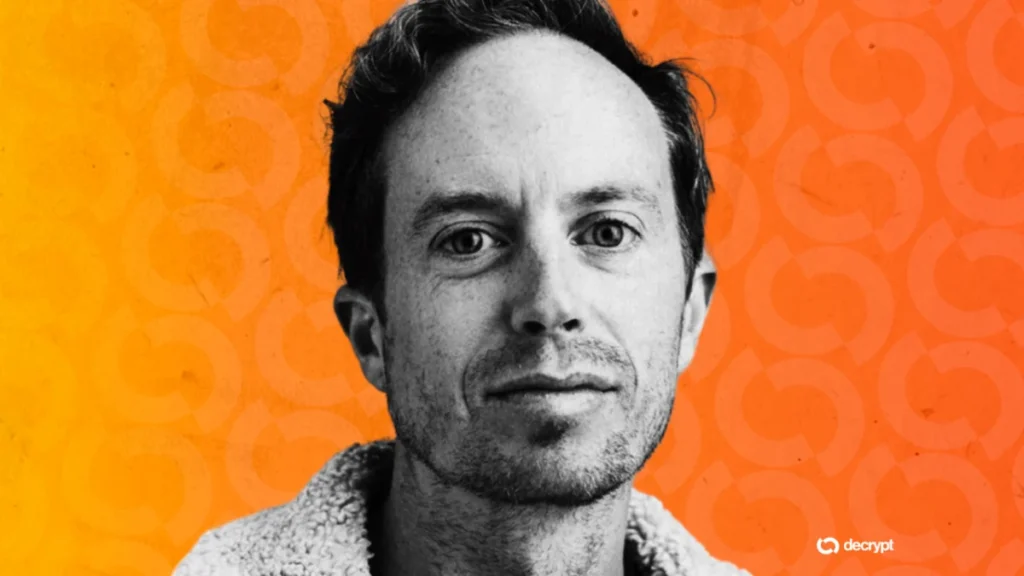
Erik Voorhees, a veteran of the cryptocurrency industry best known for founding the ShapeShift exchange, announced the news via a manifesto-style post on X. For Voorhees, Venice AI is more than just a software product; it is a defensive bulwark against what he describes as a "dystopian apparatus."
"This aversion to ubiquitous centralized surveillance and control is our philosophical foundation, and upon it, Venice is growing rapidly," Voorhees stated. His critique of the current AI landscape is stark: he argues that while companies like OpenAI and Anthropic have focused on existential risks related to job displacement and cybersecurity, they are ignoring the most fundamental threat—the erosion of human privacy.
Voorhees contends that as humans begin to outsource their cognitive processes to AI models, the "flow of consciousness" is increasingly being monitored, cataloged, and exploited. By providing an interface that avoids storing conversations on centralized servers, Venice AI aims to protect the sanctity of private thought, positioning itself as a "permissive port city" where human and agentic sovereignty are paramount.
Chronology: From Concept to Unicorn
Venice AI’s rise has been meteoric, reflecting the heightened public anxiety surrounding data privacy.
- May 2024: Venice AI officially launches, offering a privacy-focused alternative to mainstream LLMs. The platform distinguishes itself by providing access to both leading open-source and proprietary models through a unified, privacy-first interface.
- April 2025 (Projected Growth): By mid-spring, the platform announces it has surpassed 3 million active users, signaling massive demand for non-surveillance AI.
- Q1 2025 Financial Milestone: In a rare achievement for the AI sector—where many firms burn through billions while operating at a loss—Voorhees reports that Venice became profitable. He attributes this to a business model that rejects the data-harvesting practices that fuel the advertising-based revenue streams of their competitors.
- July 2025: The company secures its $65 million Series A, officially achieving unicorn status at a $1 billion valuation.
Market Reaction: The VVV Token Surge
The market’s reaction to the funding news was immediate and bullish. The Venice AI native token, VVV, experienced a double-digit rally, jumping 11% within 24 hours of the announcement to reach $13.74.
The price appreciation was compounded by a strategic shift in the token’s economics. On the same day as the funding news, Venice AI announced a reduction in VVV emissions to 3 million per year. These tokens are distributed as rewards to holders who stake their assets to support the decentralized network. By lowering the annual inflation rate, the company has effectively signaled a commitment to scarcity, encouraging long-term holding among its user base.
Supporting Data: Why Privacy Matters in the AI Age
The success of Venice AI is set against a backdrop of growing global tension regarding how tech companies handle user data. Current industry leaders are often incentivized to use user prompts to train future iterations of their models. This "feedback loop" creates a scenario where a user’s private ideas, trade secrets, or personal queries are effectively ingested into a corporate machine.
Venice AI’s value proposition is simple: it does not "spy." By utilizing decentralized architecture, the platform ensures that the user remains the sole possessor of their conversation history.
Furthermore, the shift in Washington adds weight to the Venice mission. As the U.S. government looks to integrate AI into federal operations—ranging from FBI investigations to biometric surveillance—the legislative environment is becoming increasingly complex. Bills requiring warrants for AI-assisted surveillance indicate that privacy is no longer just a consumer concern; it is becoming a constitutional flashpoint. Voorhees has explicitly stated that the new funding will be used to advance "First and Fourth Amendment protections" within the context of human-machine interaction, suggesting that the company is prepared to engage in legal and policy advocacy to defend its decentralized model.
Implications: The Future of Sovereign Intelligence
The emergence of a $1 billion "privacy-first" AI company carries profound implications for the future of the technology sector.
1. The Death of the "Free" Model
For years, the internet has been built on the "if it’s free, you’re the product" model. If Venice AI proves that a profitable, sustainable, and privacy-focused AI business can thrive, it may force competitors to reconsider their data policies. If users realize they can access powerful AI without sacrificing their privacy, the incentive to use "surveillance-based" AI will plummet.
2. The Rise of "Agentic" Sovereignty
Voorhees’s mention of "sovereignty for both human and agentic" participants suggests a future where AI agents act as personal digital proxies. In this vision, an AI agent would belong to the individual, not the corporation. This shifts the power dynamic from the company to the user, who can deploy their own agents to handle tasks without exposing their private data to external interference.
3. Regulatory Friction
As Venice AI scales, it will inevitably face regulatory scrutiny. Governments often struggle with the concept of "uncensored" AI, fearing that such tools could be used for illicit purposes. However, by aligning its brand with constitutional protections, Venice is attempting to frame its platform as a necessary civil liberty tool rather than a rogue technology.
Official Responses and Strategic Roadmap
The funding will be directed toward expanding the platform’s technical infrastructure, which offers users a "menu" of models. Rather than being locked into one provider, Venice users can select from a variety of top-tier open-source models, effectively treating the platform as an agnostic gateway.
"We will construct the platform dedicated to private and unrestricted machine intelligence," Voorhees reiterated in his statement. By building an open, permissive environment, the company hopes to attract not just casual users, but developers and researchers who are wary of the "walled gardens" built by Silicon Valley’s current incumbents.
Conclusion: A New Era for AI
The $65 million investment into Venice AI is a turning point. It demonstrates that the market is maturing beyond the initial "gold rush" phase of AI and into a phase of critical evaluation. Users are beginning to demand accountability, and investors are responding by backing projects that prioritize long-term user trust over short-term data exploitation.
As Venice AI moves into this next chapter, it faces the gargantuan task of competing with companies that have hundreds of billions of dollars in backing. Yet, by anchoring its identity in the fundamental human right to private thought and intellectual autonomy, Venice has carved out a position that is as much a political statement as it is a technological innovation. Whether this "port city" can hold its ground against the currents of global surveillance remains to be seen, but for now, it has firmly established itself as the primary destination for those who want their AI, and their privacy, side-by-side.