The Passive Income Myth: How One Investor Built a Multimillion-Dollar Portfolio from Scratch in Two Years
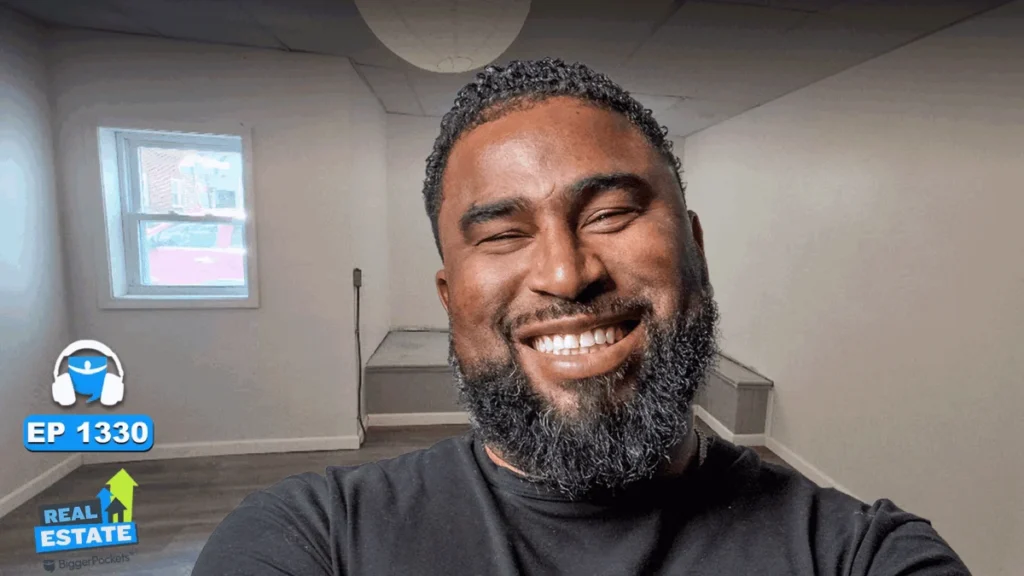
In an era where "get-rich-quick" schemes and digital gurus dominate social media feeds, Kent Long was once just another professional looking for a way out of the 9-to-5 grind. Working as a regional manager for therapy departments at skilled nursing facilities, Long spent his weeks on the road, clocking in thousands of miles and hours of highway time. Like many others, he fell for the siren song of “passive income” online, only to find that ventures like Amazon e-commerce businesses required high overhead and constant maintenance that yielded little to no profit.
Then, he discovered the power of tangible assets. In 2024—a year when many market analysts argued that real estate was “past its prime”—Long executed a strategy that defied the skeptics. By focusing on high-cash-flow, undervalued properties in Altoona, Pennsylvania, Long transformed a modest $14,000 down payment into a 10-unit portfolio that is on track to replace his corporate salary by the time he turns 50.
The Genesis of a Portfolio: Fact-Checking the "Fantasy"
Long’s journey began not with a massive inheritance or a real estate license, but with a realization that the internet gurus were selling a fantasy. After experiencing a personal transition—a divorce that left him needing a new living situation—he chose to pivot toward real estate investing.
Long’s strategy was simple but rigorous: find properties that could be converted from single-family homes into multi-unit dwellings. His background as a "Mr. Fix-It," bolstered by a family lineage of skilled carpentry, allowed him to see potential in structures that others dismissed. He didn’t look for turnkey luxury; he looked for bones, square footage, and the ability to increase density.
A Chronology of Rapid Scaling
The First Deal: The $70,000 Catalyst (July 2024)
In July 2024, Long purchased a property in Altoona that had previously been a duplex but had been converted into a single-family home. The purchase price was $70,000. With a $10,000 renovation budget—kept low due to his own labor—he converted the property into a triplex. By simply adding a door and minor kitchen modifications, the property began generating $3,000 in monthly rent.
The HELOC Engine (February 2025)
Instead of traditional refinancing, which would have increased his debt service and diminished his cash flow, Long utilized a Home Equity Line of Credit (HELOC). By pulling 80% of the appraised value out, he secured a $78,000 line of credit. This provided him with the liquidity to acquire his second property—a 1,700-square-foot home purchased for $30,000—without taking on high-interest debt.
Intergenerational Wealth: Bringing in the Family
By the time Long approached his third and fourth deals, he had successfully integrated his family into the business. He helped his 19-year-old son purchase a duplex for $44,000. Under Long’s mentorship, the young investor renovated the property, and by age 20, he had successfully refinanced the deal, pulling out $72,000 in equity. This taught his son not only the mechanics of real estate but the importance of frugality and long-term asset management.
Supporting Data: The Math Behind the Moves
The success of Long’s portfolio lies in the numbers, which remain consistent despite fluctuating interest rates. In markets like Altoona, price points are low enough to allow for rapid debt pay-down and high cash-on-cash returns.
- Deal One: $80,000 all-in (purchase + reno), $3,000 monthly rent.
- Deal Two: $50,000 all-in, $1,900 monthly rent.
- Deal Three: $70,000 all-in, $2,400 monthly rent.
- Deal Four: $120,000 all-in, $3,100 monthly rent.
Currently, the portfolio generates approximately $5,500 in monthly cash flow. By leveraging local community banks rather than national lenders, Long has been able to secure commercial loans that offer greater flexibility and faster closing times. He maintains a "slow-roll" approach to rent increases, ensuring that tenants are brought to market rates gradually, which minimizes turnover and maintains steady income.
Official Perspectives: The BiggerPockets Connection
During an appearance on the BiggerPockets podcast, host Henry Washington highlighted the brilliance of Long’s "Modified BRRRR" (Buy, Rehab, Rent, Refinance, Repeat) strategy. Washington noted that many investors fail because they over-leverage or attempt to scale too quickly in high-appreciation markets where cash flow is nonexistent.
Long’s perspective on market risk is pragmatic: “I like to think of it as lower risk than anything else. The amount of money that I would invest into a $30,000 house compared to a $300,000 house… I’m just mitigating risk in the initial price point.”
This approach emphasizes that in real estate, appreciation is a bonus, but cash flow is the engine. Long argues that by staying in the game, the investor creates multiple exit strategies—selling for profit, holding for cash flow, or leveraging equity for further acquisitions.
Implications for the Future of Independent Investing
Breaking the 9-to-5 Cycle
Long’s primary objective is to retire from his corporate role by age 50. With 10 units currently under his belt and a goal to acquire four more within the next 18 months, he is on track to replace his income entirely. His story implies that the "barrier to entry" in real estate is largely psychological rather than financial. By ignoring the "guru" advice to look only for high-end properties, he found a niche that remains profitable regardless of the broader national economic climate.
The Role of Sweat Equity
A significant implication of Long’s success is the value of "sweat equity." While he eventually hired contractors for more complex work, his ability to perform flooring, painting, and basic construction in the early stages kept his capital costs low enough to allow for the rapid acquisition of subsequent properties. He effectively turned his weekends into a second business that pays dividends in perpetuity.
Community-Based Banking
Long’s success also underscores the importance of local relationships. By utilizing community banks that understand the Altoona market, he secured financing structures—such as 85% purchase-price loans and 100% renovation-cost coverage—that are often unavailable through larger, impersonal financial institutions.
Conclusion: Lessons for Aspiring Investors
Kent Long’s trajectory is a blueprint for the modern, part-time investor. He proves that:
- Market Timing is Secondary to Math: You do not need a bull market to succeed if your numbers (cash flow vs. debt service) work on day one.
- Education is Essential: Long’s journey was fueled by years of listening to podcasts and studying real estate mechanics during his long commutes.
- Family Involvement Creates Stability: By bringing in his son and father, he transformed a business endeavor into a multigenerational project, sharing both the labor and the financial rewards.
As Long continues to scale toward his 10-unit, five-year goal, his story serves as a reminder that the path to early retirement isn’t found in a digital course or an Amazon storefront. It is built, brick by brick, door by door, in the unglamorous, highly profitable neighborhoods that most investors ignore. For those who believe they are "too late" to start, Long’s portfolio suggests that the best time to enter the market is when you have the courage to treat real estate as a business rather than a fantasy.