The Panopticon on the Corner: Federal Judge Rules Warrantless Flock Safety Searches Unconstitutional
In a landmark decision that could reshape the future of digital surveillance in the United States, a federal judge has ruled that law enforcement’s use of the Flock Safety automated license plate reader (ALPR) system to track individuals without a warrant violates the Fourth Amendment.
The ruling, handed down by U.S. District Judge Sara Hill regarding a Tulsa, Oklahoma case, represents a significant judicial intervention into the rapid proliferation of mass surveillance technologies. While the decision does not immediately establish a binding national precedent, it provides a powerful legal framework for defense attorneys and privacy advocates who have long argued that the “passive” collection of movement data is anything but benign.
The Case: From a California Plate to 91 Pounds of Meth
The case centers on a traffic stop conducted by a Tulsa County sheriff’s deputy. According to court filings, the deputy utilized the Flock Safety database to track a specific vehicle—not because it was linked to a crime, but because the officer noted it bore a California license plate.
Judge Hill’s scathing assessment of the deputy’s conduct was clear: there was “no apparent reason” for the search other than the vehicle’s state of origin. The deputy used the historical movement data retrieved from the Flock network to justify a further search of the vehicle, which resulted in the discovery of 91 pounds of methamphetamine.
However, in a move that underscores the constitutional weight of the Fourth Amendment, Judge Hill ordered that the evidence discovered during the search be suppressed. Citing the “fruit of the poisonous tree” doctrine—a legal metaphor used to describe evidence derived from an illegal search—Hill ruled that because the initial investigation into the vehicle was unconstitutional, all subsequent evidence was inadmissible.
Chronology of a Surveillance Explosion
The rise of Flock Safety has been meteoric, mirroring the broader trend of municipal and law enforcement reliance on private-sector surveillance tech.
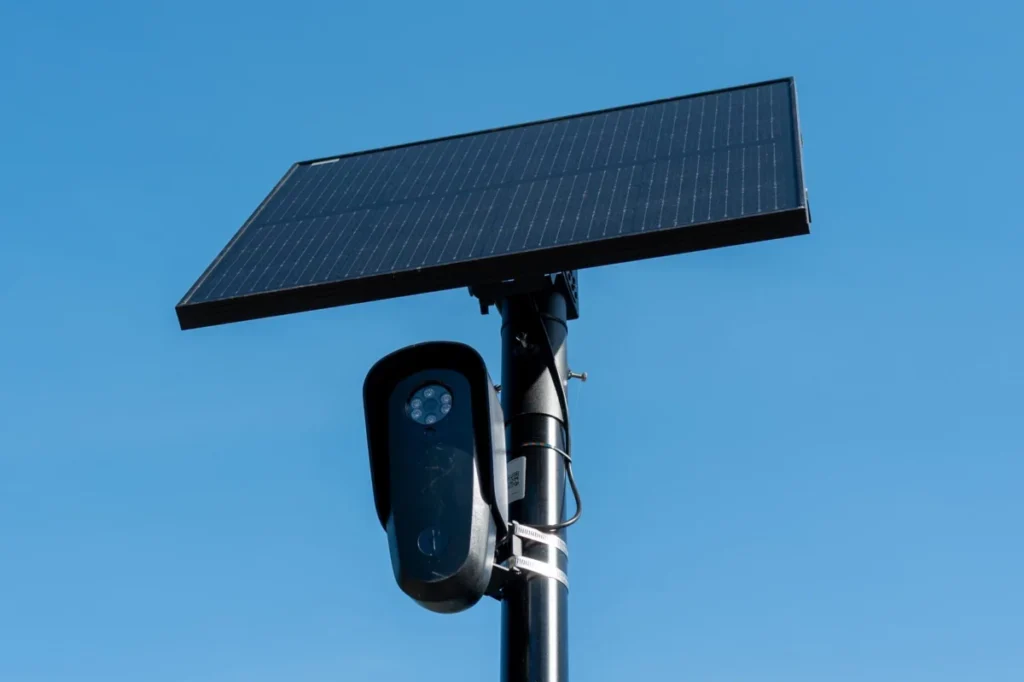
- The Proliferation Phase: Over the past decade, Flock Safety grew from a small startup into a ubiquitous presence, installing thousands of solar-powered, motion-activated cameras across suburban neighborhoods and major metropolitan areas.
- The Data Accumulation: Unlike traditional police dashcams, Flock cameras record and catalog the movement of every vehicle that passes by, 24/7. This data is uploaded to a centralized cloud database, creating a searchable, historical map of a citizen’s whereabouts.
- The Judicial Pivot: As the network expanded, so did legal scrutiny. Earlier this year, reports began to surface of law enforcement officers using the system to stalk individuals or conduct "fishing expeditions" without judicial oversight.
- The Current Ruling: Judge Hill’s decision serves as the first major federal rebuke of this model, directly challenging the idea that "public" data (like a license plate on a street) is exempt from the protections of the Fourth Amendment when aggregated over time.
Indiscriminate Mass Surveillance: The Constitutional Implications
Judge Hill’s opinion went well beyond the specifics of the drug case. She leveled a structural critique at the technology itself, framing the Flock system as a tool of "indiscriminate mass surveillance."
In her written order, Hill distinguished this case from Carpenter v. United States, the landmark 2018 Supreme Court case that held the government generally needs a warrant to access historical cell site location information. While Carpenter dealt with the granular tracking of a specific individual via their phone, Hill noted that Flock is more dangerous because it is "not targeted on a single individual."
"It is a tool that collects information about all vehicles that pass by any network-connected camera at all times, and it serves up the information to law enforcement on demand," Hill wrote.
Legal experts suggest that this "aggregation effect" is the crux of the issue. When police track one person for a day, it is surveillance. When police use a network of thousands of cameras to track every citizen’s movement across a city for months, it becomes a permanent, searchable archive of private life. Hill argued that such technology becomes "constitutionally problematic" when law enforcement can access this catalog for "any purpose whenever convenient."
A Growing Political Backlash
The Tulsa ruling arrives at a time when the political consensus regarding "public-private" surveillance is fracturing. Across the ideological spectrum, lawmakers and state governments are beginning to view these cameras as a liability rather than a panacea.
State-Level Resistance
States like Florida and Texas have recently moved to block or significantly curtail the use of Flock technology, citing profound privacy concerns. These legislative shifts are fueled by reports of abuse—ranging from officers tracking ex-partners to the unauthorized sharing of databases with third-party contractors.
Federal Intervention
The legislative response reached the halls of Congress on Friday, when Senator Bernie Sanders (I-VT) introduced the "Block Flock Act." The bill, if passed, would strictly prohibit federal agencies from using automated license plate readers like those provided by Flock, citing the incompatibility of mass tracking with the fundamental right to privacy.
"We cannot allow a private company to facilitate a dragnet that turns every neighborhood in America into a police checkpoint," a spokesperson for the Senator’s office noted.
Official Responses and Corporate Strategy
The company at the center of the storm, Flock Safety, finds itself in a precarious position. CEO Garretty Langley has publicly called for a “compromise” between safety and privacy, attempting to navigate the intense scrutiny while maintaining the company’s core business model.
In a series of recent statements, Langley has apologized for instances where law enforcement officers misused the platform to stalk individuals. These apologies have done little to quell the skepticism of civil liberties groups, who argue that the system is "designed for abuse" by the very nature of its mass-collection capability.
Financially, the pressure is mounting. The wave of contract cancellations and the loss of municipal partnerships has forced the company to take drastic measures. Reports indicate that Flock has begun offering voluntary employee buyouts in a bid to downsize its workforce—a clear indicator that the "surveillance boom" is facing a significant market correction.
The Future of Privacy Law
The Tulsa ruling is not a final decree, but it is a massive signal flare for the legal community. As more cases move through the appellate courts, the question will eventually reach the Supreme Court: Does the Fourth Amendment protect us from being tracked by a network of private cameras that effectively monitor the entirety of our public movements?
If the legal system follows Judge Hill’s logic, the era of unchecked "passive" surveillance may be coming to an end. Law enforcement agencies may soon be required to demonstrate "probable cause" not just to pull a car over, but to query the digital archives that monitor our daily lives.
For now, the ruling serves as a warning to both law enforcement and the tech companies that enable them. The "privacy vs. safety" debate is shifting from a philosophical discussion to a series of concrete, courtroom-led constraints on the power of the digital state. As society weighs the benefit of reduced crime rates against the cost of a permanent, searchable record of every citizen’s travel history, the Tulsa decision will likely be cited as the turning point where the courts finally pushed back against the rise of the machine-readable city.