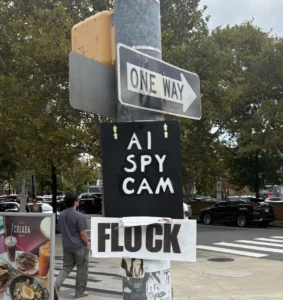
The Surveillance Standoff: Senator Bernie Sanders Launches Legislative Assault on Flock Safety’s Plate-Reading Empire
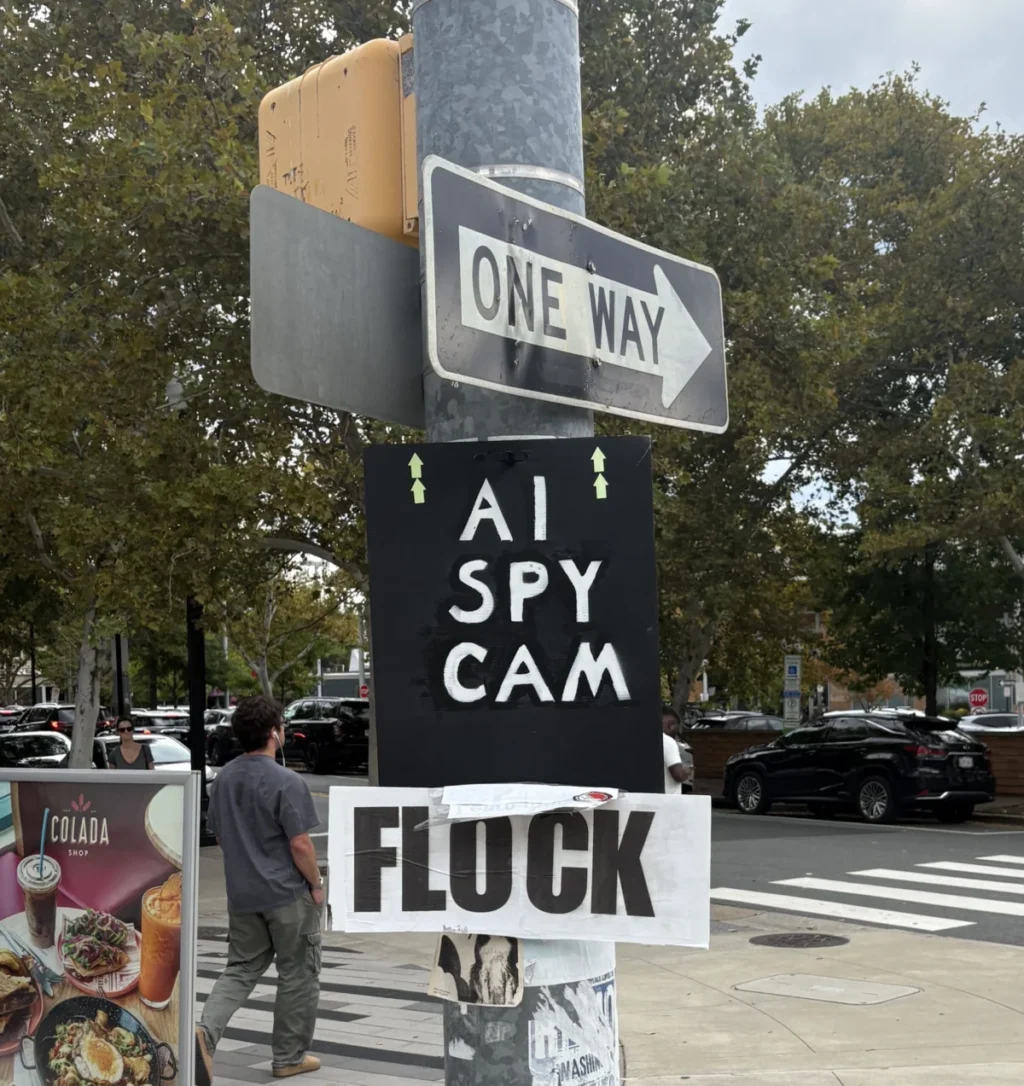
In an era defined by the rapid proliferation of automated surveillance, the friction between public safety and personal privacy has reached a boiling point. Senator Bernie Sanders (D-Vermont) has ignited a new legislative firestorm with the introduction of the "Ban Flock Act," a bill designed to effectively strip federal agencies of their ability to utilize automated license plate readers (ALPRs). While the bill’s title specifically targets the industry’s dominant player, Flock Safety, the legislation represents a sweeping attempt to curb the unchecked growth of a technology that critics argue has transformed the American landscape into a permanent, high-tech police state.
The move marks a significant escalation in the ongoing national debate over how much privacy citizens should sacrifice in the name of law enforcement efficiency. With over 120,000 cameras currently scanning billions of plates each month, the technology—once touted as a breakthrough in fighting auto theft and violent crime—is now facing an existential crisis.
The Legislative Offensive: What the "Ban Flock Act" Proposes
Senator Sanders, joined by co-sponsors Representative Alexandria Ocasio-Cortez (D-N.Y.) and Senator Jeff Merkley (D-Ore.), unveiled the bill on Friday with the explicit goal of dismantling the federal government’s reliance on ALPR data. Despite its pointed name, the legislation is structurally designed to cover all ALPR systems, not just those manufactured by the $8 billion unicorn Flock Safety.
Key Provisions of the Bill:
- Federal Prohibition: The act would bar all federal agencies from using ALPR systems or accessing databases populated by private or local police-operated readers.
- The Funding Squeeze: The bill employs a "power of the purse" strategy. State and local governments that refuse to abandon their ALPR programs would face the loss of federal grants from five major departments, including the Justice Department and the Department of Homeland Security.
- Strict Data Limitations: Any use of ALPR technology—specifically for toll collection or future Congress-approved exceptions—would be strictly capped, with data retention limited to a maximum of 48 hours.
- Legal Recourse: The bill grants citizens the right to sue the federal government over privacy violations and empowers state attorneys general to enforce these restrictions at the local level.
While the bill faces steep odds in a polarized Congress, it serves as a powerful signal that the regulatory honeymoon for surveillance tech startups has come to an abrupt end.
A Chronology of Controversy: From Startup Darling to Public Enemy
To understand the sudden legislative pivot against Flock Safety, one must look at the company’s meteoric rise and the subsequent erosion of public trust.
2017: The Founding
Flock Safety was founded with a singular mission: to eliminate crime. By utilizing stationary, solar-powered cameras that capture high-resolution images of license plates and vehicle characteristics, the company promised police departments a "force multiplier" that could instantly alert officers to stolen vehicles or suspects involved in active investigations.
2021–2023: The Scaling Phase
Flock quickly became a fixture in American suburbs and cities. Backed by venture capital heavyweights, including Andreessen Horowitz, the company’s valuation soared. Its pitch was simple: connect disparate camera networks into a single, searchable national database. However, this ease of use eventually became its greatest liability.
2024–2025: The Backlash
As the network expanded, reports of systemic abuse began to surface. Privacy advocates, civil liberties groups, and local communities started pushing back against the "surveillance sprawl." The narrative shifted from "catching criminals" to "tracking innocent citizens."
August 2026: The Breaking Point
The summer of 2026 proved disastrous for the company. Following a series of high-profile protests and the public discovery of officer misconduct—including a former Milwaukee officer who used the platform to stalk a romantic partner 179 times—cities began terminating contracts at an unprecedented rate. The Los Angeles Police Department (LAPD), once a marquee client, suspended its use of the technology pending a full privacy review.
Supporting Data: The Scale of the "Digital Panopticon"
The numbers behind Flock Safety are staggering. According to Senator Sanders, the network currently consists of more than 120,000 cameras. In a February blog post, the company acknowledged that its network processes more than 20 billion vehicle reads every single month.
This data volume creates a "digital panopticon." Because the system doesn’t just record license plates but also captures vehicle make, model, color, and unique aftermarket modifications, it allows for the granular tracking of individuals as they move across municipal, county, and state lines.
The security risk is compounded by the "sharing" feature of the platform. Flock allows police departments to share their data with neighboring jurisdictions and private entities, creating a web of surveillance that is often opaque to the public. Even when companies implement data retention policies—such as CEO Garrett Langley’s recent decision to reduce default retention from 30 days to seven—critics argue that the sheer volume of "temporary" data is still too dangerous to be handled by private corporations.
Official Responses and Corporate Damage Control
Flock Safety has been forced into a defensive posture, attempting to balance its "public safety" branding with the reality of increasing regulatory scrutiny.
The Corporate Response
CEO Garrett Langley has attempted to mitigate the fallout by implementing stricter internal controls. Following the Milwaukee abuse scandal, the company rolled out an audit tool designed to lock officers out of the system if their search patterns are flagged as suspicious or "unusual."
During a recent podcast appearance, investor Jason Calacanis proposed a "double-key" system, where two distinct authorizations would be required to perform a search. Langley confirmed that such a feature is currently "on the whiteboard." However, for many legislators, these self-imposed "guardrails" are insufficient. They argue that as long as the data exists, the potential for abuse—whether through stalking, unauthorized tracking, or data breaches—remains unacceptably high.
The Legislative Perspective
Senator Sanders’ office has made it clear that the bill is not merely about Flock Safety, but about the precedent of private, for-profit surveillance of the public. "We cannot allow a private company to build a dragnet that tracks the movement of every American citizen," a spokesperson for the Senator stated. The bill’s co-sponsors have emphasized that local police departments should not be incentivized by federal dollars to bypass the constitutional rights of the people they serve.
Implications: The Future of Surveillance and Public Trust
The "Ban Flock Act" represents a watershed moment in the relationship between technology and governance. Its implications are far-reaching:
1. The Death of the "Wild West" Era
If passed, the bill would effectively end the era of unchecked private surveillance infrastructure. It would force a fundamental restructuring of how law enforcement agencies across the U.S. handle digital evidence.
2. A Shift in Venture Capital Strategy
For investors like Andreessen Horowitz, the regulatory risk profile for surveillance startups has fundamentally changed. If the federal government moves to restrict the use of these technologies, the "exit strategy" for companies like Flock becomes significantly more complicated. We may see a shift in VC focus toward technologies that emphasize privacy-preserving computation or encrypted, localized data storage.
3. The Constitutional Clash
The legal battleground will likely center on the Fourth Amendment. Is the scanning of a license plate on a public road a "search"? While the Supreme Court has historically been permissive regarding observations made in public view, the aggregation of that data into a searchable, national database is a relatively new frontier that the courts have yet to fully address.
4. Public Demand for Accountability
The push for this legislation is a direct reflection of a public that is increasingly uncomfortable with the trade-off between convenience/security and privacy. Whether or not the bill passes, the act of introducing it has codified a national skepticism toward "smart city" surveillance.
Conclusion: The Road Ahead
As the industry prepares for the TechCrunch Disrupt event in San Francisco this October, all eyes will be on CEO Garrett Langley. His upcoming appearance will likely be the most scrutinized moment in the company’s history.
The debate over Flock Safety is no longer just about a company or its cameras; it is about the fundamental architecture of the American surveillance state. As the federal government considers whether to pull the plug on these systems, the American public is left to wonder: in our quest for a safer society, have we inadvertently built a system that tracks our every move? The "Ban Flock Act" is the first major, formal attempt to answer that question, and regardless of its immediate legislative fate, the conversation has officially moved from the periphery of civil rights discourse to the center of the Senate floor.