The New Arsenal: How AI and Autonomous Systems Are Rewriting Global Power
By Charles Ferguson
June 19, 2026
The character of war is undergoing its most radical transformation since the dawn of the nuclear age. As military analysts observe the evolving conflicts of the mid-2020s, a singular reality has crystallized: the traditional metrics of power—tank counts, carrier strike groups, and sheer manpower—are being rapidly eclipsed by a new trinity of dominance: manufacturing scale, sophisticated artificial intelligence (AI) integration, and the mastery of real-time battlefield data.
For the United States and its European allies, the implications are sobering. While these nations have long rested on the laurels of technological superiority, they now find themselves caught in a precarious trap of their own making. Hobbled by systemic political dysfunction, bureaucratic stagnation, and industrial bases that have withered under decades of globalization, the West faces a widening "innovation gap." As the global order shifts, the question is no longer who has the most missiles, but who can produce the smartest, cheapest, and most autonomous systems at a scale the enemy cannot match.
Main Facts: The Shift to Algorithmic Warfare
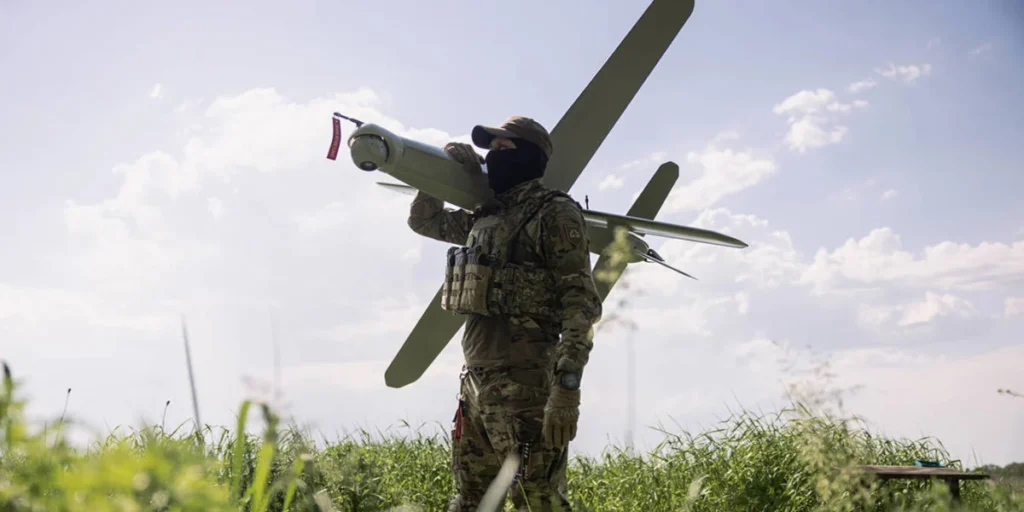
The current revolution is defined by the convergence of low-cost, mass-produced drones and high-end machine learning algorithms. This shift has effectively democratized the ability to strike with precision, turning what were once exclusively "superpower" capabilities into commodities available to mid-tier states and non-state actors.
The primary driver is the "autonomy loop." Modern combat drones no longer rely on human operators to maintain a constant data link—a vulnerability easily exploited by electronic warfare (EW). Instead, they utilize onboard edge computing to identify, track, and engage targets autonomously. This shift creates a "swarm effect," where a single human commander can oversee hundreds of autonomous units, effectively overwhelming traditional air defense systems through sheer volume and cognitive speed.
Furthermore, the integration of Large Language Models (LLMs) and computer vision into military command-and-control (C2) systems has fundamentally altered the "OODA loop" (Observe, Orient, Decide, Act). AI systems can now process satellite imagery, intercepted communications, and sensor feeds in milliseconds, providing commanders with a "God’s-eye view" that renders traditional concealment methods nearly obsolete.
Chronology: The Road to the Algorithmic Front
The trajectory of this transformation can be traced through several critical inflection points over the last decade:
- 2020–2022 (The Prototyping Phase): The conflict in Nagorno-Karabakh and the early stages of the Ukraine war demonstrated the efficacy of cheap, off-the-shelf drone technology. The world watched as expensive, conventional armor was dismantled by munitions costing a fraction of the target’s value.
- 2023 (The Generative AI Leap): The mainstreaming of generative AI tools signaled a turning point in military software development. Defense contractors began shifting from bespoke, multi-year software cycles to "agile" integration, mirroring the rapid iteration models of Silicon Valley.
- 2024–2025 (The Autonomy Explosion): Nations began formalizing "Drone Swarm" doctrines. The deployment of AI-enabled loitering munitions became the standard for frontline infantry units, effectively removing the need for traditional artillery support in many tactical scenarios.
- 2026 (The Industrial Reckoning): The current year marks a realization among Western defense planners that military power is once again tied to the factory floor. The realization that "software-defined warfare" is useless without a "hardware-defined supply chain" has forced a painful re-evaluation of defense industrial policy.
Supporting Data: The Industrial Gap
The disparity between current manufacturing capabilities and strategic requirements is stark. Data from recent industry reports highlights a troubling trend:
- Manufacturing Throughput: While Western defense prime contractors focus on low-volume, high-cost platforms (such as fifth-generation aircraft), emerging adversaries have pivoted to "mass-production robotics." Current estimates suggest that certain rival nations can produce autonomous drone units at a rate 15 to 20 times higher than the total combined output of the NATO industrial base.
- Defense Spending vs. Procurement: Despite record-breaking defense budgets, a significant percentage of Western spending is consumed by legacy system maintenance and bureaucratic overhead. Only approximately 12–15% of current procurement budgets are dedicated to "next-generation" AI and autonomous systems, whereas emerging powers are allocating upwards of 40% of their military expenditure to these specific sectors.
- Supply Chain Resilience: Over 70% of the microelectronics required for autonomous systems are currently produced or assembled in regions with high geopolitical risk. The Western push to "onshore" these capabilities has been hampered by a lack of skilled labor and prohibitive regulatory costs.
Official Responses: The Struggle to Adapt
Governments are not entirely oblivious to these challenges, though the response has been characterized by a tension between traditional procurement models and the need for radical agility.
In Washington, the "Replicator" initiative has been touted as the answer to the scale problem. By aiming to field thousands of cheap, attritable autonomous systems, the Department of Defense hopes to offset the numerical advantages of adversaries. However, internal reports from the Pentagon suggest that the initiative is struggling against "entrenched acquisition hurdles," where even simple hardware upgrades require years of testing and certification.
In Europe, the European Defence Fund (EDF) has begun prioritizing joint ventures in AI and robotics. Yet, the fragmented nature of European defense markets—where individual nations often prioritize national champions over collective efficiency—continues to slow the pace of innovation. "We are trying to build the future with a toolkit designed for the 1990s," noted a senior NATO procurement official during a recent summit in Brussels. "The political willpower exists, but the structural machinery to execute it is rusted shut."
Implications: A World Reordered
The long-term implications of this transition are profound and potentially destabilizing.
1. The Death of Attrition
Traditional warfare relied on the ability to absorb losses and regenerate strength. In an era of AI-driven, high-speed combat, the side that loses its "software edge" or its drone production capacity cannot recover. The war may be decided in the first few hours of conflict, as autonomous systems neutralize critical nodes before human commanders even realize a strike has commenced.
2. The Return of the Industrial State
The digital age led many to believe that physical manufacturing mattered less. The current crisis proves the opposite: the country that can mass-produce hardware will always win, provided that hardware is "smart enough" to be lethal. This puts a premium on nations that maintain robust manufacturing sectors, effectively ending the era where service-based economies could "outsource" their defense needs.
3. Ethical and Strategic Risks
The push for autonomy introduces the "black box" problem. When AI systems make targeting decisions in milliseconds, the ability for human oversight is marginalized. This risks accidental escalation, where autonomous systems interact with enemy algorithms in ways that human planners did not anticipate, potentially triggering conflict through algorithmic error.
4. The Geopolitical Divide
We are entering a bifurcated world. On one side are the nations that have integrated their civilian tech sectors into their military-industrial complex. On the other are the nations—primarily in the West—that maintain a wall between Silicon Valley and the Pentagon. If the West does not bridge this divide, it risks a slow, inevitable decline in global influence.
Conclusion
The AI revolution is not merely an upgrade to existing weapon systems; it is the fundamental reordering of power. For the United States and Europe, the window to catch up is closing. The challenge is not just technological—it is political. It requires a fundamental overhaul of how these nations view industry, how they regulate innovation, and how they perceive the nature of the state itself.
Victory in the coming decades will belong to the nations that can turn their labs into factories and their algorithms into frontline assets. The era of the slow-moving, heavy-armored state is drawing to a close. The age of the algorithmic superpower has arrived, and it shows no mercy to those who remain unprepared.