The Great Crust Crisis: Why America’s Favorite Comfort Food is Facing a Reckoning
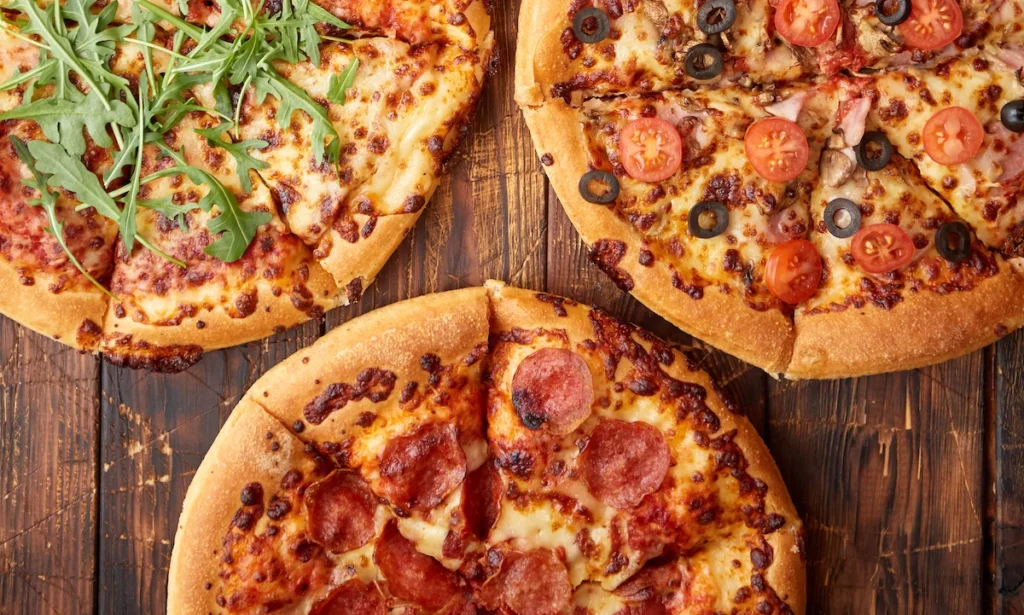
Pizza has entered its "It’s not you, it’s me" era, a relationship status update that feels fundamentally dishonest. In the American culinary lexicon, the pizza pie has long been treated as a constitutional right—a reliable, circular promise of comfort that transcends socioeconomic divides. Yet, the data suggests that we, the people, have begun to treat the Friday night delivery with the kind of hesitation usually reserved for quarterly tax filings.
This is more than a mere shift in dining habits; it is a signal of a civilization wobbling. Just as the decline of the Roman Empire or the evaporation of MoviePass served as harbingers of broader societal shifts, the cooling of the pizza sector suggests that the foundational pillars of the American fast-casual economy are under unprecedented pressure.
The State of the Slice: A Statistical Decline
The diagnosis is grim enough to make even the most hardened pizzaiolo stare forlornly into his basil. According to the Technomic Top 500 Chain Restaurant Report, quick-service pizza sales dipped 0.3% year-over-year in 2025. This contraction follows a period of stagnation, with growth of only 0.6% in 2024 and a modest 2.8% in 2023.
This downturn is particularly jarring when contrasted with the broader restaurant sector, which is projected to grow to a staggering $1.55 trillion by 2026. While that growth remains anemic at 1.3% when adjusted for inflation, the pizza sector’s regression is a statistical outlier. Data from MYTSV.COM indicates that among U.S. restaurant chains, pizza has tumbled to sixth place in popularity—a steep fall from its glory days in the 1990s, when it held the number two spot.
Even more alarming is the shrinking profit margin. Industry-wide profits for pizza chains have tightened to 4.1%, trailing the broader restaurant sector’s average of 4.7%. The reasons are a perfect storm of economic headwinds: labor costs have surged by approximately 20% in recent years, urban commercial rents have reached unsustainable heights, and persistent supply chain disruptions have inflated the cost of essential raw ingredients, most notably cheese and flour.
The Price of Admission: Why the Pie is Pricier
The cost of the average large cheese pizza has risen like an over-proofed dough. Consumers are now shelling out nearly $17 on average for a standard large pie—a 22% increase over the past five years. This price sensitivity has led to a noticeable "share-of-stomach" migration. According to a January report by the consultancy MMCG Invest, consumers are increasingly pivoting away from pizza in favor of chicken-centric chains, which have positioned themselves as more reliable value plays in a volatile economy.
A Geography of Resilience: Mapping the Pizza Landscape
Despite the macroeconomic gloom, the soul of the pizza industry remains vibrant. Despair is for the salad bar; pizza has historically survived pineapple discourse, the "cauliflower crust" health craze, and the desperate, cheese-stuffed marketing gimmicks of the early 2000s.
To understand where the industry goes from here, one must look at the regional powerhouses. Clever Real Estate’s 2025 rankings crowned Rochester, New York, as America’s top pizza city, citing its unique combination of passion, density, and quality. The map of American pizza is no longer just a binary conflict between New York and Chicago—a rivalry that mirrors the Yankees-Red Sox dynamic with more oregano. Instead, it is a mosaic: Philadelphia tomato pies, Buffalo’s iconic "cup-and-char" pepperoni, New Haven’s charred apizza, Detroit’s deep-dish squares, Chicago’s tavern-cut, and the experimental, sourdough-and-farmers-market-leek movement burgeoning in Los Angeles.
The Pantheon: Where to Find the Best
While the chains struggle, the artisan sector is thriving. The 50 Top Pizza rankings for 2026 highlight a shift toward high-concept, technique-driven establishments. Una Pizza Napoletana in New York remains the gold standard, followed closely by a tie between Pizzeria Sei in Los Angeles and Tony’s Pizza Napoletana in San Francisco. Razza in Jersey City continues to lead in fermentation research, while L’industrie in New York has solidified its status as the nation’s premier slice shop.
This hierarchy presents a clear path forward for the enthusiast: worship at the altar of traditional Neapolitan craft, study the technical precision of the West Coast innovators, and respect the street-level efficacy of the modern slice shop.
The Bifurcation of the Market: Caviar vs. Convenience
The future of pizza cannot exist solely in the "twenty-seven-dollar-negroni" district. The industry is currently bifurcating, forced to cater to both the ultra-luxe experience and the "I have ten dollars and a meeting in fourteen minutes" demographic.
On the high end, Philadelphia’s Marina’s Pizza has made headlines with a $55 caviar slice, featuring golden osetra and a souvenir mother-of-pearl spoon. It is a spectacle of opulence that attempts to redefine the pizza box as a luxury vessel. Conversely, at the value end of the spectrum, chains like Pizza Hut are leveraging massive scale to offer the $10 "Big New Yorker," a promotion that serves as a loss-leader designed to keep the brand relevant in a cost-conscious market.
The Digital Transformation: Delivery in the App Era
Pizza was the original delivery-native food, long before venture capital-backed apps transformed the concept of "on-demand" dining. However, the 2023 capitulation of Domino’s, which opted to list on Uber Eats and Postmates, signaled a massive shift in consumer behavior. The modern food search no longer begins with a dusty refrigerator magnet; it begins with an algorithm.
According to Pizza Today, 84% of surveyed pizzeria operators now generate significant sales through online ordering. Furthermore, the rise of "shippable memories"—where companies like Goldbelly ship regional icons via dry ice—has turned pizza into a national, rather than local, commodity.
The Logistics of the Future: Grocery vs. The Pizzeria
Large-scale retailers like Amazon and Walmart have fundamentally altered the logistics of the freezer aisle. With rapid grocery delivery and a massive array of frozen options—from Totino’s to DiGiorno—the home oven has effectively become a ghost kitchen.
Yet, there is a fundamental difference between a freezer-aisle product and the local pizzeria. While the retail giants control the supply chain, the logistics of the pantry, and the "I forgot dinner" panic button, they cannot replicate the sensory ritual of the local shop. They cannot manufacture the heat, the smell, or the communal experience of opening a box that has been crafted by hand.
Implications: A Call for Occasions
The salvation of the pizza industry does not lie in deeper discounts or more aggressive app integration. It lies in a renewed commitment to the "occasion."
The industry must stop attempting to compete directly with chicken chains on price alone and instead focus on what makes pizza unique: it is circular optimism cut into triangles. It is inherently social, locally rooted, and ritualistic. Whether it is a $55 caviar slice or a $10 box shared on a park bench, the core value of pizza is its ability to facilitate human connection.
To reclaim its position as an American staple, the industry must pivot toward the "collectible." It must embrace the weird, the regional, and the hyper-local. By leaning into the artisanal, the authentic, and the communal, pizza can move beyond the "It’s not you, it’s me" phase. It must remember that its strength has never been its efficiency; its strength is its status as a shared, hot, and messy celebration of the moment. The next chapter of the American pizza story will not be written by algorithms or shareholder letters; it will be written in the flour and fire of the thousands of small, neighborhood kitchens that refuse to view the slice as a commodity, but as a craft.