The Neural Frontier: Max Hodak and the Quest to Redefine Human-Computer Interaction
When you interact with the digital world today, you likely rely on a familiar, centuries-old paradigm: the keyboard, the mouse, or the haptic feedback of a smartphone screen. These tools, while revolutionary in their time, act as external barriers—filters that mediate our intent through cumbersome physical gestures. But what if the next interface was not a device you hold, but an extension of your own neural architecture?
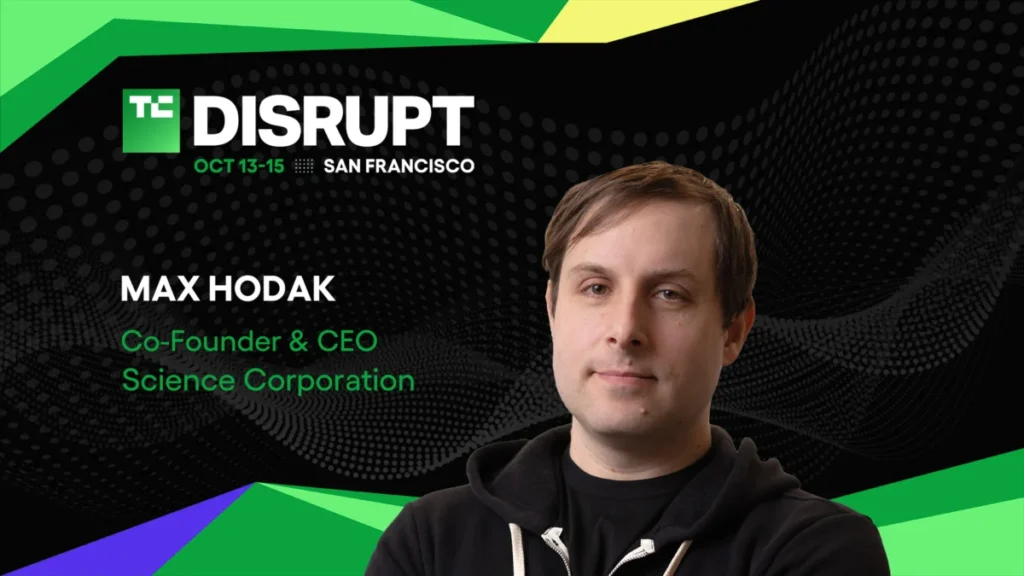
At TechCrunch Disrupt 2026, Max Hodak, the visionary CEO of Science Corporation, is poised to challenge the status quo. His mission is to dismantle the “screen-first” era of technology, replacing it with a seamless, biohybrid interface that bridges the gap between human cognition and digital processing. As he prepares to address over 10,000 industry leaders, founders, and investors at San Francisco’s Moscone West, the tech world is looking closely at how Science Corporation is turning the stuff of science fiction into a tangible, clinical reality.
The Evolution of an Interface Pioneer
To understand where Max Hodak is going, one must look at where he has been. His career is not merely a resume; it is a long-standing thesis that the human-machine interface is the most significant bottleneck in the advancement of our species.
Hodak’s journey began in childhood, fueled by a precocious interest in programming that eventually led him to the rigorous halls of the Duke Pratt School of Engineering. It was there, working in the laboratory of renowned neurobiologist Miguel Nicolelis, that Hodak first witnessed the profound potential of brain-computer interfaces (BCIs). Nicolelis’ work—famously allowing paralyzed patients to control robotic limbs with their thoughts—left an indelible mark on the young engineer.
After an early pivot into the life sciences with the founding of Transcriptic, a robotic cloud laboratory, Hodak made his mark on the global stage in 2016 by co-founding Neuralink. As its initial president, he helped steer the company through its formative years, bringing the concept of brain-implantable technology into the mainstream consciousness. However, in 2021, he departed to launch Science Corporation. While Neuralink focused on high-bandwidth communication, Science Corporation adopted a broader, more clinical approach, emphasizing neural engineering designed to address the most urgent needs of human physiology: sight, cognition, and mobility.
Chronology of a Biohybrid Breakthrough
The ascent of Science Corporation has been marked by rapid clinical milestones and significant financial backing, positioning the firm as a leader in the neuro-tech sector.
- 2021: Max Hodak founds Science Corporation, aiming to develop advanced neural engineering solutions that prioritize patient health outcomes.
- 2022–2024: The company focuses on research and development, securing substantial capital to fuel the development of proprietary BCI hardware.
- 2025: Science Corp makes headlines as its PRIMA implant demonstrates success in clinical settings, proving that a digital camera paired with a retinal chip could bypass damaged anatomy to restore vision.
- 2026 (April): The company announces it is preparing to place its first advanced sensors into the human brain, marking a pivot toward direct, intracranial BCI applications.
- 2026 (September): Science Corp announces a $230 million Series C funding round, bringing its total valuation to $1.5 billion, signaling intense investor confidence in the future of brain-implantable sensors.
Data and Clinical Reality: Beyond the Hype
It is easy to dismiss BCI technology as the province of speculative fiction, but the data suggests a different narrative. The PRIMA implant is not merely a concept; it is a functional medical device that has already changed lives. By utilizing a pair of glasses equipped with a high-resolution camera, the system captures visual data and transmits it wirelessly to a chip implanted directly into the patient’s retina.
The success of PRIMA provides the backbone for the company’s broader, more ambitious platform. The company’s latest endeavors involve sensors capable of monitoring and stimulating neural activity at a level of granularity previously unseen. With $230 million in fresh capital, Science Corporation is moving beyond retinal restoration. Current research initiatives include:

- Neuro-Regeneration: Utilizing sensor feedback to map and potentially stimulate the healing of damaged neural pathways.
- Early Warning Systems: Developing predictive algorithms that detect the onset of epileptic seizures or neurological distress before the patient is even consciously aware of the symptoms.
- Parkinson’s Management: Exploring how closed-loop, biohybrid stimulation can mitigate the tremors and motor control issues associated with neurodegenerative diseases.
The Implications: A Post-Screen Future
The philosophical core of Hodak’s upcoming keynote, "Beyond Screens," centers on the idea that our current reliance on displays is a limitation. If a computer can receive input directly from the nervous system, the requirement for a physical screen becomes redundant.
The Impact on Human Cognition
If we remove the "input/output" latency of keyboards and screens, we enter a world of "thought-speed" interaction. While the initial applications are strictly medical—helping those with physical impairments regain agency—the long-term implications are vast. We are looking at a future where software can interface directly with human memory and cognitive processes, effectively "offloading" mental strain to cloud-based neural extensions.
The Startup Ecosystem
For the thousands of founders attending TechCrunch Disrupt, the shift toward BCIs represents a new frontier for investment and innovation. If the "screen" is removed, the entire UI/UX design industry must be fundamentally reimagined. Companies that position themselves as "neural-native" could become the next generation of tech giants, just as mobile-first companies defined the 2010s.
Ethical and Regulatory Challenges
Of course, moving the interface inside the skull brings unprecedented ethical, security, and regulatory challenges. As Hodak and his team move toward human trials for intracranial sensors, the conversation around data privacy—specifically "thought privacy"—will become paramount. How do we secure a brain-computer interface from unauthorized access? What happens when the hardware needs an update? These are the questions that will dominate the next decade of medical and technological policy.
Why TechCrunch Disrupt 2026 Matters
As the industry gathers at San Francisco’s Moscone West from October 13–15, the focus on AI and biohybrid technology is sharper than ever. With over 250 sessions and six industry-specific stages, the event is designed to foster the kind of cross-pollination that drives disruptive change.
Max Hodak’s presence is not just a keynote; it is a roadmap. For investors, it is a chance to vet the technology that may soon define the biotech sector. For founders, it is a reminder that the most significant disruptions often come from those willing to challenge the fundamental ways we interact with the universe.
As the window for early-bird registration closes on September 25, the industry is left to consider a singular, provocative thought: We are moving toward a world where technology no longer sits on our desks or in our pockets, but within our minds. Whether we are ready for it or not, the era of the biohybrid human has begun.
To secure your place at this year’s most pivotal event and witness the future of human-machine interaction, register today to take advantage of savings of up to $200. Join the conversation that will define the next century of innovation.