The Manchester Blueprint: Can a Regional Success Story Rewrite the UK’s National Economic Future?
By Diane Coyle
June 24, 2026
The United Kingdom finds itself at a pivotal political crossroads. Following the sudden resignation of Prime Minister Keir Starmer, the corridors of Westminster are thick with speculation regarding his successor. Yet, as the national narrative pivots toward a leadership transition, the gaze of economists and political strategists has shifted north, away from the traditional epicenter of power in London, to the vibrant, post-industrial landscape of Greater Manchester.
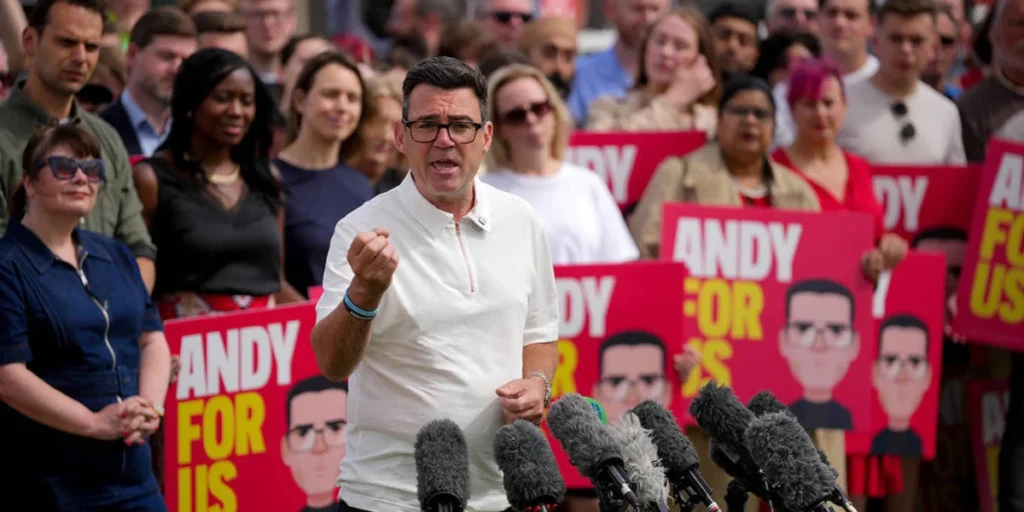
Andy Burnham, the former Mayor of Greater Manchester and a newly minted Member of Parliament following a decisive special election victory, has emerged as the frontrunner in the race for the premiership. His rise is not merely a product of political maneuvering; it is inextricably linked to the "Manchester Model"—a decade-long experiment in regional governance that has transformed the city from a fading industrial hub into the UK’s fastest-growing economic engine.
Main Facts: A Tale of Two Cities
The fundamental narrative currently dominating the British economic discourse is the stark contrast between the stagnant growth of the national economy and the dynamism of the Greater Manchester Combined Authority (GMCA).
Greater Manchester’s economic turnaround has been characterized by a strategic shift toward decentralization. Under Burnham’s tenure as mayor, the region leveraged its devolved powers to integrate transport, housing, and skills development into a singular, cohesive strategy. By fostering a climate of "inclusive growth," Manchester has managed to attract significant foreign direct investment (FDI) while simultaneously addressing long-standing regional inequalities.
The core fact remains: while the UK national GDP growth has sputtered in the mid-2020s, Manchester has consistently outperformed the national average. This success suggests that regional autonomy, when paired with a clear, long-term vision, can act as a catalyst for growth even in the face of national headwinds.
Chronology: The Evolution of the Manchester Model
To understand how Manchester arrived at this juncture, one must look back at the trajectory of the last two decades.
- 2011: The creation of the Greater Manchester Local Enterprise Partnership marks the first serious attempt at regional coordination beyond local council borders.
- 2014: The "Devo Manc" deal is signed, transferring significant powers over healthcare, transport, and policing from Westminster to the newly formed Greater Manchester Combined Authority.
- 2017: Andy Burnham is elected as the first Mayor of Greater Manchester. His platform centers on bridging the gap between the affluent city center and the struggling peripheral boroughs.
- 2020–2022: Despite the global pandemic, Manchester’s digital and creative sectors experience an unprecedented boom, effectively insulating the local economy from the worst of the national contraction.
- 2025: Greater Manchester achieves the highest regional growth rate in the UK, officially surpassing the economic recovery rate of the London metropolitan area for the first time in modern history.
- June 2026: Prime Minister Keir Starmer resigns. Andy Burnham secures a landslide victory in a parliamentary special election, immediately positioning himself as the primary contender for the Labour Party leadership and the premiership.
Supporting Data: The Evidence of Success
The "Manchester Model" is not merely rhetorical; it is supported by robust empirical data. Analysis of regional economic performance between 2020 and 2026 highlights three critical areas of outperformance:
- Human Capital Development: Through the "Greater Manchester Skills Strategy," the region saw a 14% increase in vocational qualifications among the working-age population compared to a 4% national average increase.
- Infrastructure Integration: The consolidation of the Bee Network—Manchester’s integrated transport system—has reduced average commute times for low-income workers by approximately 18%, directly linking residents to emerging job hubs.
- Investment Attraction: FDI in the tech sector within the Manchester city-region grew by 22% year-on-year, significantly buoyed by the "Innovation Manchester" initiative, which aligns university research output with private sector commercialization.
Economists note that while Manchester still faces challenges—specifically in pockets of persistent intergenerational poverty—the velocity of its growth suggests that the institutional architecture created through devolution is fundamentally more responsive to local needs than the top-down models traditionally employed by the Treasury.
Official Responses: Westminster’s Ambivalence
The reaction from the political establishment in Westminster has been mixed. Supporters of the Manchester model argue that it is the "only viable blueprint" for a post-Starmer Britain. "What we have seen in Manchester," says a senior Labour strategist, "is proof that the state can be an active partner in economic growth without stifling the private sector. It is a model of pragmatic socialism that delivers results."
Conversely, critics—particularly from the traditional Whitehall establishment—caution against "over-extrapolation." They argue that Manchester’s success is idiosyncratic, relying heavily on the specific geography of the North West and the unique concentration of university talent. "You cannot simply copy-paste Manchester into Cornwall or rural Lincolnshire," notes a Treasury advisor. "The risk of the Burnham leadership is that it will attempt to impose a regional solution on a national scale, potentially ignoring the unique complexities of our rural and coastal economies."
Implications: A New National Strategy?
As the UK approaches a potential transition to a Burnham-led government, the implications for the nation’s economic future are profound. If Burnham ascends to the premiership, his tenure will likely be defined by the "Great Decentralization."
1. The Death of the Treasury-Centric Model
A Burnham-led government would likely signal the end of the hyper-centralized economic management that has characterized the UK for decades. We can expect a push for further devolution, with local leaders in the Midlands and the North given more autonomy over tax-raising powers and capital expenditure. This could lead to a "Britain of Regions," where economic growth is no longer a zero-sum game between London and the rest of the country.
2. The Focus on "Inclusive Growth"
The Manchester Model prioritizes social outcomes alongside economic ones. Under a national application of this strategy, we might see a pivot toward "Mission-Oriented" government—where the state sets specific targets (e.g., carbon neutrality, health outcomes) and incentivizes private sector alignment. This would represent a departure from the traditional neoliberal framework that has dominated since the late 1990s.
3. The Challenge of National Scaling
The greatest risk is the complexity of scale. Governing a city-region of 2.8 million is fundamentally different from managing a nation of 67 million. Regional success requires agility; national success requires balancing competing interests, often at the cost of speed. Critics wonder if Burnham’s "get-it-done" mayoral style will clash with the bureaucratic realities of the civil service and the legislative hurdles of the House of Commons.
Conclusion: The Path Ahead
The political drama currently unfolding in Westminster is, at its heart, a conflict between two visions of Britain. One vision clings to the centralized, London-centric model of the past, while the other looks to the laboratory of the North for the solutions of the future.
Whether or not Andy Burnham succeeds Keir Starmer, the Manchester Model has already changed the terms of the debate. It has demonstrated that regional economic dynamism is possible when local leaders are empowered to solve local problems. For the next occupant of Number 10, the task will not be to replicate Manchester in every detail, but to learn from its resilience, its integration, and its unwavering commitment to inclusive growth.
As the nation waits for the results of the leadership contest, one thing is clear: the era of the passive, centralized state is nearing its end. The future of the British economy is being written in the town halls of the regions, and for the first time in a long time, the center is looking north for inspiration.
The challenges remain daunting—inflationary pressures, a cooling housing market, and the long-term structural deficit left by the previous administration—but the Manchester blueprint provides a glimmer of hope. If the UK is to regain its economic footing, it will likely be by embracing the very thing that made Manchester successful: the belief that the people closest to the problems are the ones best equipped to solve them.