The Invisible Barrier: Why Most Polling Places Fail to Meet Accessibility Standards
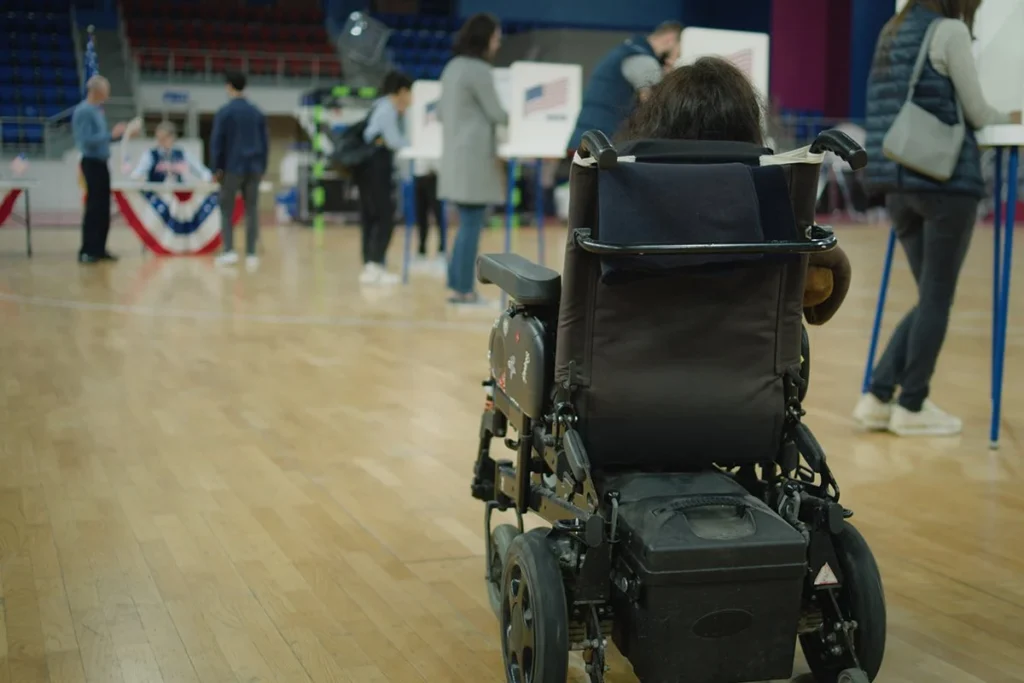
For millions of Americans, the right to vote is a cornerstone of democracy—a civic privilege enshrined in federal law and protected by the promise of equal access. Yet, for the more than one in four adults in the United States living with a disability, that promise is frequently broken at the threshold of the polling station. Recent data from a comprehensive audit in Michigan suggests that the physical and procedural barriers facing disabled voters are not merely isolated incidents but part of a systemic crisis that persists despite decades of legislative action.
The Reality of Access: A Snapshot of Failure
During Michigan’s 2025 election cycle, a massive undertaking was launched to hold the democratic process accountable. Dozens of auditors mobilized across the state, visiting more than 400 polling locations to assess whether disabled voters could exercise their right to cast a ballot independently.
The results, released in a sobering report, revealed that only 10 percent of the assessed polling locations met basic, legally mandated accessibility standards. This statistic serves as a harrowing reminder of the gap between the law and reality. When nearly 90 percent of polling sites fail to provide a barrier-free experience, it effectively disenfranchises the one in three adult Michiganders who live with a disability.
This is not a localized anomaly. When the last nationwide audit was conducted nearly a decade ago, it revealed that 83 percent of polling locations across the United States were inaccessible. The persistence of these figures, even in states with progressive voting legislation, underscores a pervasive national failure to prioritize inclusive infrastructure.
Chronology of an Advocacy Movement
The fight for accessible polling is not new, but the methodology of auditing has evolved significantly over the past several years. Detroit Disability Power (DDP), the organization spearheading the Michigan audits, began their efforts informally in 2018. At that time, the goal was to identify the most glaring hurdles faced by voters with mobility aids or visual impairments.
By the 2022 midterm elections, DDP formalized its audit program in a strategic partnership with The Carter Center. That year, they audited 261 locations across Metro Detroit, marking the largest poll accessibility audit in U.S. history at the time. The initiative grew in scope throughout 2024 and 2025, culminating in the assessment of 415 Election Day polling sites and 32 early voting locations across Michigan.
While the percentage of "passing" sites has fluctuated—from 16 percent in 2022 to 10 percent in 2025—advocates argue this decline is partially a reflection of broader, more rigorous assessment criteria and a larger sample size. Rather than a decline in accessibility, the data represents a clearer, more honest picture of a landscape that has been historically ignored by election officials.
The Pillars of Access: What Defines a "Passing" Site?
To determine whether a site is truly accessible, DDP auditors utilize a 24-question survey that measures a location against four fundamental, legally required criteria:
- Accessible Parking and Pathways: A clear, stable route from a designated parking space to the building entrance.
- Accessible Entrance: A doorway that accommodates mobility devices without requiring assistance or navigating stairs.
- Fully Functional Voting Machines: Equipment that is plugged in, powered on, and equipped with necessary peripherals.
- Privacy and Independence: A wheelchair-height voting booth that allows for a private ballot, alongside functional accessible machines (including audio options, braille keyboards, and sip-and-puff interfaces).
A site is labeled "inaccessible" if it fails any one of these four categories. While some hurdles—such as historic architecture that prevents structural modification—are inherently difficult to rectify, DDP emphasizes that many failures are the result of negligence or lack of training rather than physical impossibility.
"You Don’t Need a Jackhammer": The Case for Simple Solutions
One of the most frustrating takeaways from the audit is that the majority of barriers are entirely within the power of poll workers to fix. Eric Welsby, advocacy director at Detroit Disability Power, notes that the most common points of failure involve the setup of accessible voting machines.
"The accessible voting machines and the wheelchair-height voting booth are something that really are fully in election workers’ power to fix," Welsby said. "You don’t need a jackhammer. You don’t need to do major construction. It’s really about knowing how to have them set up, how to set them up properly, and how to make sure a voter using those can cast their ballot independently and secretly."
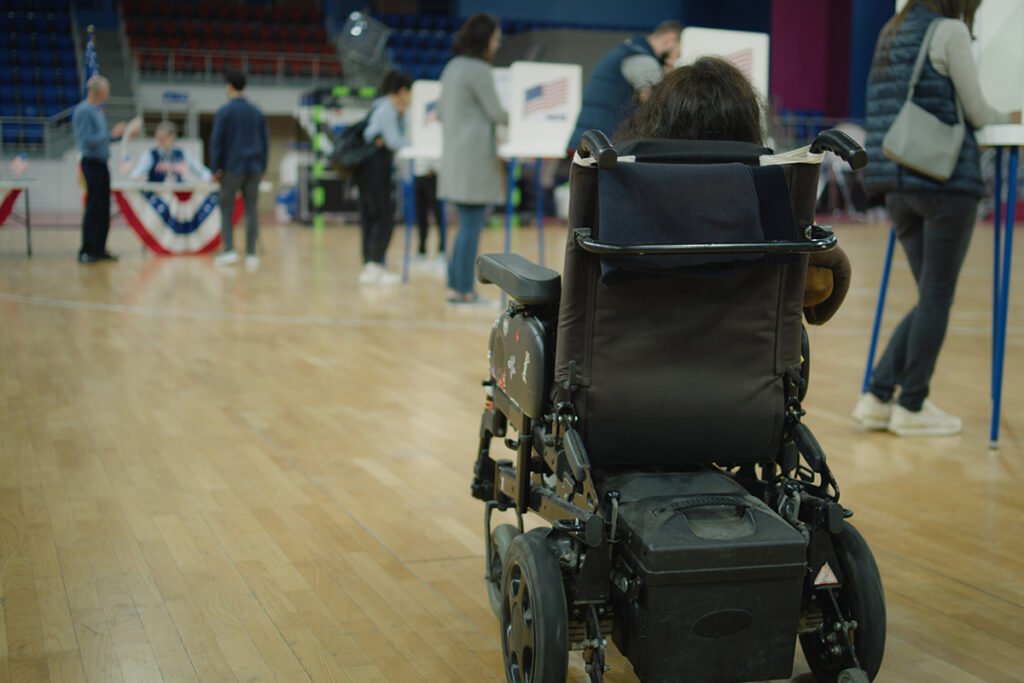
Common issues identified in the audit included machines that were not powered on, headphones that were missing or tangled, or privacy screens that were improperly positioned. Even basic signage—directing a voter to an accessible entrance rather than a staircase—is often neglected, leaving voters to navigate the polling site in search of entry. By training auditors to act as credentialed election challengers, DDP has gained the legal standing to observe these issues firsthand and provide real-time feedback to clerks, turning the audit into a collaborative tool for improvement rather than just a critique.
The National Ripple Effect: Expanding the Coalition
The success of the Michigan audit has acted as a catalyst for a national movement. Through the National Polling Access Audit Coalition, DDP is working to export its expertise to other states. With the backing of the American Association of People with Disabilities and The Carter Center, the coalition launched the Voting Access Audit Fellowship this year.
This fellowship is currently supporting five nonprofit organizations across the country:
- Cobb Collaborative (Georgia)
- Count US IN (Indiana)
- Keystone Progress Education Fund (Pennsylvania)
- Civic Nebraska (Nebraska)
- Metropolitan Asian Deaf Association (New York)
For organizations like the Cobb Collaborative, the need is urgent. Jacob Rogers, program coordinator at the organization, notes that Georgia’s history of voter suppression makes this work particularly critical. With recent legislative changes in Georgia—including restrictions on absentee ballots and ballot drop boxes—the importance of physical polling site accessibility has intensified.
"Georgia has a long history of voter suppression," Rogers explained. "Voter education means little if a voter can’t actually get through the doors to use any of the voter resources that are available to them."
Legal Protections vs. Practical Enforcement
The legal framework for voting accessibility is robust on paper. The Voting Rights Act of 1965, the Americans with Disabilities Act (ADA) of 1990, and the Help America Vote Act (HAVA) of 2002 all provide explicit protections for disabled voters.
Yet, the enforcement of these laws is often reactive rather than proactive. Boards of Elections can be sued for discrimination, but legal remedies are notoriously slow, often taking years to resolve. By the time a court orders a change, multiple election cycles have passed, and voters have been deprived of their rights. The audit model fills this gap by creating an accountability mechanism that functions in real-time, focusing on immediate remediation rather than long-term litigation.
The Future of Voting: A Safer, More Inclusive Democracy
The current political climate, characterized by renewed skepticism regarding mail-in voting, places an even greater burden on in-person polling locations. For many disabled voters—particularly those with mobility limitations, sensory impairments, or compromised immune systems—the polling place must be a safe, reliable, and accessible environment.
As the National Polling Access Audit Coalition continues to scale, the goal is to shift the culture of election administration. By providing clerks with clear, data-driven reports on what is working and what is not, the coalition hopes to move toward a future where "accessible" is the default setting for every polling place in America.
Looking ahead, DDP plans to audit approximately 700 sites in Michigan for the next election cycle, aiming to cover a significant portion of the state’s 5,000 locations. The results of these audits will continue to be a barometer for the health of American democracy. As Welsby notes, the ultimate objective is not just to point out failures, but to support the officials tasked with running our elections to ensure that every citizen, regardless of ability, can cast their ballot with dignity, independence, and secrecy.
The task is significant, but the path forward is clear: through rigorous data collection, consistent training for poll workers, and the active involvement of the disability community, the "invisible barriers" to the ballot box can be dismantled. Democracy, after all, is only as strong as its accessibility.