The Infrastructure of Autonomy: How the Creator of VLC Is Orchestrating the Robotic Revolution
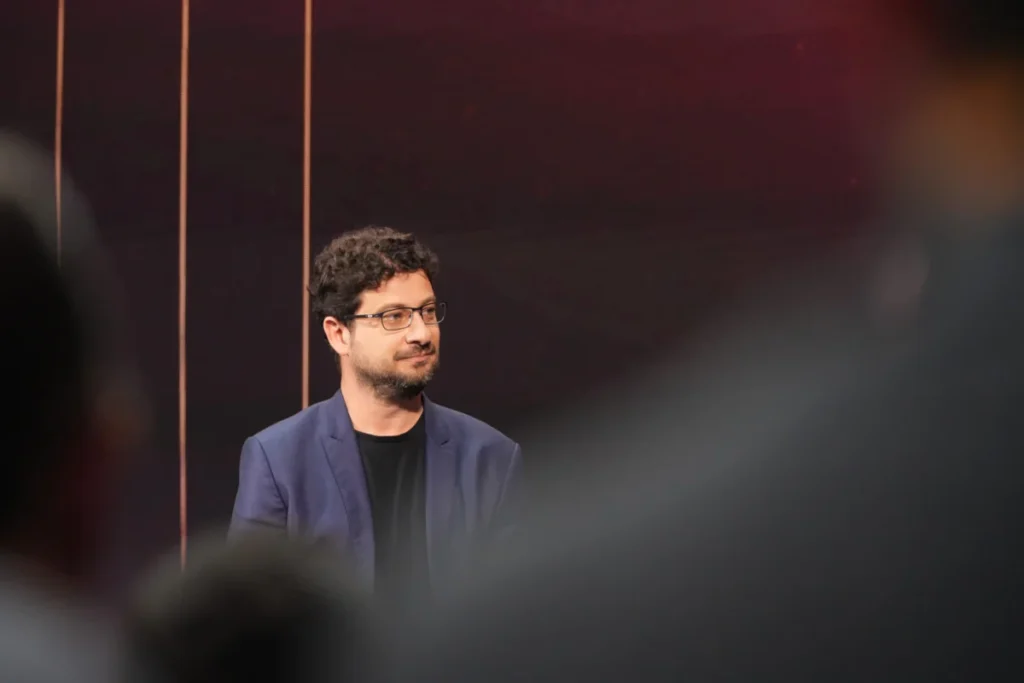
In the digital age, few icons are as recognizable as the orange traffic cone of VLC Media Player. With over 6 billion downloads, it stands as a monument to the power of open-source software and the vision of its lead developer, Jean-Baptiste Kempf. However, Kempf is no longer content with merely revolutionizing how we watch video. His current mission is significantly more ambitious: he aims to build the nervous system for the next generation of physical machines.
Through his Paris-based startup, Kyber, Kempf is developing an infrastructure layer designed to facilitate the real-time control of remote devices. As the world stands on the precipice of a massive expansion in robotics and drone deployment, Kyber is positioning itself as the essential middleware for a future where "physical AI" becomes as ubiquitous as the internet itself.
The Core Problem: Latency in a Physical World
The central thesis behind Kyber is rooted in a fundamental reality of physics: distance creates delay. Whether it is a drone navigating a complex construction site or an industrial robotic arm performing high-precision assembly, the synchronization of video, audio, sensor data, and control inputs is paramount.
"If you control things in the real world, every millisecond matters," Kempf explains.
Kyber operates as an SDK that bridges the gap between the human operator (or the AI agent), the compute layer, and the physical action. While many existing solutions handle these tasks in isolated, bespoke environments, Kyber is designed to scale. The startup’s name, a nod to the "Kyber crystals" that power the lightsabers of the Star Wars universe, reflects its focus on precision, speed, and energy. By applying the advanced streaming techniques Kempf perfected during his tenure as CTO at the cloud gaming startup Shadow, Kyber manages to achieve minimal latency, even when the "pilot" and the "machine" are separated by thousands of miles.
Chronology: From Media Players to Robotics Infrastructure
The journey to Kyber did not begin in a robotics laboratory, but in the trenches of video streaming.
- The VLC Foundation: Kempf’s early reputation was forged through the VideoLAN project, where he helped transform VLC from a niche academic tool into the world’s most popular media player. This experience provided him with a masterclass in building software that can handle immense scale and diverse hardware configurations.
- The Shadow Years: While serving as CTO at Shadow, a cloud-gaming pioneer, Kempf encountered the limitations of remote computing. The challenges of delivering a seamless, lag-free gaming experience over a network are conceptually identical to the challenges of remote robotic operation. It was here that the seeds for Kyber were sown.
- The Inception of Kyber: Recognizing that the infrastructure for remote physical control was fragmented and proprietary, Kempf founded Kyber to build a universal, open-source-backed layer for the "Internet of Robots."
- The Lightspeed Infusion: In late 2024, the startup’s potential was validated by a $5 million seed round led by Lightspeed Venture Partners. The investment underscored a growing trend among top-tier VCs: the belief that the "Physical AI" boom is only as robust as the underlying systems that support it.
Supporting Data: The Scale of the Challenge
The necessity for a platform like Kyber is driven by the sheer projected volume of autonomous systems. Industry analysts estimate that hundreds of millions of robots and drones will be deployed across urban and industrial landscapes by the end of the decade.
Current solutions, often built internally by massive logistics or defense contractors, are effective but limited. As Kempf points out, the largest existing fleets today struggle to manage 2,000 to 3,000 units effectively. Scaling that number to millions requires a paradigm shift.
"Imagine you need to manage millions of them," Kempf notes. "That is not the same thing as managing a few thousand."
This leap in scale necessitates:
- Observability: Knowing, in real-time, that every system in a fleet of 100,000 units is functioning correctly is a monumental data challenge.
- Over-the-Air (OTA) Updates: The ability to push software patches and security updates to millions of edge devices without manual intervention.
- Edge Compute Optimization: Tuning performance to the specific compute power available on each individual device, a technique Kempf honed through his years of optimizing VLC for everything from low-end smartphones to high-end servers.
Official Responses and Strategic Direction
The industry response to Kyber has been swift. By adopting a "hybrid" business model—keeping the core project open-source while offering enterprise-grade support and proprietary modules—Kyber is mirroring the success of companies like HashiCorp or Palantir.
Lightspeed Venture Partners, in a public statement regarding their investment, emphasized the "picks and shovels" nature of the startup. "Physical AI is only as good as the underlying systems running it," the firm stated, highlighting that Kyber provides the necessary stability for the next generation of AI agents.
Kyber’s team of 25 full-time staff is heavily weighted toward Forward-Deployed Engineers (FDEs). This is a strategic choice. By placing engineers directly within client organizations—ranging from defense contractors to telecommunications firms—Kyber ensures that its software is not just a "black box" but a tailored solution that integrates into existing workflows. With offices in Paris, San Francisco, and Singapore, the company is clearly positioning itself to capture a global market.
The Implications: A New Era of Remote Work
The implications of Kyber’s technology extend far beyond the high-tech world of robotics. By enabling high-fidelity, low-latency remote control, the platform is poised to disrupt the sector of remote IT access.
Kempf envisions Kyber as more than a mere competitor to legacy solutions like Citrix. By building a platform that allows for the management of any remote device—from a drone in a remote field to a server in a basement—the company is building the "operating system" for the physical internet.
Redefining Human-Machine Interaction
As AI agents increasingly take over the day-to-day management of fleets, the human role will shift from "operator" to "supervisor." Kyber’s observability tools will be the dashboard through which these supervisors view the world. If a robot encounters an anomaly, the human must be able to "jump in" with zero lag, taking manual control to resolve the issue.
The Democratization of Infrastructure
Perhaps the most significant implication is the democratization of high-end robotics. By providing a standardized, robust infrastructure layer, Kyber lowers the barrier to entry for smaller startups. If a team can build a robot and simply plug it into the Kyber SDK, they no longer need to spend "tens of millions" building their own proprietary command-and-control software.
"The companies that tried to solve it spent years and tens of millions building custom solutions they’ll never share," Kempf says. "We’re building the version everyone else can use."
Conclusion: The Future is Decentralized
As we look toward a future defined by the convergence of AI and robotics, the importance of the "plumbing" cannot be overstated. Just as the internet required TCP/IP and video streaming required standards like H.264, the age of autonomous machines requires a standard for remote, real-time control.
Jean-Baptiste Kempf, once the man who brought video to the masses, is now orchestrating the infrastructure that will allow those masses to interact with a world populated by intelligent, autonomous machines. Whether Kyber succeeds in becoming the "VLC of Robotics" remains to be seen, but the trajectory is clear: the era of the physical, connected, and autonomous world has arrived, and the race to build its foundation is already underway.