The High Cost of Transformation: Nike’s CFO Shakeup Amidst Market Turbulence
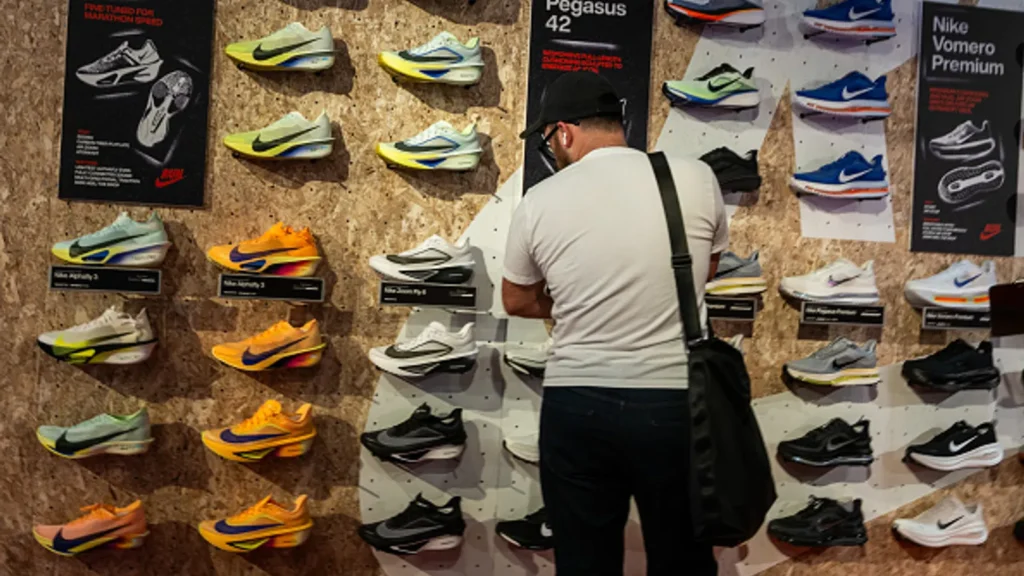
In a move that underscores the fierce competition for elite financial leadership, Nike Inc. has orchestrated a significant leadership transition, appointing a veteran finance executive to navigate the company through a period of profound structural change. The move, characterized by substantial compensation packages for both incoming and outgoing leadership, reflects a broader trend among major U.S. public corporations: the willingness to pay a premium to secure seasoned stewards of capital during volatile market cycles.
As Nike grapples with shrinking market share, margin compression, and the complexities of its "Sport Offense" turnaround initiative, the appointment of a new CFO is being viewed as a critical strategic pivot. However, the eye-watering financial incentives attached to this transition have reignited the debate surrounding executive compensation in an era where shareholder returns are increasingly difficult to capture.
The Financial Mechanics of the Transition
The appointment of the new finance chief comes with a compensation structure designed to compensate for "forfeited equity" from previous roles—a common practice in high-level executive recruiting. According to recent filings with the U.S. Securities and Exchange Commission, the incoming CFO will command an annual base salary of $1.45 million, supplemented by a target long-term incentive award of $11.5 million for fiscal 2027.
To bridge the gap between his previous corporate responsibilities and the demands of the Nike boardroom, the company has structured a robust "make-whole" package. This includes a one-time cash signing bonus exceeding $7 million, payable on his first payroll date, and a performance-based cash award of $4 million, which is scheduled to vest in December 2027.
Josh Crist, co-managing partner of the executive search firm Crist Kolder, notes that while these figures may raise eyebrows, they are increasingly representative of the current market reality. "The numbers are starting to creep up," Crist remarked. "Nike is clearly incentivizing a high-caliber leader to walk away from significant ‘in-the-money’ equity elsewhere. Simultaneously, the payout to the outgoing CFO serves as a recognition of long-term loyalty and institutional knowledge, even if the price tag is somewhat unprecedented."
The "New Normal" of Executive Compensation
The remuneration packages at Nike are not isolated incidents but rather symptoms of an inflationary environment for top-tier executive talent. Across the U.S. corporate landscape, median CFO compensation rose by 8% over the past year. In extreme cases, this growth has become exponential.
High-profile packages have moved beyond the realm of standard bonuses into nine-figure territory. Tesla’s Vaibhav Taneja saw his total compensation package climb to over $139 million in 2024, while Welltower’s Tim McHugh set a new benchmark with a staggering $167 million package. These figures highlight the intense pressure boards of directors face to secure executives capable of managing multi-billion dollar operations under the scrutiny of institutional investors.
For Nike, which has long prided itself on stability, the decision to lean into these competitive salary structures signals an urgent need to secure a "proven public-company CFO" who can hit the ground running.
A Chronology of Nike’s Strategic Pivot
The leadership transition coincides with a difficult period in Nike’s history, defined by both internal restructuring and external market pressures.
- Pre-Pandemic to Present: Nike enjoyed years of market dominance, but recent years have seen a steady erosion of its competitive edge. A strategic decision to pull back distribution from third-party retailers left a vacuum that agile competitors, such as Hoka and On, were quick to fill.
- October 2025: Nike formally announced its "Sport Offense" initiative, a comprehensive operational overhaul designed to streamline innovation and reignite growth.
- April 2026: In a move to reduce operational overhead, Nike implemented a series of layoffs affecting approximately 1,400 employees across its technology and operations divisions.
- Fiscal Q3 2026 (Ended Feb 28, 2026): The company reported a 32% decline in net income, dropping to $520 million from $794 million in the prior year, despite revenues remaining flat at $11.3 billion.
- June 30, 2026: The company is set to report its Q4 and full-year fiscal 2026 results, a pivotal moment for investors to assess whether the "Sport Offense" strategy is gaining traction.
Analytical Perspective: The Margin Challenge
The economic outlook for Nike remains tempered by systemic challenges. Industry analysts observe that Nike’s operating margins have struggled to maintain pre-pandemic levels, often dipping into the single digits. Morningstar analysts have projected operating margins to fall to approximately 5.9% for fiscal 2026, with only a modest recovery to 7.2% expected in 2027.
The "Sport Offense" model is intended to address these margin pressures, but the transition has been fraught with difficulties. Beyond internal operations, global trade tensions and tariff fluctuations have disrupted supply chains, while changing consumer preferences have made the retail landscape significantly more fickle.
"The industry has found that consumers are increasingly willing to switch brands for something that aligns with their personal aesthetic or performance needs," noted one industry analyst. This shift has forced legacy giants like Nike to reconsider how they communicate value and maintain loyalty in an increasingly fragmented market.
Official Responses and Strategic Rationale
In the official statement accompanying the CFO announcement, leadership emphasized that the transition is a "natural moment" for the company. The goal is to move beyond "foundational actions"—which have included the painful process of layoffs and restructuring—toward "sustained growth."
The incoming CFO, who brings deep financial experience from previous roles at Pfizer, Lowe’s, and CVS Health, is seen as the architect needed to translate these high-level strategic shifts into concrete financial results. The company’s leadership maintains that his pedigree as a seasoned finance veteran is essential for guiding Nike through its next chapter.
Despite multiple requests for further comment regarding the specific performance targets associated with the new CFO’s incentive structure, Nike representatives remained silent, pointing to the upcoming earnings call as the forum for further transparency.
Implications: Can the World Cup Provide a Springboard?
All eyes are now turned toward the upcoming summer earnings call. A significant portion of investor sentiment rests on the success of Nike’s marketing and product investments surrounding the World Cup. Analysts hope that these investments will act as a "springboard" to reverse the downward trend in net income and restore confidence in the brand’s ability to dominate the global stage.
If the World Cup efforts fail to translate into improved top-line growth or margin expansion, the pressure on the new CFO will be immediate. The board has placed a significant bet—both in terms of the high cost of talent acquisition and the strategic direction of the company.
Ultimately, the transformation of Nike is as much a test of its financial agility as it is a test of its cultural relevance. As the company attempts to balance the high costs of leadership retention with the urgent need to innovate, the coming fiscal year will determine whether this expensive leadership pivot was the key to unlocking Nike’s potential or merely a symptom of a larger, more complex malaise within the sportswear giant.
The market, as always, will provide the final audit. Investors will be looking for more than just executive tenure; they will be searching for the clear, empirical evidence that Nike can reclaim its shelf space and its profitability in an era where the competition never rests.