The Hidden Cost of Summer: Why Your Vacation Rental Pool is a Liability Minefield
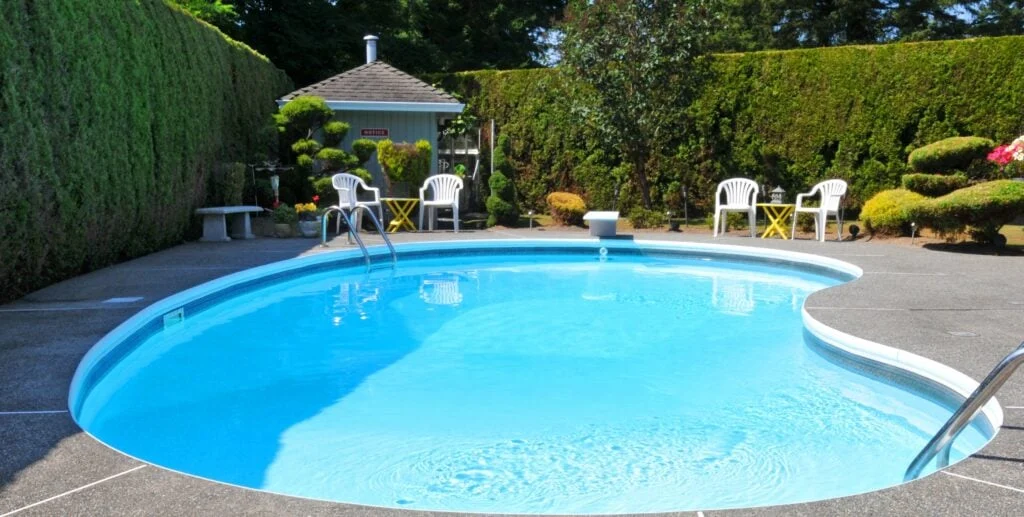
For short-term rental (STR) investors, the summer months represent the "Golden Quarter." Occupancy rates surge, nightly premiums climb, and the calendar begins to mirror the idealized revenue projections crafted during the initial underwriting phase. However, these three months of peak profitability often coincide with the highest period of risk for property owners—specifically those hosting swimming pools, hot tubs, or wet decks.
While these water features are powerful revenue drivers, they can transform a high-performing asset into a six-figure legal catastrophe in a matter of seconds. This is not an alarmist perspective; it is a cold, hard assessment of premises liability. For the modern STR host, understanding the intersection of insurance gaps and physical safety is no longer optional—it is a prerequisite for survival in the hospitality industry.
The Data That Should Demand Your Attention
The statistics surrounding residential water accidents are sobering. According to the Centers for Disease Control and Prevention (CDC), the United States sees over 4,000 fatal unintentional drownings annually—averaging 11 deaths every single day. Beyond the fatalities, another 8,000 individuals are treated in emergency departments for nonfatal drownings, often resulting in long-term neurological impairment.
The demographic impact is particularly harrowing: drowning is the leading cause of death for children aged 1 to 4 and the second-leading cause of unintentional injury death for those aged 5 to 14. Perhaps most critical for the STR investor is the data provided by Pool Guard USA, which indicates that roughly 81% of fatal child pool and spa drownings occur in residential settings rather than public parks. When you list your property on platforms like Airbnb or Vrbo, you are essentially operating a "public" space within a residential environment, and the liability exposure shifts accordingly.
The Illusion of Safety: Why Hot Tubs Pose Unique Risks
Many hosts operate under the dangerous assumption that hot tubs are lower-stakes amenities compared to full-sized swimming pools. The logic—that the water is shallower and the footprint is smaller—is a common trap.
Hospitality safety data derived from Consumer Product Safety Commission (CPSC) reports reveals that more than 300 people die in hot tub-related accidents every year in the U.S. Children under five represent nearly 20% of these incidents. Furthermore, the mechanics of injury in a hot tub differ from a pool. While drowning is a primary concern, slips and falls around the tub account for roughly half of all reported injuries.
Entrapment represents the most insidious risk. A faulty or non-compliant drain cover can create lethal suction, trapping a guest—or a child—underwater. Furthermore, heat overexposure in improperly regulated tubs can lead to fainting, which, in a water environment, is a recipe for a wrongful death claim. For an STR host, these are not hypothetical scenarios; they are active risks that appear in litigation files every single year.
The Economics of a Liability Claim
When a serious incident occurs, the financial repercussions are swift and devastating. While there is no public database for "average vacation rental drowning settlements," premises liability and wrongful death legal benchmarks provide a grim reality check.
Analyses of wrongful death litigation show that cases involving clear negligence—such as a failure to maintain safety barriers or equipment—routinely result in settlements ranging from $500,000 to well over $1 million. In cases involving significant lost future earnings or catastrophic permanent injury, the payouts can climb into the multi-millions.
Even non-fatal incidents are costly. A 2026 premises liability study suggested that the average residential slip-and-fall settlement on private property hovers around $105,000, with severe cases easily eclipsing the half-million-dollar mark. For an investor relying on the cash flow of a single property, a single incident of this magnitude is essentially a business-ending event.
The Insurance Gap: Why Your Homeowner’s Policy Is Failing You
Perhaps the most dangerous misconception in the STR community is the reliance on standard homeowner’s insurance. Insurance industry experts categorize pools as "attractive nuisances," a legal term that implies the property owner has a heightened duty of care to prevent accidents, even involving trespassers.
Standard homeowner’s policies are designed for personal living and the occasional social gathering. They are fundamentally incompatible with the commercial nature of a short-term rental. Most standard policies contain "business activity" exclusions, meaning that if a claim arises while a paying guest is on the property, the insurer may deny coverage entirely.
If you are operating an STR, your insurer must be aware of it. If they aren’t, you are not just under-insured—you are likely uninsured for the very activity that generates your revenue. Many carriers will outright cancel or refuse to renew a policy if they discover unauthorized short-term rental activity combined with the presence of a pool.
Transitioning to Professional Coverage
To mitigate this risk, hosts must transition to policies specifically designed for vacation rentals. These policies treat the property as a business, offering:
- Commercial General Liability (CGL): Broader coverage that accounts for the constant turnover of guests.
- Business Income Protection: Coverage for lost revenue if a property must be shuttered following an incident.
- Amenity-Specific Endorsements: Explicit coverage for pools, hot tubs, and docks that standard policies often exclude.
While these policies command higher premiums than residential insurance, the cost is marginal when weighed against the potential for a seven-figure legal judgment. Using resources like the BiggerPockets landlord insurance calculator, powered by Steadily, can provide a clear view of what specialized coverage costs, often revealing that the "gap" in price is far smaller than the "gap" in protection.
A Practical Checklist for the Peak Season
Operational excellence is the first line of defense. Before the summer bookings arrive, every host should audit their property against the following safety standards:
- Barrier Integrity: Ensure that all pool areas are surrounded by a fence at least four feet high with self-closing, self-latching gates.
- Drain Compliance: Verify that all drain covers in pools and hot tubs are compliant with the Virginia Graeme Baker Pool & Spa Safety Act.
- Slip-Resistant Surfaces: Install high-traction mats or coatings around the perimeter of the pool and all entry/exit points for hot tubs.
- Lighting and Signage: Ensure that the path from the house to the water is well-lit and that depth markers and temperature warnings are clearly visible.
- Emergency Equipment: Maintain a life ring or reach pole in a visible, accessible location near the pool.
- Guest Education: Include clear, concise safety rules in your digital guidebook, emphasizing that children must be supervised at all times and that alcohol consumption should be limited around water.
The Path Forward: Integration of Safety and Strategy
The presence of a pool or hot tub is a proven revenue driver. Listings equipped with these amenities can see occupancy increases of up to 13%, alongside higher nightly rates. The key is to manage these assets not as household perks, but as high-risk business components.
The most successful investors treat insurance, safety infrastructure, and guest communication as a unified system. They are never surprised by their policy limitations because they have vetted them proactively. They do not wait for a near-miss to install a pool alarm or check their gate latches.
Summer is meant to be the most lucrative time of the year, not the most precarious. By bridging the gap between your current insurance status and the realities of commercial liability, you protect more than just your assets—you protect your future. Take the time today to run your property through an industry-standard insurance calculator and ensure that your business is built on a foundation of security, not just sunshine.
This article is sponsored by Steadily, the official landlord insurance provider of BiggerPockets. For those looking to secure their assets before the summer rush, visit the BiggerPockets landlord insurance calculator to get an instant estimate. BiggerPockets Pro members are eligible for a 5% discount on premiums through the Pro Perks dashboard.