The Great Divergence: Why the G7 Must Confront the Inequality Crisis
By Adriana Abdenur
June 12, 2026
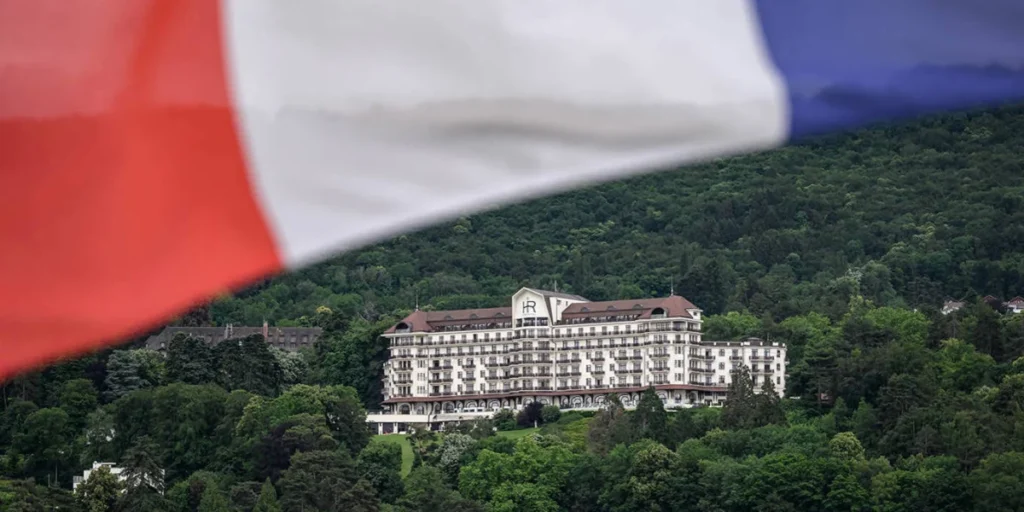
The French town of Évian-les-Bains, nestled between the dramatic peaks of the Alps and the shimmering expanse of Lake Geneva, serves this month as the stage for the G7 summit. For the gathered leaders of the world’s most advanced economies, the setting evokes a sense of enduring stability and post-war prosperity. However, this picturesque backdrop stands in stark contrast to the reality beyond the summit’s perimeter: a world defined by deepening economic insecurity, volatile political fragmentation, a rapidly accelerating climate crisis, and a pervasive, corrosive distrust in the very institutions that the G7 leaders represent.
At the epicenter of these interconnected crises lies a systemic failure that has long been relegated to the periphery of high-level policy discussions: extreme inequality. Whether measured by income, wealth, opportunity, or political influence, the disparity between the global elite and the rest of the population is no longer merely a symptom of a flawed economic model—it is the primary catalyst for the instability currently threatening the global order.
Main Facts: A Systemic Breakdown
The central thesis for the 2026 summit is clear: the G7 must pivot from viewing inequality as an unfortunate byproduct of growth to recognizing it as a fundamental destabilizer of global governance. For decades, the dominant economic paradigm assumed that a rising tide would lift all boats. Instead, we have witnessed a “great divergence,” where capital gains have vastly outpaced wage growth, creating a feedback loop of concentrated power.
The G7—comprising Canada, France, Germany, Italy, Japan, the United Kingdom, and the United States—collectively accounts for a significant portion of global GDP. However, their internal social contracts are fraying. In these nations, the middle class is shrinking, social mobility is stagnating, and the perceived legitimacy of democratic capitalism is under assault from populist movements fueled by the sense that the system is rigged.
Chronology: The Evolution of the Crisis
To understand how we arrived at this inflection point, one must look at the trajectory of the last two decades:
- 2008–2012: The Global Financial Crisis served as a wake-up call. While central banks moved to save the financial system, the recovery was K-shaped, leaving low-income households behind while asset owners saw their wealth recover—and surge—due to unprecedented monetary easing.
- 2015–2019: Political populism took root across the West. Brexit and the election of various anti-establishment figures signaled that large swaths of the electorate felt abandoned by globalization.
- 2020–2022: The COVID-19 pandemic acted as an accelerant. While “essential workers” faced health risks and wage stagnation, a small group of digital and financial titans saw their fortunes multiply, widening the wealth gap to historic proportions.
- 2023–2025: The intersection of high inflation and climate-related supply chain disruptions exacerbated the cost-of-living crisis. This period saw a shift from “trickle-down” rhetoric to a desperate search for “resilience,” yet policy remained focused on crisis management rather than structural reform.
- 2026 (Present): The G7 summit in Évian-les-Bains marks the point where “inequality fatigue” has reached a breaking point, forcing leaders to confront whether their current economic models can survive without a fundamental redistribution of power and resources.
Supporting Data: The Anatomy of Disparity
The data paints a harrowing picture of a world divided. According to recent reports from the World Inequality Lab and various multilateral institutions, the top 1% of the global population now owns more than 45% of total household wealth, while the bottom 50% owns less than 1%.
- Income Stagnation: In several G7 nations, real wages for low-to-middle-income workers have remained virtually flat since the late 1990s, despite consistent productivity gains.
- The Wealth Gap: Global billionaire wealth has increased by more than 80% since 2020, even as inflation pushed millions of families into food and energy poverty.
- Political Influence: Research indicates a high correlation between wealth concentration and the ability to influence legislative outcomes. Lobbying expenditures in G7 capitals have hit record highs, effectively creating a barrier to policies that would favor the general public, such as aggressive wealth taxation or robust labor protections.
- Opportunity Costs: Educational attainment, while rising globally, is increasingly gated by family wealth. The “social ladder” is becoming a relic of the past, as the children of the affluent consistently outperform those of the poor regardless of individual aptitude.
Official Responses: Between Rhetoric and Reality
In the lead-up to the summit, official statements from the G7 secretariats have begun to strike a different, more urgent tone. The draft communiqué suggests a newfound emphasis on “inclusive growth.”
France, holding the presidency, has proposed a “Global Solidarity Tax” on extreme wealth to fund climate transition projects in the Global South. German officials have signaled support for strengthening international labor standards, arguing that “fair competition” is impossible when worker rights are eroded to cut costs.
However, deep divisions remain. The United States and the United Kingdom continue to exhibit hesitation regarding aggressive taxation models, fearing that such measures could stifle innovation or trigger capital flight. Japan has focused its rhetoric on “human capital investment,” prioritizing education and training over direct wealth redistribution.
Despite these differences, the shift in language is palpable. The consensus is moving away from the “free market at any cost” ideology toward a “managed market” approach. The question remains: is this a genuine ideological shift, or a tactical retreat meant to appease public anger without disrupting the status quo?
Implications: The High Cost of Inaction
If the G7 leaders leave Évian-les-Bains without a concrete, actionable, and binding framework to address inequality, the implications for global stability are dire.
1. The Erosion of Democracy
When citizens lose faith that the economic system can provide for them, they stop trusting democratic institutions. This creates a vacuum that is inevitably filled by demagoguery and authoritarianism. The internal stability of the G7 nations is the bedrock of the current international order; if that bedrock cracks, the entire global architecture of alliances and trade agreements will follow.
2. Climate Injustice
Climate change is inherently unequal. The wealthiest nations and individuals contribute the most to carbon emissions, while the poorest suffer the most severe consequences. Without a policy framework that bridges this divide—through technology transfer, climate financing, and debt relief—the global south will become increasingly alienated, potentially leading to mass migration crises and the collapse of international climate negotiations.
3. Geopolitical Fragmentation
The current divide between the G7 and the rest of the world (often characterized as the “Global South”) is hardening. If the G7 continues to be perceived as a “rich man’s club” that ignores the plight of the majority, other power blocs—such as an expanded BRICS+—will find it increasingly easy to build coalitions based on the promise of a more equitable, multipolar world order.
Conclusion: A Path Forward
The G7 summit in Évian-les-Bains is a test of political will. The leaders gathered there must accept that the old playbook—characterized by austerity, deregulation, and a blind faith in market efficiency—has failed to prevent the current crisis.
Addressing inequality requires more than charity; it requires structural reform. This means reforming global tax regimes to prevent base erosion and profit shifting, strengthening the bargaining power of labor, investing in public goods like healthcare and education, and ensuring that the digital transition serves the many rather than the few.
As the summit concludes, the world will be watching to see if these leaders possess the courage to look past the beauty of Lake Geneva and recognize the gathering storm beyond it. Inequality is not an inevitable feature of the modern world; it is a policy choice. It is time for the G7 to choose differently.