The Great Yield Debate: Why Today’s 5% Bond Returns Are Reigniting the Stocks-Versus-Bonds Controversy
NEW YORK — For nearly two decades, the investing world operated under a predictable, low-interest-rate orthodoxy. With central banks holding rates near zero following the 2008 global financial crisis, fixed income offered little more than a nominal return, effectively forcing risk-tolerant and risk-averse investors alike into the equity markets.
Today, that landscape has fundamentally shifted. With high-quality bond yields comfortably hovering around 5%, financial advisors are fielding polarized inquiries from a bifurcated investor base. On one side are the traditional equity maximalists questioning the opportunity cost of holding any fixed income over a decade-long horizon. On the other are cautious savers asking a radical new question: If fixed income can reliably hit long-term retirement return targets, why bother with the stock market at all?
This clash of philosophies underscores a timeless market reality: differing risk tolerances and time horizons are precisely what make a market function. Yet, as investors grapple with attractive bond yields after a brutal decade for fixed income, financial experts argue that abandoning diversification entirely—in either direction—carries hidden, structural dangers.
Main Facts: The Resurgence of Fixed Income and the Re-Emergence of Extreme Allocations
The core debate centers on a simple macro-financial development: the return of yield. For generations, investors relied on a balanced portfolio approach, typically weighted between equities and fixed-income assets. However, the prolonged era of zero-interest-rate policy (ZIRP) conditioned a generation of market participants to view bonds as dead weight, while rewarding pure equity concentration, particularly in U.S. large-cap growth stocks.
Now, with 5% yields available on safe, high-quality bonds, investor psychology is fracturing into two distinct camps:
- The Equity Maximalist: An investor with a 10-year (or longer) time horizon who views bonds as an unnecessary drag on wealth generation. This perspective argues that the opportunity cost of missing out on superior stock market returns far outweighs the short-term comfort of fixed-income yields.
- The Fixed-Income Convert: An investor approaching or currently in retirement who questions the necessity of equity volatility. If an individual’s asset allocation model is built on an assumed 6.5% annual return, and safe fixed-income instruments can capture a large portion of that yield without drawdowns, the temptation to shift 100% of future contributions—or even an entire portfolio—into bonds becomes powerful.
These opposing viewpoints highlight a broader market tension: balancing the desire for absolute return against the human need for psychological comfort and capital preservation.
Chronology: How We Got Here—From ZIRP to the 5% Yield Era
To understand why investors are seriously debating all-bond portfolios today, it is necessary to trace the evolution of modern monetary policy and market behavior over the past century:
- The Historical Baseline (Pre-2008): For decades, traditional portfolio construction treated a mix of stocks and bonds as standard gospel. Bonds provided steady income and acted as a reliable counterweight during economic contractions.
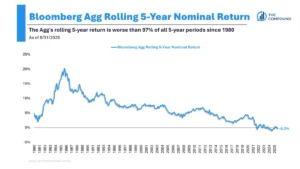
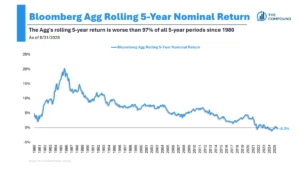
- The Post-Crisis Era (2009–2021): Following the Great Financial Crisis, central banks engineered a prolonged period of ultra-low interest rates. Bonds yielded virtually nothing, making equity concentration the undisputed winner of the 2010s. Diversification "didn’t work" because fixed income offered negligible returns.
- The Shock Therapy (2022–2023): Inflation surged, prompting central banks to execute one of the most aggressive tightening cycles in history. Both stocks and bonds experienced historic drawdowns in 2022—an outlier year that bruised fixed-income investors and challenged conventional hedging models.
- The Current Paradigm (Present Day): Yields stabilized around the 5% mark. For the first time in nearly 20 years, conservative investors have a viable alternative to stocks, sparking unprecedented conversations about abandoning equities altogether.
Supporting Data: Stocks vs. Bonds Through the Decades
When evaluating whether a long-term investor should completely abandon stocks or bonds, historical data offers vital context.
Long-Term Wealth Accumulation
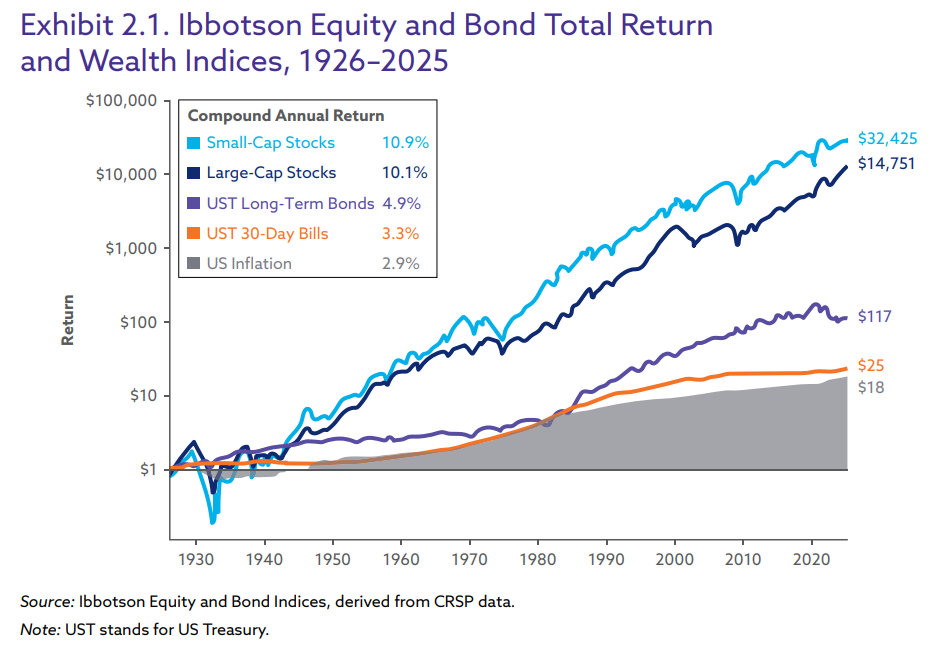
According to historical data compiled by Ibbotson and associates spanning the past century, equities consistently outperform fixed income over extended periods. The compounding power of corporate earnings and dividend growth heavily favors stocks over multi-decade horizons, creating a clear opportunity cost for investors who sit entirely in cash or bonds.
The Rolling 10-Year Win Rate
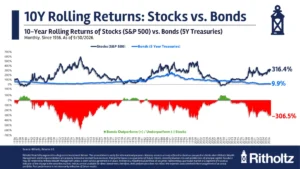
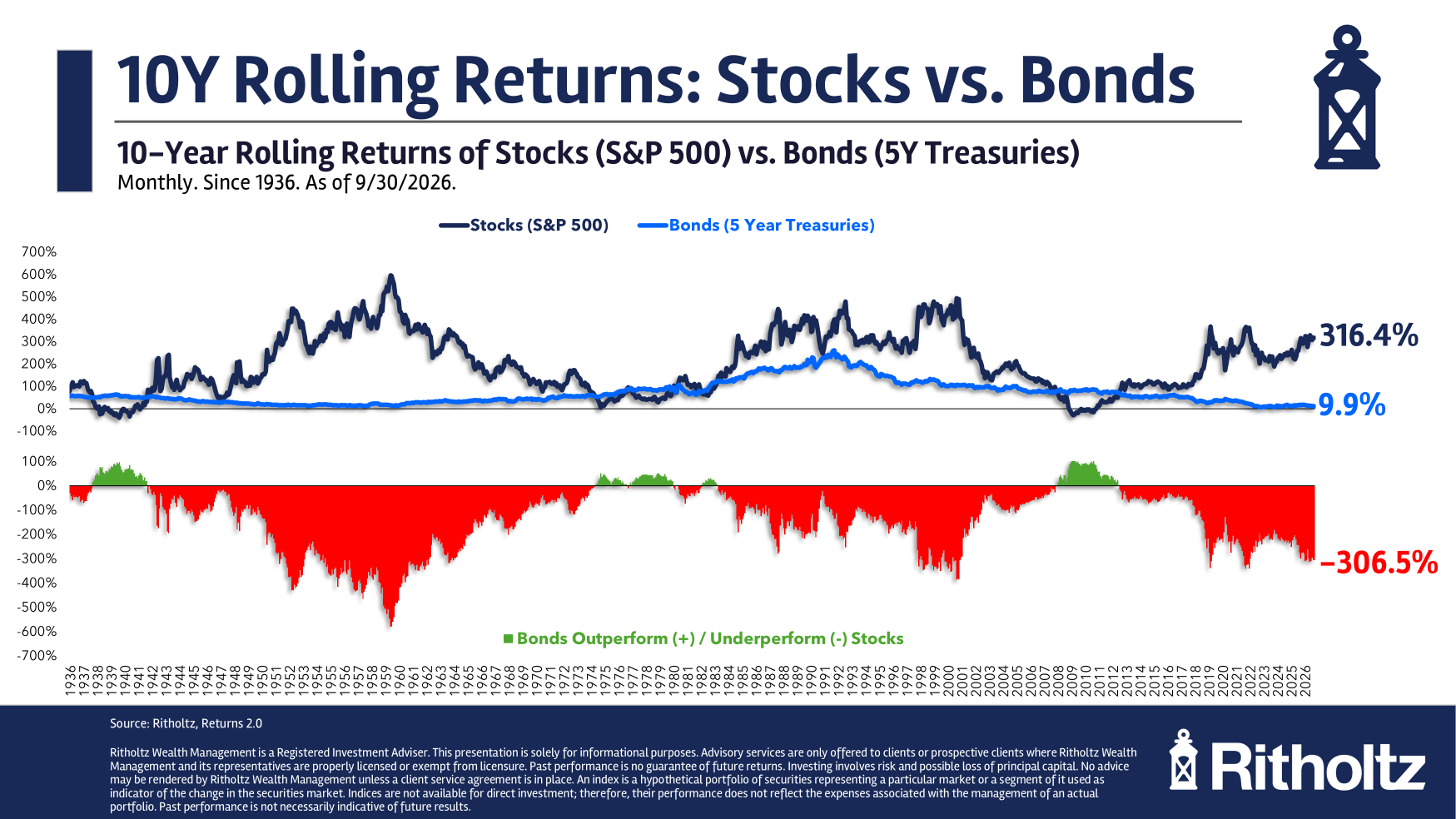
An analysis of rolling 10-year total returns for the S&P 500 versus 5-year U.S. Treasuries dating back to the late 1920s reveals that stocks beat bonds in roughly 83% of all 10-year periods.
However, history also reveals distinct "lost decades" for equities—notably the 1930s, the 1970s, and the 2000s—during which bonds successfully outperformed stocks.
The Hedge in Down Years
Bonds have historically justified their inclusion in a portfolio precisely when equities stumble. Examining historical down-years for the U.S. stock market:
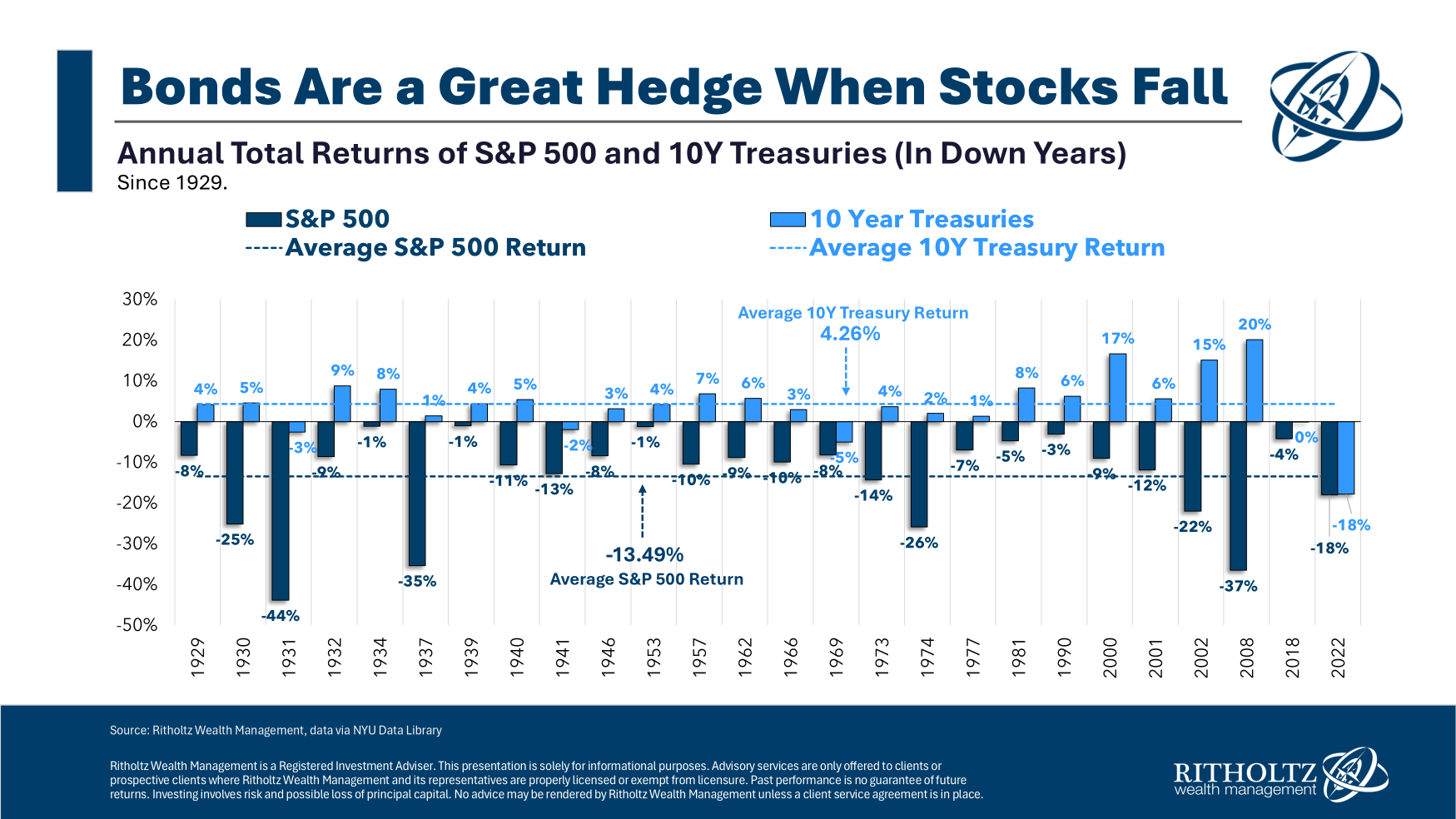
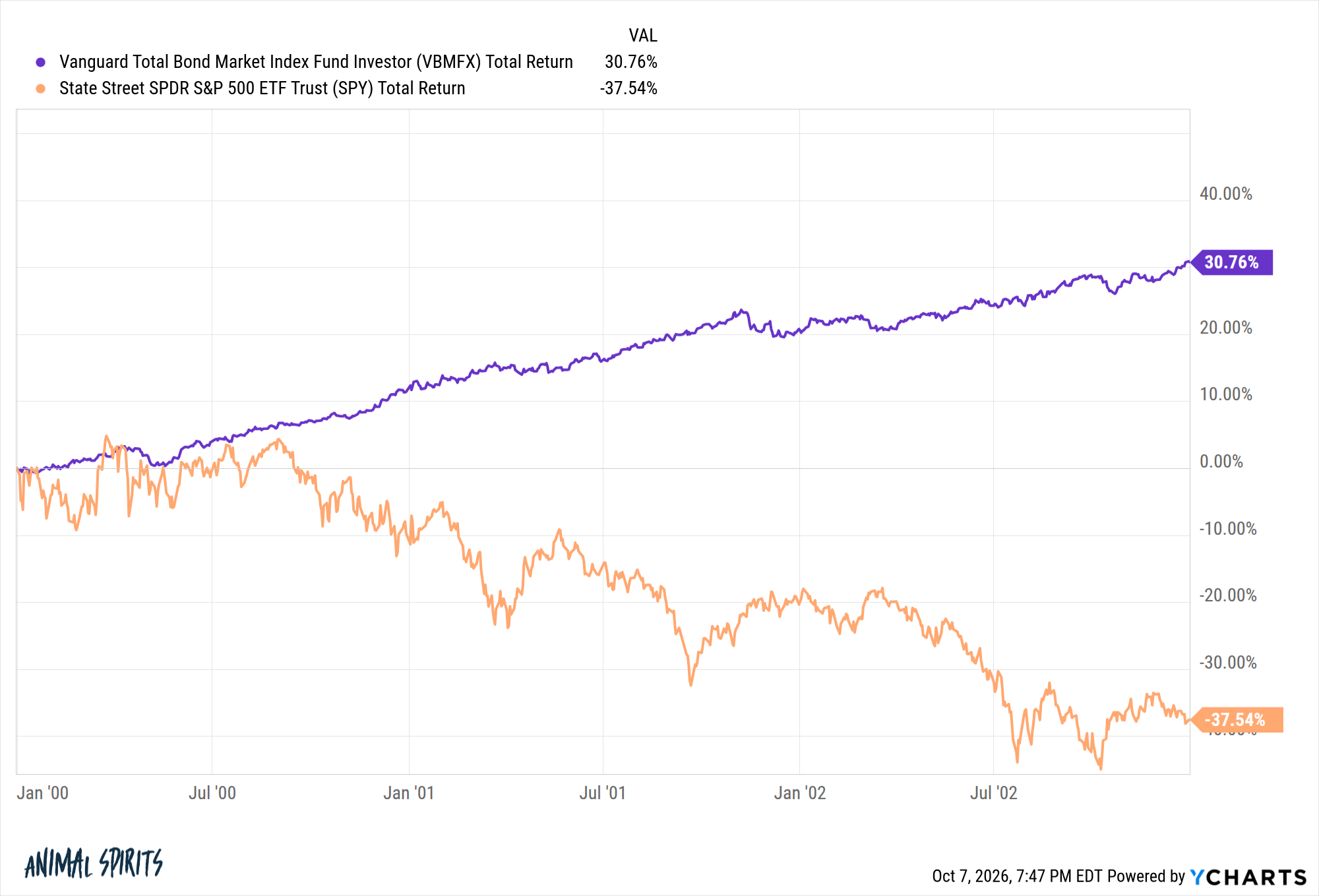
- In the 26 distinct down-years for the S&P 500, the average equity return was -13.5%.
- In those exact same years, bonds averaged a positive gain of 4.3%, outperforming stocks by nearly 18 percentage points.
During acute market panics—such as the bursting of the dot-com bubble (2000–2002) and the Great Financial Crisis (2007–2009)—high-quality bonds acted as an immediate flight-to-safety asset, protecting portfolios from catastrophic losses while equities plummeted.
Official Perspectives and Expert Analysis
Financial analysts and wealth managers emphasize that while spreadsheet math is important, behavioral finance dictates real-world investing outcomes.
The Case for Bonds as a Behavioral Valve
Even if an investor has a time horizon exceeding 10 years, owning fixed income is rarely just about maximizing raw mathematical returns. For many, bonds serve crucial psychological and practical functions:
- Emotional Hedge: A buffer against panic selling during severe market drawdowns.
- Behavioral Release Valve: Prevents investors from abandoning their strategy out of fear.
- Dry Powder: A source of liquid capital to reallocate into cheap equities during a market crash.
- Regular Income: Essential for retirees and near-retirees living off portfolio distributions.
The Hidden Dangers of an All-Bond Portfolio
Conversely, financial advisors warn against the seductive trap of an all-bond portfolio, even with 5% yields.
- Inflation Risk: Bond yields are nominal. If inflation spikes, the purchasing power of fixed-income payouts erodes. Over a 20- or 30-year retirement, inflation represents a silent tax that can drastically reduce a person’s standard of living.
- Reinvestment and Interest Rate Risk: If interest rates drop substantially in the future, investors relying entirely on maturing bonds will find themselves unable to replicate their previous yields, jeopardizing long-term return targets.
- The Power of Asymmetric Diversification: Historical volatility and return profiles demonstrate that adding a modest equity allocation (such as 20% stocks to an 80% bond portfolio) dramatically improves the overall return profile without inducing a proportional spike in volatility. In essence, having all your money in bonds may actually carry a higher long-term structural risk—the risk of obsolescence via inflation—than holding a small equity offset.
Implications for Modern Portfolios
As markets navigate this high-yield environment, the implications for individual investors are profound.
For decades, the dominant investment strategy has been extreme concentration—piling capital into U.S. large-cap equities because alternative asset classes offered unappealing returns. However, with fixed income once again offering legitimate, risk-free yields, diversification is poised for a comeback.
Investors are no longer forced to swallow excessive stock market volatility just to generate yield. Yet, substituting equity risk entirely for inflation risk by going 100% into bonds is a perilous gamble. The optimal path forward lies not in ideological extremes—whether championing 100% stocks or 100% bonds—but in recognizing that asset classes perform complementary functions.
Bonds hedge against deflationary crashes and provide steady income, while stocks hedge against inflation and drive long-term generational wealth. For the modern investor, the return of the 5% bond yield isn’t a signal to abandon the stock market; rather, it is an invitation to build a truly resilient, all-weather portfolio.