The Great Stall: Is the U.S. Housing Market Finally Finding Its Floor?
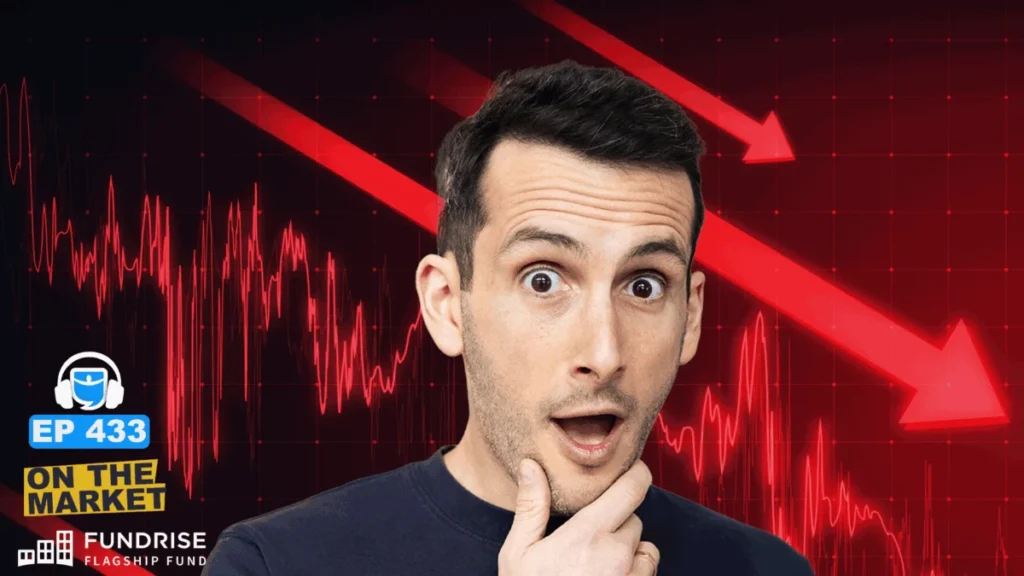
For years, the U.S. housing market has been caught in a tug-of-war between high interest rates, persistent inflation, and a stubborn lack of inventory. Industry observers, investors, and prospective homebuyers have spent months waiting for the "big move"—either a catastrophic crash or a robust recovery. However, according to recent market data analyzed on the On the Market podcast, the reality is far more nuanced: the market has entered a period of relative stability, often referred to as "The Great Stall."
While headlines continue to lean into narratives of extreme volatility, a closer examination of current demand and inventory suggests that the market may have finally hit its floor.
Main Facts: The State of the Market in 2026
The current housing landscape is characterized by a "wait-and-see" approach. Despite the prevailing sentiment of frustration among buyers and investors, the underlying data paints a picture of a market that is not collapsing, but rather waiting for a catalyst to break its current deadlock.
Key findings from recent market reports include:
- Rising Demand: Contrary to popular belief, housing demand is showing signs of resilience. Pending home sales are up approximately 9% year-over-year.
- Leading Indicators: The Mortgage Bankers Association’s Purchase Index, a primary gauge of future home-buying activity, has climbed 7% compared to the same period last year.
- Inventory Stability: National inventory levels remain essentially flat, refuting the "crash" thesis which would require a significant, sustained rise in available homes for sale.
- The "Lock-In" Effect: Homeowners remain firmly rooted in their current properties, largely due to the mortgage rate lock-in effect, which continues to suppress new listings.
A Chronological Look at the Current Cycle
To understand where the market is going, one must look at how we arrived here. The trajectory of the housing market over the past four years has been defined by three distinct phases:
1. The Post-Pandemic Correction (2022–2023)
Following the historic surge in prices during the pandemic, the Federal Reserve initiated a series of aggressive interest rate hikes to combat inflation. This immediately cooled the market, ending the era of "easy money" and causing mortgage rates to climb from sub-3% to well above 6%.
2. The Great Stall (2024–2025)
As rates stabilized, the market settled into a stalemate. Buyers were priced out by affordability constraints, while sellers refused to list their homes and forfeit their low-interest mortgage rates. This created a supply-demand vacuum where transaction volumes plummeted, but prices remained largely stagnant.
3. The Search for a Floor (2026–Present)
Recent data suggests we have reached the bottom of this corrective cycle. Despite 6.6% mortgage rates, the uptick in pending sales and purchase applications indicates that a baseline of demand has been established. The market is no longer free-falling; it is merely waiting for external economic shifts to signal the next move.
Supporting Data: Why a Crash Remains Unlikely
The "crash" narrative, which suggests that the U.S. is headed toward a 2008-style collapse, is not supported by current economic indicators.
The Absence of Forced Selling
A housing crash typically requires a massive influx of "forced sellers"—individuals who are unable to make their mortgage payments and are forced to sell or face foreclosure. Current data shows that foreclosure and delinquency rates remain at or near pre-pandemic levels. Without a spike in unemployment or a systemic failure in the lending sector, there is no evidence of the widespread financial distress necessary to trigger a crash.
New Listing Trends
New listings have remained remarkably flat, growing by only about 4.5% on a weekly basis over recent months. This suggests that even in a high-rate environment, current homeowners are not being forced to exit the market. The stability in listing volume acts as a buffer, preventing the kind of inventory glut that would lead to significant price erosion.
The Resilience of Employment
A critical component of housing stability is the labor market. With unemployment holding steady at 4.3%, the majority of homeowners remain gainfully employed and capable of servicing their debt. As long as the labor market remains robust, the floor under housing prices will likely hold.
Official Perspectives and Economic Influences
The future of the housing market is inextricably linked to broader economic forces, most notably the geopolitical situation in the Middle East and its impact on inflation.
The Geopolitical Factor: The Iran Conflict
The ongoing conflict involving Iran has introduced a layer of inflationary pressure that complicates the Federal Reserve’s path. Energy prices, supply chain logistics, and global market confidence are all influenced by the stability of the Middle East.
Market analysts suggest that a long-term peace deal could serve as the primary catalyst for lower mortgage rates. A cessation of hostilities would likely ease inflation fears, prompting a decrease in 10-year Treasury yields—the primary benchmark for mortgage rates. Conversely, if the conflict continues to drag on, the "higher for longer" interest rate environment may become entrenched, keeping affordability at current, stifled levels.
The Role of Mortgage Spreads
Mortgage rates are determined by two factors: the 10-year Treasury yield and the "spread" (the difference between the yield and the mortgage rate). While yields have remained elevated, the spread has actually compressed back to historical averages of about 190 basis points. This compression has been a vital success story, preventing mortgage rates from soaring even higher than they currently are.
Implications for Investors and Homebuyers
For those currently navigating the market, the environment offers both challenges and distinct opportunities.
Strategies for Investors
- Targeting New Construction: Builders are currently under immense pressure. Because they are sitting on inventory and facing rising costs, they are often willing to offer significant concessions, such as rate buy-downs or price reductions, to move units. Investors who can identify high-demand locations may find excellent value in new developments.
- Focusing on Fundamentals: In a "stalled" market, the quality of the asset matters more than ever. Investors should avoid speculative plays and focus on properties with high rental demand and solid underlying fundamentals.
- Predictability as an Asset: While the market is stagnant, it is also predictable. For investors who can make the numbers "pencil out" at current interest rates, the stability of the current cycle offers a rare opportunity to acquire assets without the fear of immediate, drastic market swings.
Advice for Prospective Homebuyers
- Ignore the Headlines: Mainstream media often focuses on dramatic swings that do not reflect the current reality of the housing market. Buyers should focus on local data and their personal financial situation rather than waiting for a "crash" that shows no signs of materializing.
- The Cost of Waiting: With the market likely at a floor, waiting for a dramatic decrease in prices may prove futile. If a buyer can afford the monthly payments and intends to stay in the home for the long term, current conditions offer a stable entry point compared to the unpredictability of the past few years.
Conclusion: Navigating the Great Stall
The U.S. housing market has successfully navigated the most turbulent phase of its post-pandemic cycle. While the days of sub-3% interest rates and runaway appreciation are firmly in the rearview mirror, so too are the fears of an imminent collapse.
We are currently in a "Great Stall"—a period of equilibrium where demand is muted but stable, and supply is constrained but not overflowing. Whether this stall breaks toward a recovery or a deeper, slower decline depends on variables beyond the housing market itself: inflation, global peace, and the resilience of the labor force. For the savvy participant, however, the current environment is not one of paralysis, but of calculated, careful movement. The market has found its floor; the question now is how long we will wait for the next floor to be built above it.