The Great Pendulum: Inequality, History, and the Future of the French Republic
By Harold James
July 17, 2026
The French political landscape, much like the broader architecture of Western democracy, has long functioned as a pendulum. For generations, the nation has oscillated between two distinct gravitational poles: the traditional, redistributionist struggles centered on class and capital, and the volatile, identity-driven eruptions of the culture wars. As we navigate the midpoint of this decade, history suggests that we are witnessing the start of yet another pivot. The cyclical nature of French governance—where economic policy gives way to moral and social upheaval—is not merely a matter of political fashion; it is a fundamental feature of a republic grappling with the legacies of its past.
The Manifesto of the Moment: A New Analytical Lens
In their seminal work, A History of Political Conflict: Elections and Social Inequalities in France, 1789–2022, economists Julia Cagé and Thomas Piketty provide a sweeping, data-driven synthesis of the last two and a half centuries of French political life. Originally released in France in 2023 and now widely discussed in the Anglophone sphere, the book serves as both a historical record and a manifesto for contemporary policymakers.
Cagé and Piketty’s thesis is rooted in the interplay between economic inequality and the ballot box. They argue that the evolution of political conflict in France is inextricably linked to the shifts in property ownership, tax structures, and the distribution of wealth. In an era defined by the return of high interest rates and the growing fragility of public debt, their analysis has transcended academic circles to become a focal point of debate in the halls of power from Paris to Princeton.
Chronology of Conflict: From the Revolution to the Modern Era
To understand the present, one must look at the long trajectory of French political evolution. Cagé and Piketty map this journey across several key eras:
- 1789–1848: The Birth of Property Politics. The post-revolutionary period was dominated by the "census suffrage" system, where only the wealthiest men could vote. This period established the foundational tension between the landed aristocracy and the burgeoning commercial class.
- 1848–1914: The Rise of the Left-Right Divide. The introduction of universal male suffrage transformed political conflict. The struggle shifted from who had the right to vote to how the state should manage the distribution of resources. The emergence of the socialist movement provided a clear binary against conservative, pro-property interests.
- 1914–1980: The Great Compression. Through two world wars, the Great Depression, and the post-war reconstruction, France experienced a dramatic reduction in wealth inequality. This era saw the rise of the "Brahmin Left" and the "Merchant Right," as political allegiances became increasingly tied to education and occupational status.
- 1980–2022: The Fragmented Republic. The current era is defined by a multi-polar conflict. The traditional left-right divide has eroded, replaced by a complex mosaic of cultural, geographic, and economic grievances. As Cagé and Piketty demonstrate, the "left" has lost its monopoly on representing the working class, while the "right" has struggled to reconcile its pro-market ethos with a nationalist electorate.
Supporting Data: The Anatomy of Inequality
The strength of the Cagé-Piketty analysis lies in its granular use of archival election data paired with fiscal records. By tracking the geographic and social composition of voters across centuries, the authors reveal that inequality is not just a statistical phenomenon—it is a political engine.
Key findings from their research indicate:
- The Educational Divide: In the late 20th century, the correlation between high education levels and left-leaning voting patterns became absolute. This created a disconnect between the "intellectual elite" and the manual labor force, a gap that populist movements have effectively exploited.
- Property Distribution: The authors demonstrate that political stability in France is highest when property ownership is broadly distributed. When capital concentrates—as it has in the current low-growth, high-asset-price environment—political volatility follows.
- Fiscal Burden: As of 2026, the cost of servicing France’s public debt has reached historic highs. The data suggests that when the state is forced to prioritize debt repayment over social welfare, the electorate inevitably drifts toward anti-establishment candidates who promise a radical restructuring of the social contract.
Official Responses and Academic Debate
The publication of A History of Political Conflict has elicited a wide range of responses from the French political establishment. Critics from the centrist camp argue that the authors rely too heavily on deterministic economic models, underestimating the role of European integration and global geopolitics in shaping French domestic policy.
"Piketty and Cagé offer a brilliant autopsy of the past," says one senior official within the Ministry of Economy and Finance. "However, the challenge of 2026 is not merely redistributive. It is about competitiveness in a de-globalizing world. We cannot simply tax our way out of a debt crisis when our industrial base is under pressure from global competitors."
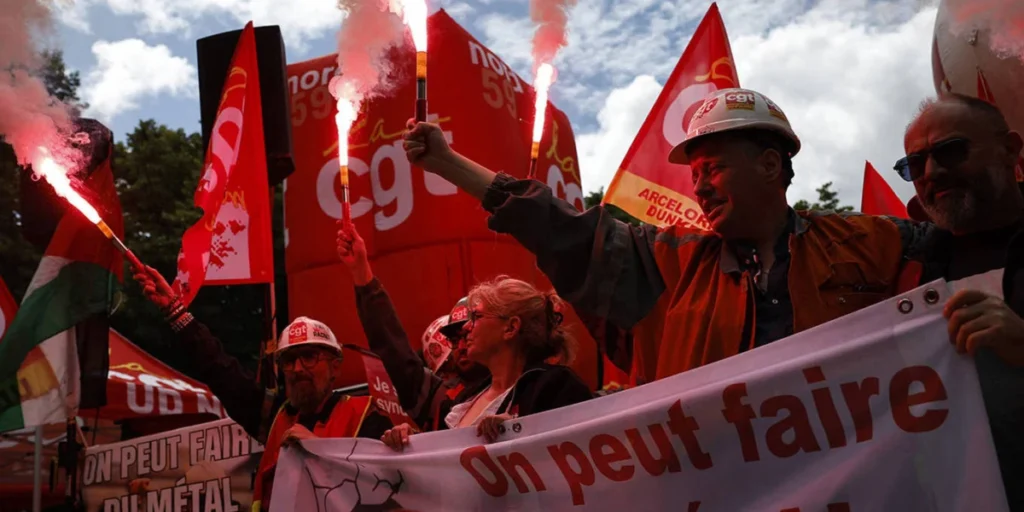
Conversely, labor unions and progressive organizations have lauded the work as the definitive framework for the next phase of French politics. They argue that the current economic strain—compounded by high interest rates—is the final proof that the neoliberal consensus has failed. They view the book’s call for "fiscal democracy" as the necessary blueprint for a new social contract that prioritizes social stability over market efficiency.
Implications: The Looming Pivot
The primary implication of this research is that the current political stalemate in France is not an anomaly; it is a predictable stage in a long-term cycle. As interest rates remain elevated, the ability of the French government to manage debt while funding its extensive welfare state becomes increasingly narrow.
1. The Death of the Centrist Consensus
The historical data suggests that the "Third Way" politics of the early 2000s are functionally dead. The polarization observed by Cagé and Piketty indicates that the electorate is moving toward "extreme" solutions—not necessarily because they are radical, but because they are the only ones offering a fundamental change to the distribution of wealth.
2. The Return of Class-Based Politics
While culture wars have dominated headlines for the past decade, the underlying economic realities are forcing a return to class-based mobilization. The intersection of housing costs, stagnant real wages, and the burden of servicing national debt creates a volatile mixture that favors movements that explicitly address the "have-nots" against the "haves."
3. The Institutional Stress Test
France’s constitutional framework, designed for a different era, is under severe pressure. The authors suggest that without significant reform to how tax policy is determined and how the state interacts with the economy, the current system may face a period of prolonged instability.
Conclusion: History as a Compass
The lesson of the last two and a half centuries, as distilled by Cagé and Piketty, is that societies can only tolerate high levels of inequality for so long before the political system forces a correction. Whether that correction comes through peaceful reform or systemic rupture depends on the ability of current leaders to acknowledge the historical currents moving beneath the surface.
As France looks toward the remainder of the 2020s, the pendulum is swinging away from the cultural distractions of the past few years and back toward the hard realities of political economy. The cycle is repeating, and the window for proactive, structural reform is narrowing. The history of the Republic is a story of resilience, but it is also a story of inevitable change. For those who study the past to navigate the future, the message of this manifesto is clear: the status quo is no longer a viable destination. The political landscape is being redrawn, and the ink is being provided by the very inequalities that history has taught us to fear.