The Great EV Retreat: Why Automakers Are Abandoning the U.S. Electric Market
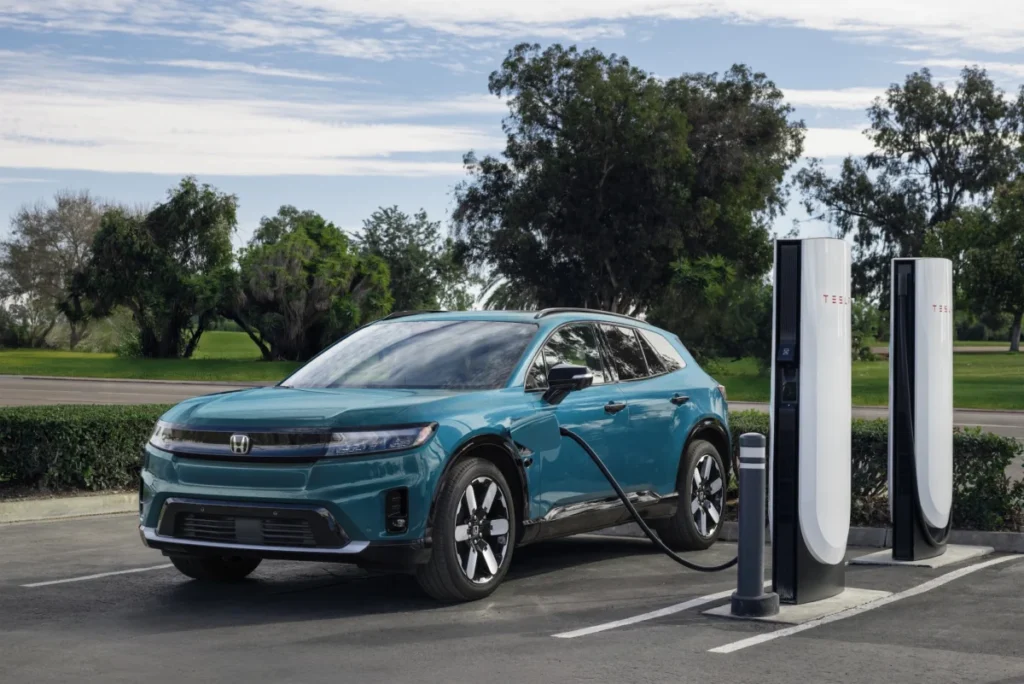
The landscape of the American automotive industry is undergoing a profound and somewhat paradoxical transformation. As global markets lean aggressively into electrification, the United States is witnessing a notable contraction. The official confirmation that the Honda Prologue has been discontinued—effectively removing the last all-electric vehicle from Honda’s U.S. portfolio—is not merely an isolated corporate decision. It serves as a bellwether for a broader, industry-wide retreat from the U.S. electric vehicle (EV) market.
This pivot away from battery-electric vehicles (BEVs) represents a stark reversal of the momentum seen just a few years ago. Driven by a volatile mix of regulatory hurdles, shifting consumer preferences, the expiration of federal incentives, and aggressive protectionist trade policies, automakers are recalibrating their long-term strategies.

The Factors Behind the Pullback
The demise of the Honda Prologue and the cancellation of several other high-profile EV programs are symptoms of a complex, multi-layered crisis. To understand why manufacturers are hitting the brakes, one must examine the confluence of economic and political pressures currently reshaping the sector.
The Fiscal Cliff: Post-Tax Credit Reality
The expiration of the $7,500 federal tax credit in late 2025 created a massive demand vacuum. For many consumers, this incentive was the primary bridge between the higher upfront cost of an EV and the parity of a traditional internal combustion engine (ICE) vehicle. Without that subsidy, the "affordability gap" widened significantly, pushing casual buyers back toward the reliability and lower entry prices of hybrids and gasoline-powered SUVs.

Trade Policy and Tariffs
Protectionist measures, specifically targeting Chinese-connected vehicle technology and high-tariff imports, have fundamentally disrupted supply chains. For companies like Polestar, which found itself barred from the U.S. market due to its ties to Geely, the geopolitical climate has rendered business models unsustainable overnight. Similarly, the "China factor" has forced domestic and non-Chinese automakers to rethink their production footprints, leading to the cancellation of models that relied on imported components or assembly lines.
The Shift to "Future-Proofing"
Automakers are not just retreating; they are pivoting. Companies like Tesla have explicitly stated that their resources are being reallocated from traditional consumer EVs to the "next frontier": AI, autonomous driving, and robotics. By shutting down the Model S and Model X lines, Tesla is betting that the future of the company lies in the Cybercab and the Optimus humanoid robot, a sentiment echoed by Volkswagen’s focus on autonomous microbus testing for its forthcoming robotaxi services.

Chronology of a Contraction: 2026’s Notable Departures
The list of departed or departing EVs has grown significantly throughout 2026. This timeline highlights the speed at which corporate strategies have shifted.
- January 2026: Tesla announces the end of the Model S and Model X. The Fremont assembly lines are repurposed for the production of Optimus robots.
- March 2026: Honda halts development of the Acura RDX, Honda 0 sedan, and 0 SUV. Hyundai announces the discontinuation of the Ioniq 6 in the U.S. market. Volvo pulls the plug on the EX30 and EX30 Cross Country.
- April 2026: Volkswagen drops the ID.4 from its U.S. production schedule, pivoting back to high-volume gas-powered SUVs like the Atlas.
- June 2026: Polestar is effectively barred from the U.S. market following U.S. Department of Commerce restrictions on Chinese-connected vehicle tech.
- July 2026: Honda officially confirms the end of the Prologue, marking the exit of the brand’s last remaining EV from the U.S. market.
Supporting Data: A Market in Flux
According to comprehensive data released in July by Kelley Blue Book and Cox Automotive, the state of the EV market is best described as "stalled." In the second quarter of 2026, 247,226 EVs were sold in the United States, accounting for approximately 5.8% of the total automotive market.

While there was a modest uptick in sales between the first and second quarters of 2026, these figures are significantly lower than the same period in 2025. The data reveals a sobering trend: fourth-quarter 2025 sales were 36% lower than in 2024, and while the gap has narrowed slightly, Q2 2026 sales remain 20.5% below 2025 levels. This data suggests that while the market is not dead, the era of rapid, speculative growth has been replaced by a period of painful consolidation.
Official Responses and Strategic Pivots
Honda’s "EV Hub" Abandonment
Honda’s decision to cancel its "0 Series" and the Prologue is perhaps the most drastic shift by a major legacy automaker. Initially, the 0 Series was the crown jewel of Honda’s electric future, intended for production at the company’s "EV Hub" in Ohio. By cancelling these projects, Honda has essentially signaled that it cannot compete with the current tariff-heavy environment and the aggressive pricing of existing domestic and international rivals.

The Case of Polestar and Volvo
The divergent fates of Polestar and Volvo illustrate the nuances of the current regulatory environment. While both are owned by Geely, Volvo managed to secure the necessary authorizations from the U.S. government to continue selling its connected vehicles. Polestar, conversely, was unable to clear these hurdles. The company’s response has been to focus on supporting its existing customer base and service network, even as its new car sales in the U.S. have effectively hit a wall.
Volkswagen’s Hybrid Hedge
Volkswagen’s strategy is a masterclass in risk management. By ending U.S. production of the ID.4, the company is not necessarily abandoning the electric dream, but rather delaying it. Their focus has shifted to the internal combustion engine and hybrid vehicles to maintain volume and profitability. Simultaneously, they continue to test autonomous ID. Buzz microbuses in Los Angeles, signaling that their long-term bet is on "Mobility-as-a-Service" (MaaS) rather than individual EV ownership.

Implications for the American Consumer
What does this mean for the average buyer?
- Diminishing Options: As manufacturers cancel entry-level and mid-market EVs, the choices available to consumers are narrowing. This shift likely pushes the average price of available EVs upward, as only high-end or luxury models remain profitable without federal subsidies.
- The Rise of the Hybrid: The "EV-or-nothing" narrative of 2022–2024 has been replaced by a more pragmatic approach. Consumers are gravitating toward hybrid technology, which offers the fuel efficiency of electrification without the range anxiety or infrastructure dependence of a pure BEV.
- Service and Resale Concerns: With several models now officially discontinued, owners of vehicles like the Prologue, the Ariya (2026 model year), and the Ioniq 6 are facing questions regarding long-term serviceability and potential depreciation. Automakers have promised to maintain service networks, but the "orphan status" of certain vehicles often impacts resale value.
Conclusion: A Slow Recovery?
The U.S. EV market is currently in a "K-shaped" recovery, where certain high-end, technologically advanced vehicles continue to find a niche, while the broad-market, mass-produced EVs struggle to gain traction in a landscape devoid of incentives and burdened by trade friction.

New entrants, such as the Rivian R2, offer a glimmer of hope, suggesting that there is still appetite for EVs that offer unique value propositions rather than just "compliance" versions of gas vehicles. However, the current trend is undeniable. The industry is retreating from the aggressive, top-down electrification mandates of the past, opting instead for a cautious, profit-first approach that prioritizes the stability of traditional internal combustion vehicles while the charging infrastructure and regulatory frameworks catch up.
For now, the electric future in the United States is not being cancelled, but it is certainly being delayed, redesigned, and, in many cases, put on indefinite hiatus.