The Great Bond Market Reckoning: Why a 5% Yield Changes Everything for Fixed-Income Investors
September 18, 2026
By Financial Market Analysis Desk
For over a decade, fixed-income investors lived in a desert of suppressed yields. Following the 2008 Great Financial Crisis and deepening through the economic shockwaves of the COVID-19 pandemic, traditional safe-haven assets offered virtually no reward for the risk of holding them.
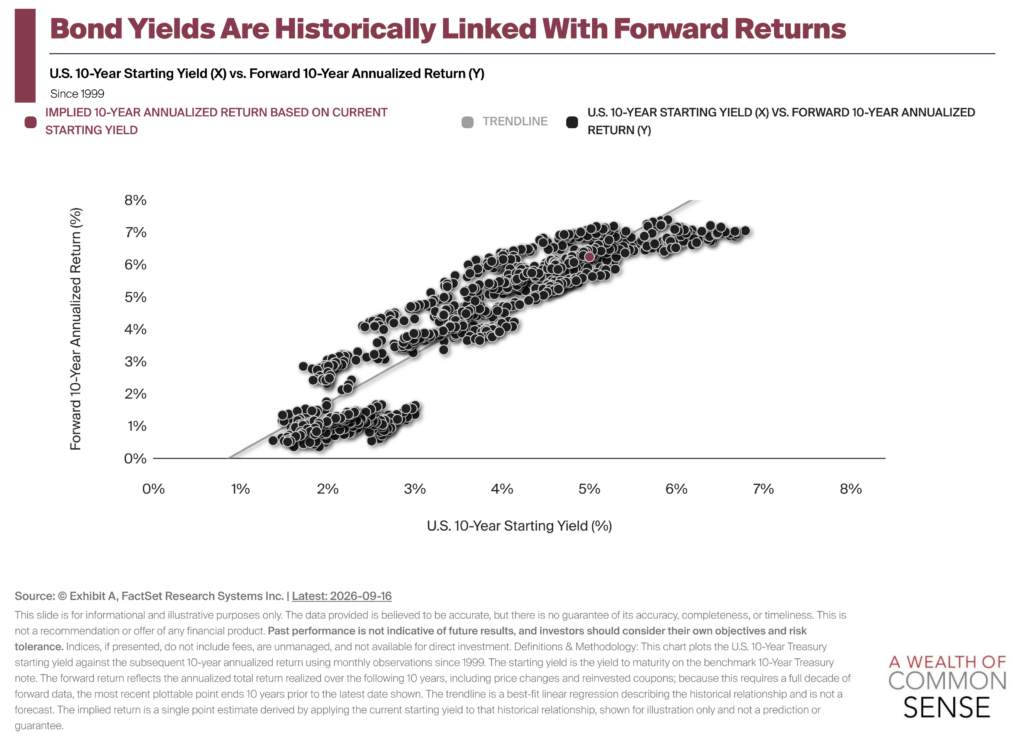
Today, the landscape has transformed entirely. With the average yield to maturity on the iShares Core U.S. Aggregate Bond ETF (AGG)—widely known as "the Agg"—hovering near 5.3%, and the 10-year U.S. Treasury yielding roughly 5%, the bond market is experiencing a massive structural shift.
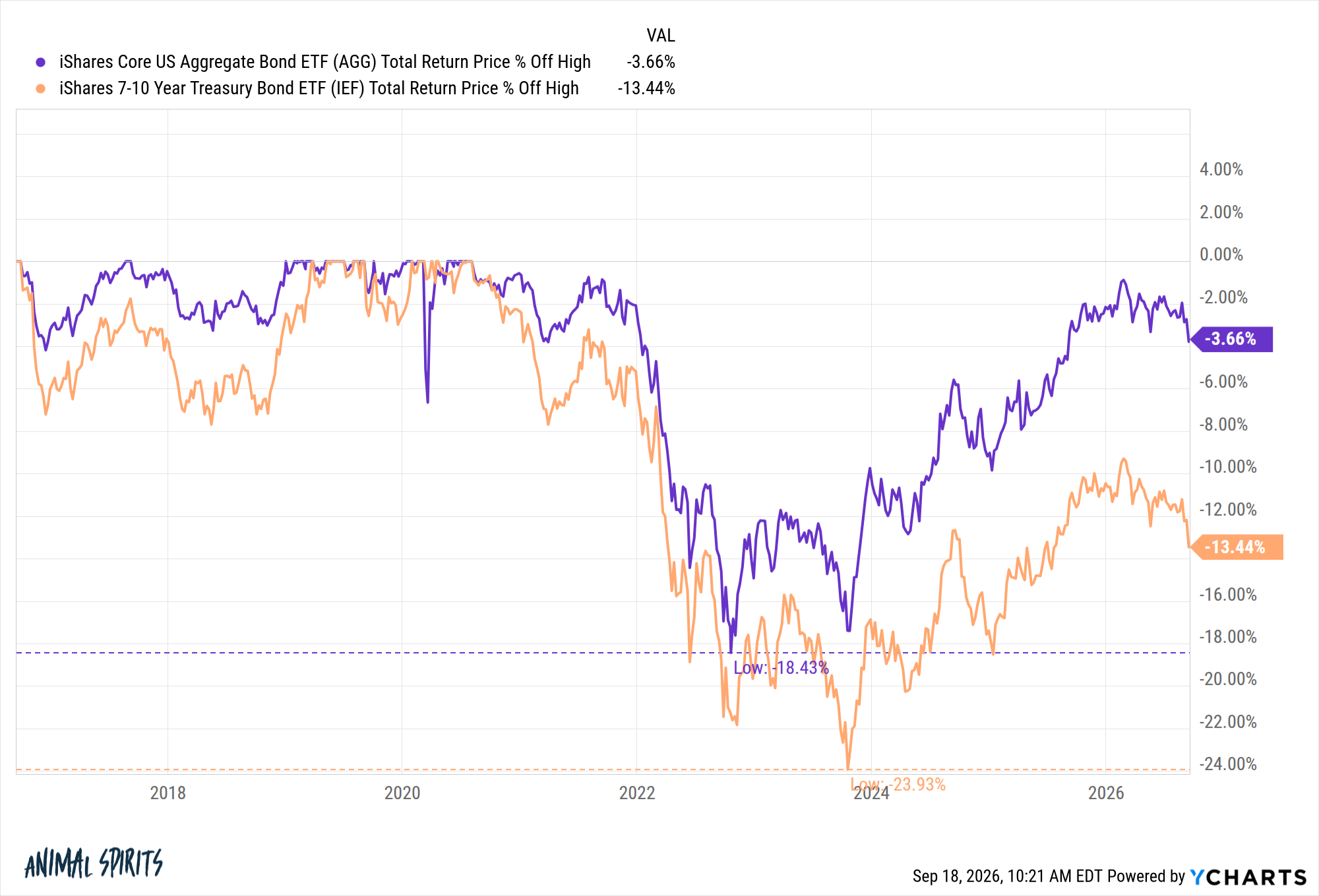
Yet, this resurgence comes on the heels of the worst bond bear market in modern history. As yields climbed from historic lows, long-suffering investors watched the Agg and 10-year Treasuries plummet by nearly 20% or more in total return drawdowns.
As investors re-examine fixed income, a fundamental question emerges: Is the current 5.2% yield on the Agg a guaranteed annual return, and what do these yields mean for the future of wealth management?
Main Facts: The Return of the 5% Bond
The modern fixed-income environment is defined by a stark contrast between past starvation and current abundance. Key metrics defining the current market include:
- The Agg’s Yield to Maturity: The benchmark iShares Core U.S. Aggregate Bond ETF now boasts an average yield to maturity of approximately 5.3%.
- The Treasury Benchmark: The 10-year U.S. Treasury note trades at a 5% yield, a dramatic rebound from sub-0.5% levels earlier in the decade.
- The Historical Pain: The transition from ultra-low to elevated interest rates triggered historic capital losses, with major bond indices dropping roughly 20% during the historic rate-hiking cycle.
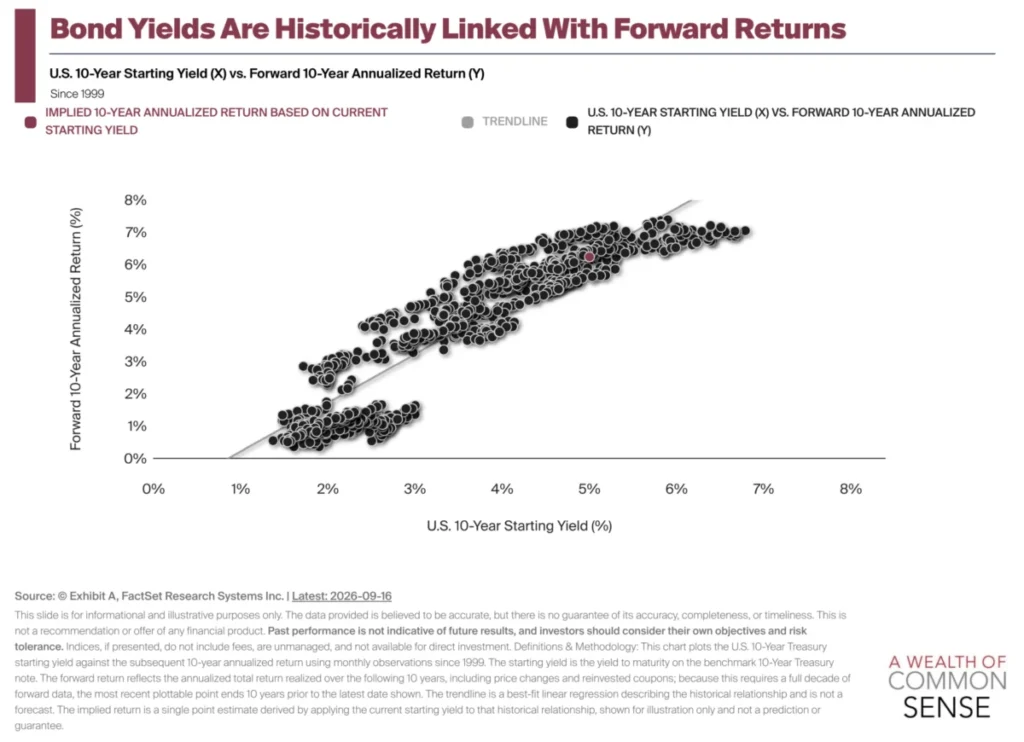
- The Math vs. Emotion Dynamic: Unlike equities, where future returns are heavily dictated by unpredictable investor sentiment and valuation multiples, bond returns are fundamentally anchored by math, with starting yields serving as reliable indicators of future medium-term performance.
Chronology: From Sub-Zero Realities to the Modern Yield Surge
To understand why a 5% yield feels so foreign—and so crucial—to today’s portfolios, it is necessary to trace the timeline of monetary policy and fixed-income performance over the past fifteen years.
The Post-Crisis Suppression (2010–2019)
In the wake of the 2008 financial collapse, central banks globally slashed interest rates to zero and engaged in aggressive quantitative easing. For much of the 2010s, the yield on the Agg languished below 3%. Investors seeking safety were essentially forced into accepting minimal returns, pushing capital aggressively into equities and alternative risk assets.
The Pandemic Slump (2020–2021)
When COVID-19 struck global markets in early 2020, the Federal Reserve dropped the benchmark federal funds rate back to 0% to 0.25%. Yields on the Agg plunged below 2%. Safe-haven government debt offered negative real returns when accounting for surging post-pandemic inflation.
The Worst Bond Bear Market in History (2022–2024)
As inflation roared back to life, the Federal Reserve embarked on one of the most aggressive monetary tightening cycles in its history. Bond prices and interest rates share an inverse relationship: as interest rates rocketed upward, existing bond prices cratered. The Agg and intermediate Treasuries suffered drawdowns nearing 20%, while long-term Treasuries (such as the TLT ETF) endured staggering drawdowns peaking near 40%. For bond investors who believed they held "risk-free" assets, the period was devastating.
The Stabilization and Normalization Phase (2025–2026)
By late 2026, interest rates found a higher plateau. While the rapid volatility has cooled, starting yields have locked in at generational highs, providing income levels not seen since prior to the 2008 crisis.
Supporting Data: Why Starting Yields Matter
When evaluating future performance, financial analysts frequently contrast the opacity of stock market forecasts with the predictive clarity of bond math.
Stocks vs. Bonds: Sentiment vs. Structure
Future equity returns depend on two driving forces:
- Fundamentals: Earnings growth and dividend payouts (which can be reasonably modeled).
- Emotions: Investor sentiment and valuation multiples (which are notoriously volatile and impossible to forecast with precision).
Bonds operate differently. While long-term bonds carry substantial risks regarding shifting inflation and interest rate trajectories, short-to-intermediate-term bonds are heavily tethered to their starting yields.
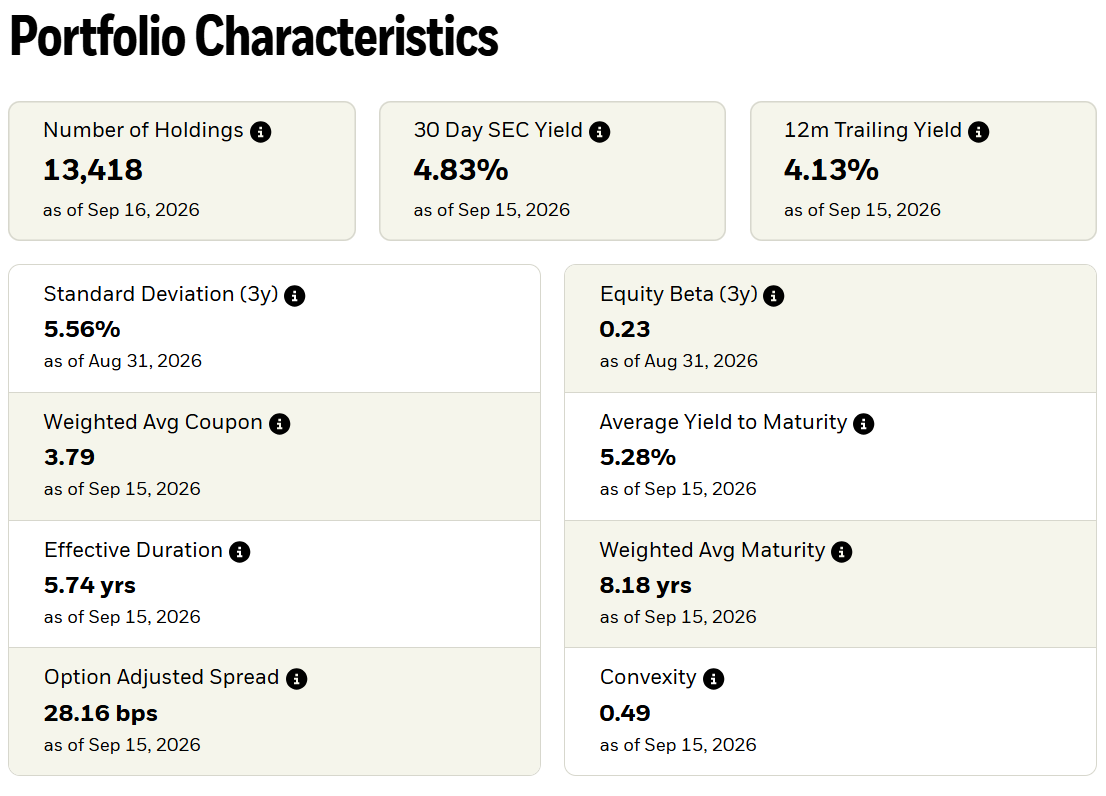
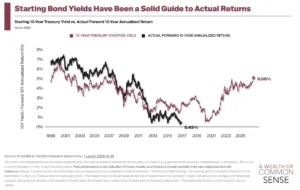
Data compiled by advisory networks such as Exhibit A tracking 10-year U.S. Treasuries since 1999 demonstrates a striking correlation between the prevailing yield at the time of purchase and the annualized return over the subsequent decade. While short-term deviations occur due to sudden rate fluctuations, the underlying yield inevitably dictates the long-term outcome.
The Mechanics of Recent Volatility
Consider how this math protects investors during turbulent periods. Earlier in the year, the 10-year Treasury rate moved from roughly 4.2% to 5%—representing a swift 20% increase in yields. In a vacuum, rising yields crush bond prices.
However, because the bonds were generating continuous income, the total return decline for the 10-year U.S. government bond was capped at around 3%. The cash flow generated by the coupon payments acted as an essential shock absorber against capital depreciation.
Expert Insights and Industry Perspectives
Addressing common investor misconceptions, market experts emphasize that a 5.2% yield on the Agg is not a guaranteed annual return. If inflation expectations remain stubbornly elevated, central banks could face pressure to push rates even higher, which would create short-term price pressure on existing holdings.
However, industry leaders analyzing the fixed-income landscape point out that over a 5-to-7-year horizon, an intermediate bond fund starting at a 5% yield is mathematically positioned to deliver annualized returns right around that 5% threshold.
During recent financial broadcasting segments—including live coverage from industry gatherings like the Future Proof conference featuring analysts such as Alex Morris of F/m Investments, alongside commentators Barry Ritholtz and Bill Sweet—experts unpacked the structural transition in wealth management. Discussions ranged from how baby boomer wealth is transitioning into high-yield cash and fixed instruments, to the practical mechanics of asset location in a post-zero-rate world.
The consensus among professionals is clear: while the road to higher yields was paved with historic pain, the destination offers investors a viable, predictable income engine that has been missing for over a decade.
Implications for Investors and Portfolios
The return of 5% yields fundamentally alters financial planning, retirement projections, and asset allocation strategies for several key reasons:
1. The Revival of the 60/40 Portfolio
For years, critics declared the traditional 60/40 stock-and-bond portfolio dead, arguing that low-yielding bonds could no longer provide downside protection or meaningful income. With intermediate bonds yielding over 5%, the 60/40 portfolio has regained its historical validity. Investors no longer need to stretch aggressively into high-risk junk bonds or speculative equities simply to generate baseline income.
2. De-Risking Retirement
Retirees and conservative investors relying on fixed income can finally outpace or match historical inflation benchmarks without taking on equity-market volatility. A diversified basket of high-quality corporate and government bonds yielding 5% provides a reliable stream of cash flow that eases the withdrawal pressure on retirement portfolios.
3. Re-evaluating Duration Risk
While short- and intermediate-term bonds offer predictable convergence toward their starting yields, long-term bond holders must remain cautious. As evidenced by deep drawdowns on long-duration assets, unexpected shifts in inflation and monetary policy can trigger steep capital losses. Investors must match their bond duration to their actual time horizon rather than blindly chasing long-term paper for slightly higher headline yields.
Conclusion
The era of financial repression is officially over. While the transition inflicted the worst bond bear market in generations, investors who weathered the storm are now rewarded with healthy, mathematically grounded yields. The 5% bond is back—and portfolio management will never look the same.