The Great Private Market Illusion: Why Public Equities Still Reign Supreme in an Era of Giants
September 24, 2026
By Ben Carlson
Main Facts
In contemporary financial discourse, a prevailing anxiety haunts technology workers, retail investors, and seasoned market observers alike: the fear of missing out on the private markets. The core premise of this narrative suggests that because modern tech giants are choosing to remain private for much longer periods, they capture the lion’s share of their exponential growth before ever offering shares to the public.
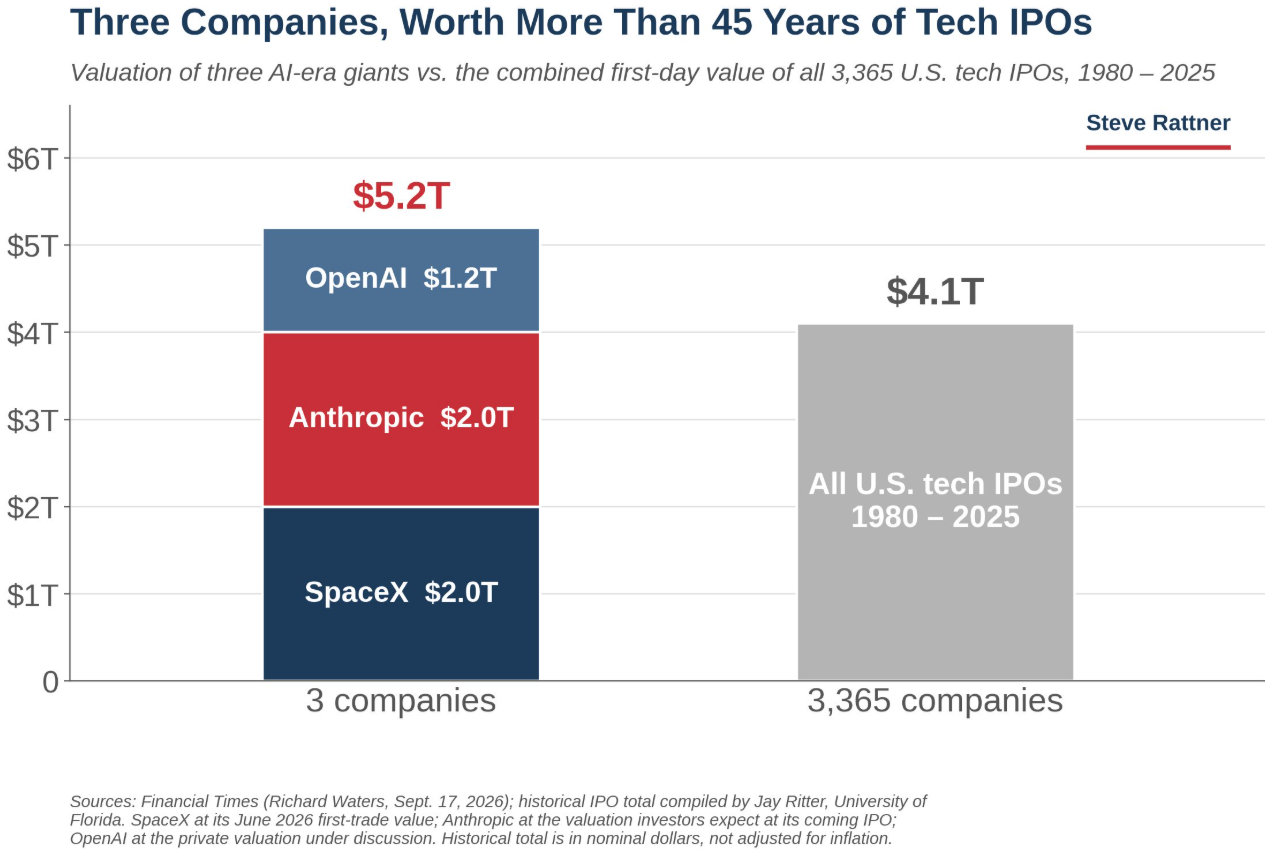
Consider the historical contrast. When Amazon went public in the 1990s, it did so with a relatively modest market capitalization of around $440 million. Fast forward to the current market landscape, where colossal entities like SpaceX completed initial public offerings at valuations nearing $2 trillion, while market estimates project that upcoming public debuts for artificial intelligence pioneers OpenAI and Anthropic will easily eclipse the $1-trillion mark each.
Data compiled by financial analyst Steve Rattner underscores this monumental shift, revealing that these three companies alone are estimated to be worth more than the combined value of every single U.S. technology IPO executed since 1980. With over 1,800 "unicorns"—privately held startup companies valued at $1 billion or more—currently operating globally with a collective valuation of $9.2 trillion, the surface-level conclusion appears grim for traditional public market participants.
Yet, despite this massive migration of capital and innovation into private corridors, the public stock market has not only survived; it has thrived remarkably, challenging the notion that passive, index-based, or Boglehead strategies are inherently disadvantaged.
Chronology: The Evolution of Public vs. Private Markets
To understand how the current ecosystem developed, it is vital to examine the historical timeline of corporate lifecycles and market dynamics over the past three decades.
- The 1990s Dot-Com Era: Companies routinely accessed public markets early in their development cycles. Venture capital pools were significantly smaller, forcing high-growth firms to seek public capital to scale operations, fund infrastructure, and provide liquidity to early backers. Amazon’s modest $440 million public debut is a textbook example of this era.
- The 2000s Post-Crisis Shift: Following the dot-com crash and the 2008 global financial crisis, regulatory burdens on public companies increased (exemplified by the Sarbanes-Oxley Act). Simultaneously, private equity, sovereign wealth funds, and institutional venture capital expanded exponentially, creating an unprecedented pool of private liquidity.
- The 2010s Decade of the Unicorn: The proliferation of cloud computing, mobile technology, and software-as-a-service (SaaS) allowed startups to scale rapidly with minimal capital expenditure. Backed by private funding rounds that routinely reached billions of dollars, companies like Uber, Airbnb, and SpaceX chose to delay their IPOs for well over a decade.
- The Mid-2020s Artificial Intelligence Boom: The paradigm shifted entirely with the advent of generative AI. Capital requirements for training foundational models skyrocketed, drawing massive investments from tech monoliths. Companies such as OpenAI, Anthropic, and SpaceX achieved unprecedented multi-trillion-dollar valuations entirely behind closed doors, intensifying debates over whether traditional public indexes were being fundamentally bypassed by the modern economy’s true growth drivers.
Supporting Data: Debunking the Myth of Public Irrelevance
The widespread belief that public equity investors are starving for returns due to the private market boom dissolves rapidly upon examining actual historical data.
1. The Extraordinary Performance of the Nasdaq 100
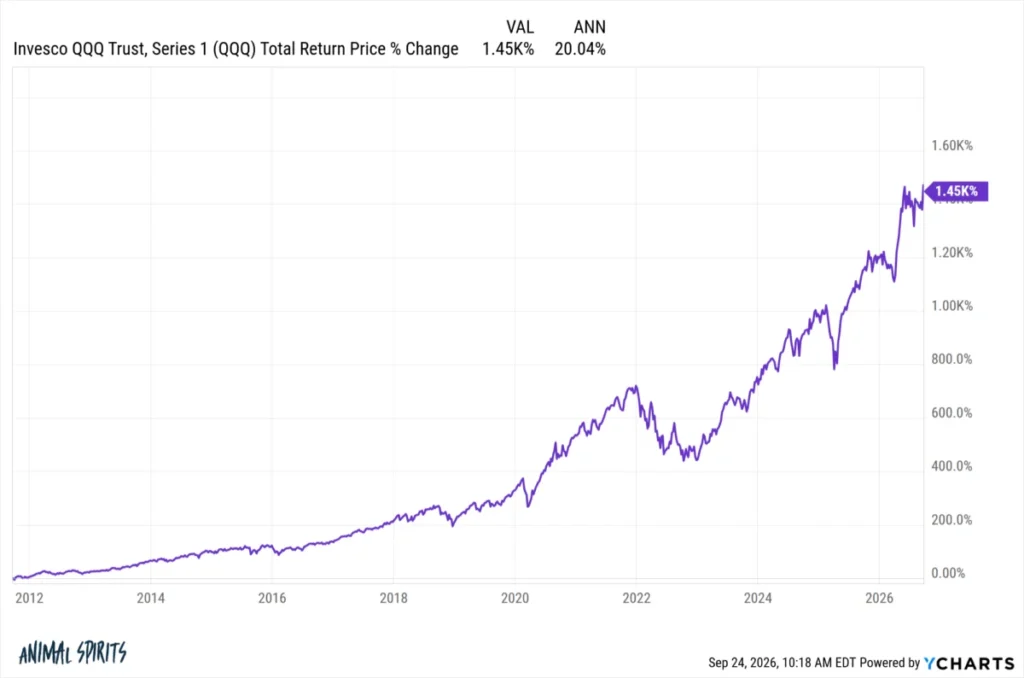
While tech workers often point to the dazzling valuations of private startups, the performance of the tech-heavy Nasdaq 100 over the past fifteen years tells a vastly different story. The index has compounded at an annualized rate of roughly 20% per year over a decade-and-a-half. This represents arguably the greatest secular tech bull market in financial history—achieved entirely without the direct inclusion of most private unicorn startups during their formative growth phases.
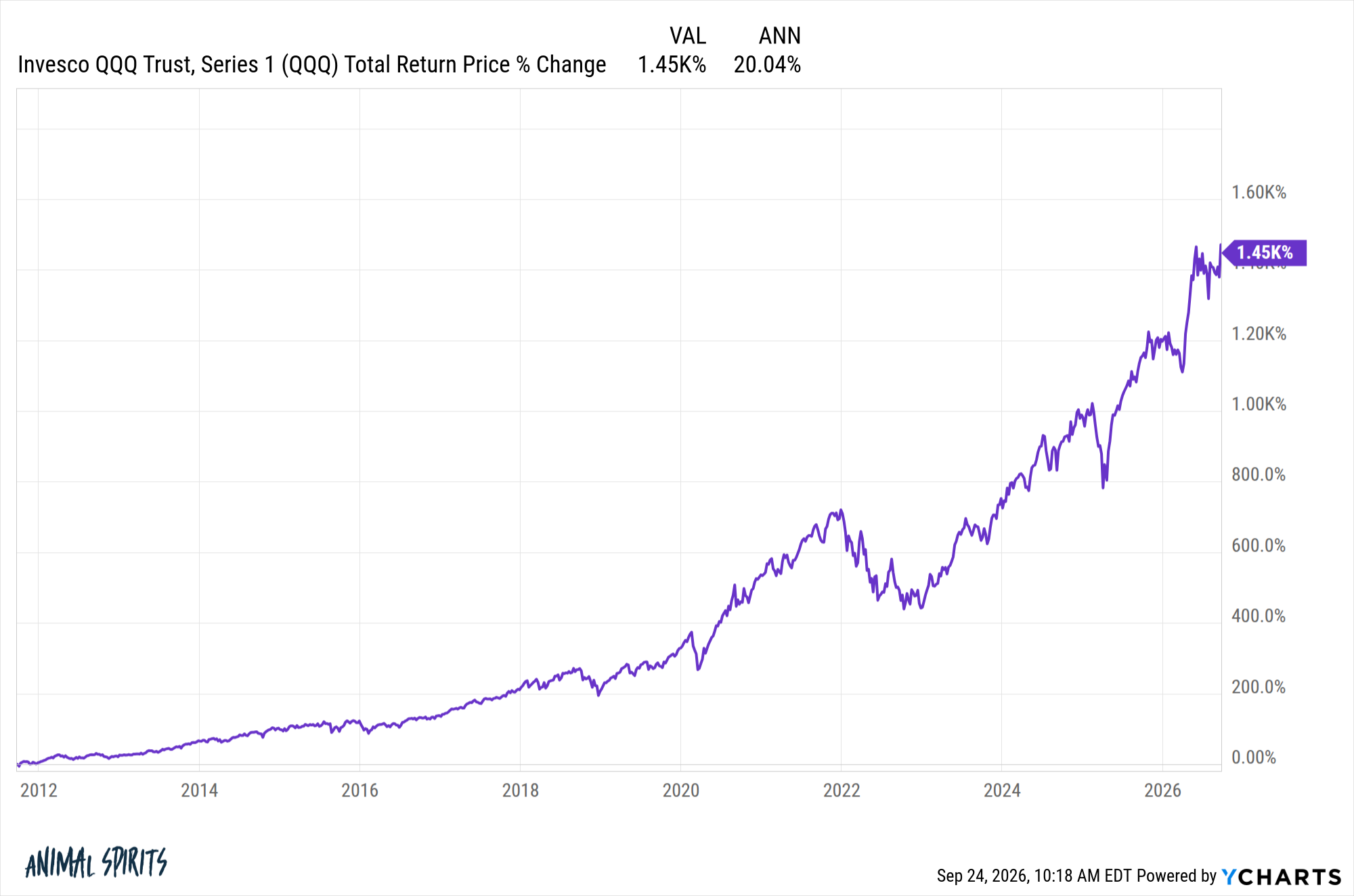
It is statistically probable that this broad-based public index performance outperformed 90%—if not more—of all active venture capital funds operating over the same timeframe. Nvidia alone has surged nearly 14,000% over the past decade. While fringe private companies may have matched or exceeded these returns, the accessibility of those gains was strictly limited to a hyper-exclusive tier of institutional investors and insiders.
2. The Power Law and Startup Failure Rates
The allure of startup equity often blinds participants to the harsh mathematical realities of venture capital. According to Bureau of Labor Statistics (BLS) data, nearly half of all new businesses fail within their first five years of operation. Over a ten-year horizon, approximately two-thirds of startups vanish entirely.
Analyses of technology startups specifically reveal that venture capital is, by structural design, a "power law" game. The vast majority of early-stage investments break even or result in total loss, leaving one or two outliers to shoulder the financial burden and generate the fund’s entire return. For the average retail or even accredited investor, picking the singular winning ticket is akin to playing the lottery.
Furthermore, historical data tracking companies post-IPO frequently reveals underwhelming performance. Many firms that stayed private for extended periods did so because private market investors aggressively overvalued them during late-stage funding rounds, leaving little upside for public market buyers once the shares finally traded openly.
3. Proxy Exposure via Mega-Cap Acquisitions and Stakes
Public market investors are not entirely walled off from private innovation. Over the past two decades, the "Magnificent Seven" (Mag 7) technology giants have executed more than 700 strategic acquisitions. When a disruptive competitor or groundbreaking technology emerges in the private sphere, these public behemoths frequently buy them out outright, funneling those innovation-driven profits directly back into the earnings reports of public shareholders.
In addition to outright acquisitions, public giants act as venture capitalists themselves. Industry leaders like Microsoft, Amazon, Alphabet (Google), and Nvidia hold significant equity stakes in top-tier private AI laboratories such as OpenAI and Anthropic. Through these symbiotic relationships, public equity holders gain indirect economic exposure to the bleeding edge of technological advancement without assuming the naked risk of an early-stage startup.
Official Responses and Expert Perspectives
Financial educators, economists, and market commentators have increasingly addressed this tension as passive investing faces scrutiny from tech-centric demographics.
Proponents of traditional indexing, often aligned with the Boglehead philosophy, maintain that simplicity, low fees, and broad diversification remain the bedrock of sustainable wealth generation. Commentators note that while the narrative of "missing out" makes for compelling discussions in tech circles, it fundamentally misdiagnoses where long-term risk and reward intersect.
Industry experts emphasize that venture capital and private equity firms market their asset classes using survivorship bias—highlighting the generational successes while quietly burying the systemic failures. Financial planners consistently advise that while allocating a small speculative slice of a portfolio to private investments or individual tech startups can be acceptable for risk-tolerant individuals, treating them as core wealth-building vehicles exposes portfolios to extreme volatility and illiquidity.
Implications for Modern Investors
The ongoing maturation of private markets and the delayed timeline of modern IPOs carry profound implications for the future of portfolio management, exchange-traded funds (ETFs), and individual wealth strategies.
1. Reassessing the Role of ETFs
The traditional index fund is not broken; rather, it has adapted to absorb economic value through corporate consolidation. Because modern public giants function as conglomerates and venture incubators, holding a broad-based index fund (such as the S&P 500 or the Nasdaq 100) inherently captures the monetization of private innovation through corporate acquisitions and strategic partnerships.
2. The Illusion of Alternative Investments
The democratization of private markets through various alternative asset platforms has gained momentum, but investors must navigate high fee structures, lock-up periods, and asymmetric information. The historical outperformance of private markets is largely concentrated in the top decile of fund managers—access to whom remains restricted to institutional endowments and ultra-high-net-worth individuals.
3. A Balanced Approach to Wealth Creation
For investors caught between the traditional Boglehead philosophy and the fast-paced world of tech startups, the path forward requires clear categorization of capital:
- Core Portfolio: Broad market public equities and low-cost ETFs should remain the foundation for long-term financial security, offering proven liquidity, transparency, and compounding power.
- Satellite Portfolio: Capital allocated to venture investments, individual stock picks, or speculative private equity should be viewed strictly as "lottery tickets"—money that the investor is entirely prepared to lose.
Ultimately, while the financial landscape has undeniably shifted toward longer private lifecycles, the public markets remain an extraordinarily powerful engine for wealth creation, easily capable of rewarding patient investors who refuse to let the myth of the private market dictate their strategy.