The Genetic Divide: Navigating the Ethical Frontier of Human Enhancement
By Daron Acemoglu
July 6, 2026
Main Facts: The Convergence of Genomics and Artificial Intelligence
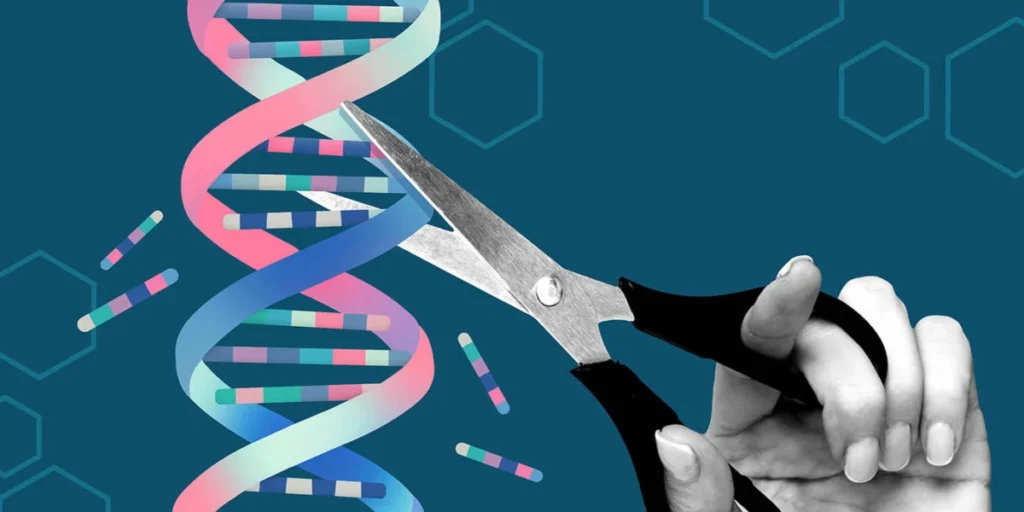
We stand at a precarious threshold in human history. For millennia, our biological makeup has been determined by the lottery of natural selection and the slow, grinding process of evolution. Today, that paradigm is being dismantled. Genetic-engineering tools, once the stuff of speculative fiction, are now operational realities, bolstered by the exponential processing power of Artificial Intelligence (AI).
The core concern is no longer whether we can edit the human germline, but who will be allowed to, and what the long-term consequences will be for the social contract. As AI-driven algorithms become increasingly proficient at identifying genetic markers for physical and cognitive traits, the ability to "design" progeny is transitioning from theoretical possibility to a premium service. Without robust, proactive policy intervention, we risk hurtling toward a bifurcated society—a tiered civilization where economic privileges are no longer merely extrinsic, but are encoded directly into our biological architecture.
Chronology: The Path to the Present
The journey to our current crossroads has been marked by rapid technological leaps that have consistently outpaced our regulatory frameworks.
- 2012: The discovery of CRISPR-Cas9 by Jennifer Doudna and Emmanuelle Charpentier revolutionized gene editing, offering a precise, relatively inexpensive method for modifying DNA.
- 2018: The scientific community was shocked by the revelation of the first gene-edited infants, sparking a global moratorium on germline editing. However, the precedent had been set.
- 2022–2024: The "AI Boom" accelerated the mapping of complex polygenic traits. AI models began successfully predicting correlations between specific genetic variants and cognitive outcomes, physical endurance, and disease resistance.
- 2025: Commercial entities began offering "polygenic risk score" screenings for embryos, effectively creating a marketplace for selecting "optimal" biological outcomes.
- 2026: We now see the integration of AI-assisted gene-editing pipelines, which reduce the likelihood of off-target mutations, making the process safer and more commercially viable than ever before.
Supporting Data: The Biological Inequality Gap
The economic implications of this technology are staggering. Current market data indicates that high-end fertility services incorporating advanced genetic screening cost upwards of $150,000 per cycle. In a global economy already plagued by widening wealth disparities, this creates an insurmountable barrier to entry for the working and middle classes.
According to recent socio-economic modeling, if left unregulated, the "biological divide" will exacerbate existing inequalities by a factor of three over the next fifty years. While the wealthy will be able to purchase enhancements that confer biological advantages—such as increased resistance to hereditary diseases, enhanced immune responses, and higher cognitive potential—the vast majority of the global population will remain subject to the random, and often cruel, distribution of genetic traits.
The data suggests that this is not merely a matter of health; it is a matter of future labor-market competitiveness. If a subset of the population is genetically optimized for specific intellectual or physical tasks, the baseline for "employability" will shift. Those who cannot afford these enhancements may find themselves systematically excluded from elite academic and professional circles, effectively turning economic inequality into a permanent, hereditary caste system.
Official Responses and the Governance Crisis
The international response to the rise of designer babies has been fragmented. While bodies like the World Health Organization (WHO) and the UNESCO International Bioethics Committee have called for a "global framework" to govern human genome editing, actual enforcement remains toothless.
Many nations, fearing a loss of competitive edge, have been hesitant to implement strict bans. In Silicon Valley and biotech hubs in Asia, there is a prevailing sentiment that strict regulation will only drive the industry underground or to jurisdictions with lax oversight.
The Institutional Opportunity:
Unlike AI, which involves complex, decentralized systems that are notoriously difficult to regulate, gene editing is a centralized clinical process. It requires high-tech laboratory infrastructure, expensive sequencing equipment, and highly trained specialists. This makes it an ideal candidate for regulation. If we treat gene-editing technologies not as private consumer goods but as public-health infrastructure, we might be able to democratize access. By treating essential gene therapies as a universal right, we could mitigate the risk of a "tiered society," ensuring that the technology is used to eradicate disease rather than to create a biological aristocracy.
Implications: The Future of the Human Experience
The shift toward genetically engineered humanity challenges the very foundations of equality and justice. If meritocracy is the bedrock of our political systems, what happens when merit is manufactured rather than cultivated?
The Erosion of Human Agency:
If an individual’s intellectual or physical capabilities are predetermined by parental wealth and laboratory intervention, the concept of personal achievement becomes fundamentally altered. We risk creating a society that values "optimization" over "diversity," potentially narrowing the scope of human experience and resilience.
The Societal Fracturing:
Social cohesion relies on the shared belief that all human beings are born with an equal baseline of worth. If we create a biological hierarchy, the empathy that binds society together could evaporate. Those who are "un-enhanced" may be viewed as fundamentally inferior by those who have been "upgraded," leading to new forms of discrimination that are justified not by race or class, but by perceived genetic "quality."
The Path Forward:
The urgency of this moment cannot be overstated. We must move beyond the binary debate of "pro-science vs. anti-science." Instead, we must engage in a rigorous, global dialogue regarding the purpose of these technologies.
- Public Health Mandates: We must prioritize the use of gene editing for the elimination of catastrophic hereditary diseases rather than the enhancement of non-medical traits.
- Global Transparency: We need a robust international registry for all germline editing procedures to prevent clandestine, unethical experiments.
- Equitable Access: If we determine that certain genetic enhancements are beneficial to the human condition, we must ensure they are distributed through public-health channels, preventing them from becoming the exclusive domain of the ultra-wealthy.
Conclusion
The tools to rewrite the code of life are in our hands. While the synergy of AI and genomics promises to eradicate some of humanity’s oldest enemies—inherited disease and biological fragility—it also threatens to ignite our deepest conflicts. We are not merely engineering the humans of the future; we are engineering the future of human equality.
If we choose the path of unchecked commercialization, we will likely wake up in a world where biology is the ultimate arbiter of fate. If we choose the path of responsible governance and public equity, we might harness these powers to foster a more resilient, healthier, and truly more equitable species. The choice is ours, but the window for making it is closing rapidly. We must act with both caution and courage, ensuring that our biological future reflects our highest values, not our deepest insecurities.