The Future of Wearables: Are Even Realities’ G2 Smart Glasses the Productivity Tool We’ve Been Waiting For?
For years, the promise of “smart glasses” has hovered on the horizon of the consumer tech industry. Visionary executives have long touted eyewear as the natural successor to the smartphone—a seamless, heads-up interface that could liberate us from the tyranny of staring at our palms. Yet, the reality of the market has remained tethered to the very devices they seek to replace. Even the most sophisticated hardware today often feels like an expensive accessory rather than a standalone computing platform.
The Even Realities G2 smart glasses are the latest entry in this high-stakes race. They present a compelling, premium aesthetic and a distinct, neon-style monochromatic heads-up display (HUD). However, as the industry continues to pivot toward augmented reality, the G2 serves as a case study in both the potential and the current limitations of wearable tech. While the G2 represents a significant hardware leap over its predecessor, it underscores a fundamental industry truth: brilliant hardware is only as good as its ecosystem.
Main Facts: The Hardware Evolution
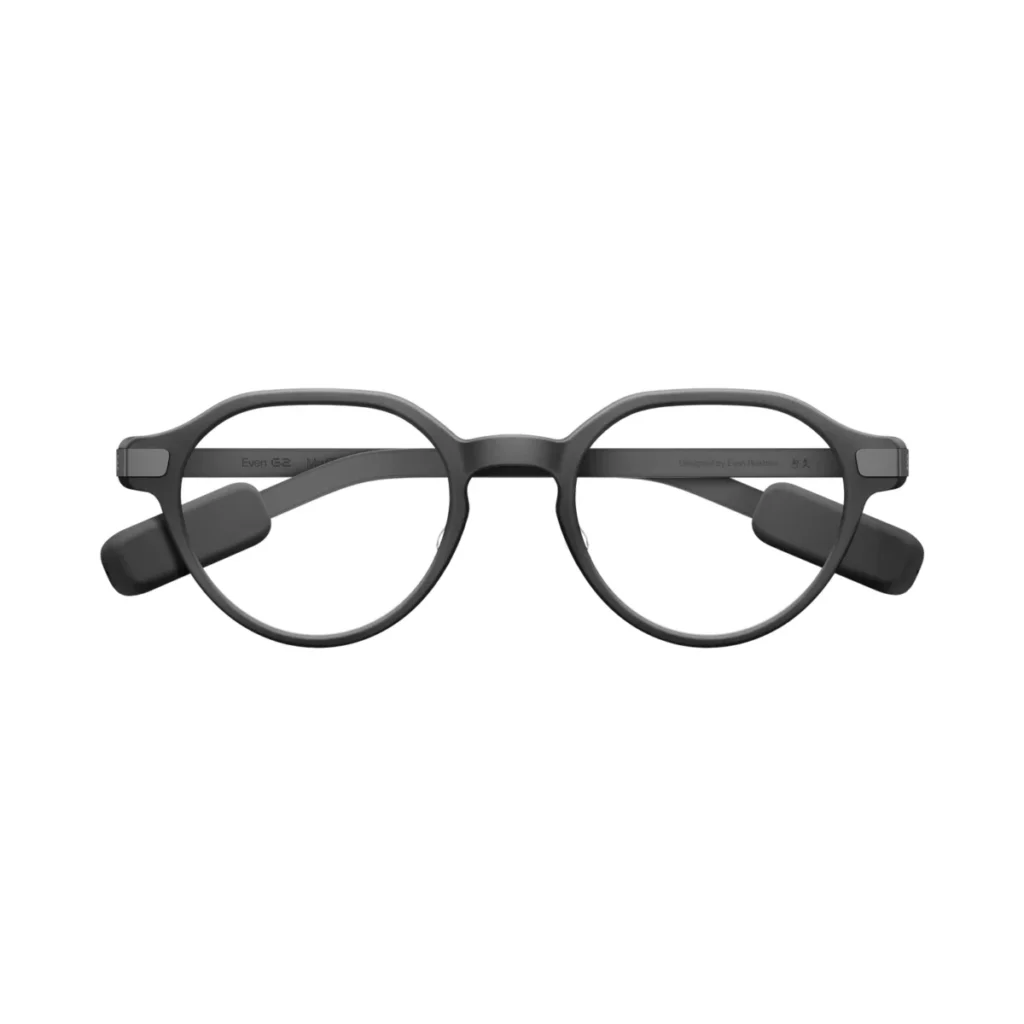
The G2 is the second iteration of Even Realities’ vision for "productivity-first" eyewear. Unlike the camera-heavy, content-focused approach favored by Meta’s Ray-Ban partnership, the G2 eschews cameras and integrated speakers entirely. This is a deliberate design choice; by removing recording capabilities, the company aims to eliminate the "privacy tax" that makes bystanders uncomfortable, positioning the G2 as an office-ready tool for professionals rather than a social media accessory.
The hardware specifications reveal a clear path of iterative improvement:
- Display: The G2 features a 1,200-nit display, a notable upgrade from the G1’s 1,000-nit panel. The display area has been expanded by 75%, and the refresh rate has been boosted to a fluid 60Hz, compared to the stuttery 20Hz of the original model.
- Audio/Input: The device now incorporates a four-microphone array, doubling the capacity of the previous model, intended to improve voice command accuracy and AI interaction.
- Build Quality: Weighing in at just 35 grams, the frames utilize a sophisticated blend of magnesium alloy for the chassis and titanium alloy for the temples, ensuring a comfortable fit for extended wear.
Chronology of Development and Connectivity
The journey of the G2 has been defined by the struggle for software stability. In the initial months following its launch, early adopters—including this reporter—faced significant hurdles. The most pressing issue was Bluetooth connectivity; the glasses would frequently decouple from the proprietary mobile app, rendering the HUD inert and leading to a frustrating user experience.
However, the company’s commitment to software refinement has yielded dividends. Through a series of targeted firmware and app updates, the connection stability has improved dramatically. What began as a temperamental prototype has evolved into a reliable, albeit still dependent, companion. This timeline reflects the broader challenge of the wearables sector: the hardware is often finished long before the software reaches a state of true maturity.

Supporting Data: Features and Functionality
The G2 is designed to act as a digital concierge. Through a stem-based touch interface, users can cycle through a dashboard of meetings, stock tickers, and news feeds. A long-press on the temple opens a suite of productivity-focused apps, including:
- Translate: A real-time language translation tool that displays text directly in the user’s field of view. During testing at the Global Connect Show (GCS) in China, the translation was precise enough to allow for seamless interaction with international colleagues.
- Navigate: A turn-by-turn navigation system that maps routes via the Even Realities app. While the visual representation on the HUD is excellent, the underlying mapping software occasionally struggles with address accuracy, limiting its utility for urban exploration.
- Conversate: Perhaps the most innovative feature, this tool uses AI to provide "prep notes" for meetings. By referencing documents uploaded ahead of time, the glasses can display "explainer bubbles" for complex terms during a conversation—a genuinely futuristic, albeit niche, application.
Despite these wins, the built-in assistant, Even AI, remains a work in progress. While the intent is clear, the execution is hampered by long-winded, unskippable responses and a propensity for misunderstanding queries in noisy, real-world environments.
The R1 Ring: A Questionable Companion
Alongside the G2, Even Realities launched the R1 ring—a touch-sensitive controller intended to manage the glasses without the user having to reach for their temples. Priced at $249, the R1 faces a steep value proposition problem.
While the device functions as intended, it is ultimately redundant. The touch-sensitive temples on the G2 already provide the same functionality. Furthermore, while the ring includes health-tracking metrics like SpO2 and heart rate, it struggles to compete with dedicated wearables like Oura or Ultrahuman. For the average user, the R1 is an expensive, unnecessary middleman in an already minimalist ecosystem.
Implications for the Future of Wearables
Even Realities’ recent achievement of a $1 billion valuation—cemented by $150 million in funding led by heavyweights like Meituan and Tencent—signals that the market is bullish on the "productivity glasses" category. However, the path to mass adoption remains obstructed by three critical factors:
1. The Reliance on the Phone
Even at their best, the G2 glasses are merely a secondary screen. As long as these devices require a tethered smartphone to process data, their autonomy remains limited. The latency issues and the occasional "unreliable" pop-up notifications serve as a constant reminder that the glasses are not yet a primary computing device.

2. The Lack of First-Party Software
The company is currently betting on third-party developers to fill the gaps in the app ecosystem. However, without a "killer app" that makes the glasses essential for the average professional, the G2 remains a "nice-to-have" toy for enthusiasts. To justify its $599 price tag, Even Realities must transition from hardware manufacturer to software platform provider.
3. The Ergonomics of Information
The G2 proves that smart glasses can be comfortable, stylish, and non-intrusive. By skipping cameras, the company has successfully bypassed the social friction that plagues Meta’s offerings. The implication is clear: there is a viable market for "heads-up, eyes-forward" computing that aids the user without recording the world.
Conclusion: A Stepping Stone, Not a Destination
The Even Realities G2 is an impressive piece of engineering. It succeeds in being the lightest, most comfortable, and most professional-looking smart eyewear on the market. Its display is crisp, its translation features are genuinely useful, and its build quality is beyond reproach.
Yet, for all its technical prowess, it is not yet the device that will replace the smartphone. It is a specialized tool—perfect for the globetrotting executive or the professional who thrives on real-time data prompts during meetings. For the rest of the world, it remains a glimpse into what is possible. As Even Realities moves forward, the pressure to expand its software capabilities will grow. Having reached unicorn status, the company now faces the hardest challenge of all: moving from a boutique novelty to a daily necessity.
If the G2 is any indication, the future of eyewear is bright—but it still needs a reason to stay on our faces for more than an hour at a time.