The Future of Transit: How Go’s IPO Signals a Paradigm Shift for Japan’s Aging Taxi Industry
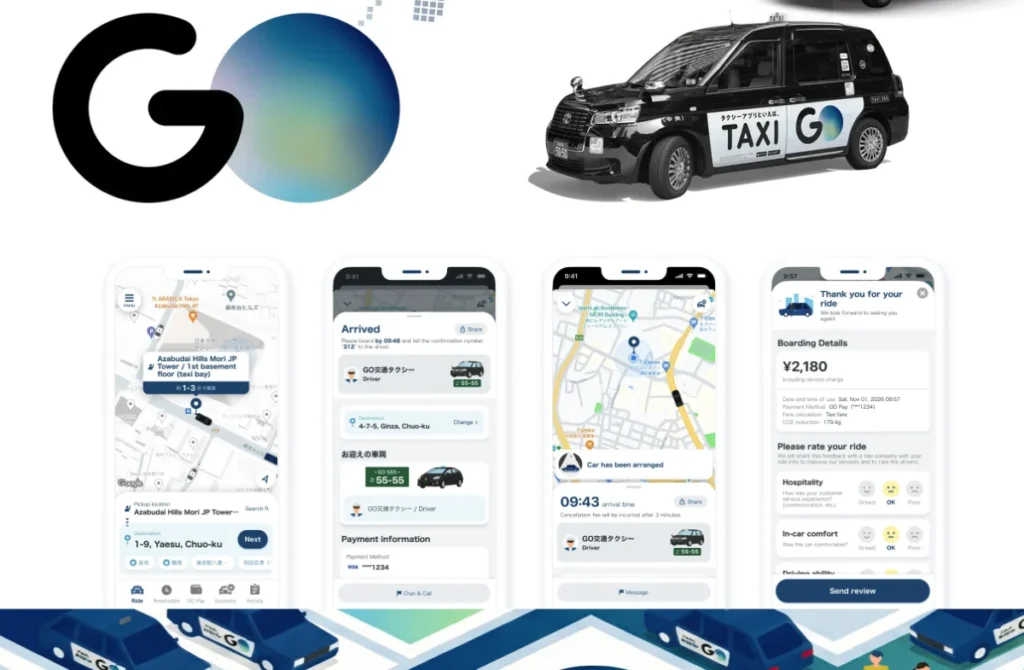
In a landmark moment for the Japanese capital markets, Go, the nation’s dominant ride-hailing platform, has successfully completed its Initial Public Offering (IPO). Raising ¥88.6 billion ($553 million), the listing stands as the largest of its kind in Japan this year. However, for the company, this financial milestone is not merely an exercise in capital formation—it is a strategic defensive and offensive maneuver designed to address a looming existential crisis: the precipitous decline of Japan’s human workforce.
As the country grapples with a demographic shift characterized by an aging population and a shrinking labor pool, Go’s pivot toward automation and strategic consolidation suggests that the future of Japanese mobility will be defined by silicon and software rather than the traditional taxi driver.
The Financial Landscape: A Strategic Infusion of Capital
Go’s debut on the public markets comes at a time of notable caution within the Japanese startup ecosystem. Government policy has recently pivoted, encouraging nascent companies to consider mergers and acquisitions as a growth path rather than the traditional, often grueling, road to an IPO. Despite this, Go managed to attract a high-profile roster of global institutional investors, including BlackRock, Wellington Management, and M&G Investment Management.
This investment demonstrates a clear appetite among international players for Japanese technology firms that are positioned to solve deep-seated structural problems. However, the market’s initial reaction has been tempered; following the IPO, Go’s stock experienced a modest contraction, closing at ¥2,314 on Friday—a 4% dip from its offering price of ¥2,400. Analysts suggest this volatility is reflective of the broader, sluggish listing season in Japan, as well as investor uncertainty regarding the timeline for the company’s high-stakes autonomous vehicle ambitions.
The Core Problem: A Nation Running Out of Drivers
The urgency behind Go’s IPO is rooted in a sobering reality. The Japanese taxi industry is currently facing an unprecedented labor shortage. Data from the Ministry of Land, Infrastructure, Transport and Tourism indicates that the number of taxi drivers has plummeted by approximately 20% in recent years. This is not a cyclical dip, but a structural collapse exacerbated by a rapidly aging workforce and a lack of younger workers entering the profession.
The human element of the industry is effectively evaporating. While the Japanese government authorized limited ride-sharing services in 2024 to mitigate this pressure, the regulations remain stringent. These services are currently restricted to specific geographic zones and require that all drivers be formally employed by existing taxi companies. Because these rules fail to address the core issue—the sheer scarcity of personnel—the industry has turned to technology as its only viable long-term solution.
Chronology of an Industry Leader
To understand the weight of Go’s current strategy, one must look at its evolution. Founded in 1977 as a traditional taxi operator, the company has transformed into the backbone of Japanese urban transport.
- 1977: The company is established, operating as a traditional taxi firm.
- Modern Era: The firm pivots to technology, launching the ride-hailing app that would become the industry standard.
- Growth Phase: Through aggressive expansion and consistent service quality, the app reaches 35 million downloads.
- Market Dominance: Today, the platform boasts 85,000 partner vehicles, capturing an 80% share of the Japanese taxi app market by usage time. Its footprint now spans 46 of Japan’s 47 prefectures, making it the de facto national transit infrastructure.
- 2024: The company goes public, securing the capital necessary to transition from a logistics coordinator to a technology-first autonomous driving player.
Official Strategic Vision: Robotaxis and Acquisitions
According to a company spokesperson, the proceeds from the IPO are earmarked for two primary objectives: the development of autonomous taxi technology and strategic mergers and acquisitions.
"We intend to use the proceeds from the sale of newly issued shares toward investment in research and development related to robotaxis and investment in business expansions, including strategic mergers and acquisitions in our business inside and outside of the taxi industry," the spokesperson stated.
This dual-pronged approach allows Go to protect its market share in the short term while building the infrastructure for a driverless future. By acquiring smaller firms or diversifying into adjacent transportation sectors, Go aims to fortify its ecosystem. Furthermore, the company is positioning itself as a central hub for international travelers. By integrating with major global payment platforms—such as Kakao T, Alipay, and WeChat Pay—Go ensures that tourists from South Korea, China, and Taiwan can navigate Japan seamlessly, effectively insulating its revenue streams against local economic volatility.
The Robotaxi Frontier: Partnerships vs. In-house Development
While Go is heavily invested in the concept of the robotaxi, CEO Hiroshi Nakajima has clarified that the company does not intend to reinvent the wheel. Rather than sinking capital into the prohibitively expensive development of proprietary autonomous driving systems, Go is opting for a partnership-led strategy.
A flagship example of this is the company’s collaboration with Waymo, the autonomous driving subsidiary of Alphabet, and Nihon Kotsu, a major Japanese taxi operator. In this triad, Go serves as the strategic coordinator, leveraging its massive dataset and existing user base to facilitate the deployment of Waymo’s technology.
However, the company remains cautious regarding the timeline. There is currently no definitive date for the rollout of fully driverless operations. The spokesperson was clear on this point: "We plan to begin driving fully autonomously, without a human specialist present, when we validate our technology and receive approval to do so."
The Competitive Arena
Go is not alone in its quest to automate Tokyo’s streets. The race to define the future of Japanese mobility is becoming increasingly crowded. In a major move earlier this year, Uber announced a partnership with Wayve and Nissan, aiming to pilot robotaxi services in Tokyo by the end of 2026. This service will utilize Nissan Leaf electric vehicles powered by Wayve’s "AI Driver," with bookings managed directly through the Uber app.
Furthermore, competition for the tourist market is heating up. Both S.Ride and Didi Mobility Japan have established similar arrangements to capture the influx of international visitors. As these tech giants maneuver for position, the competition is shifting from a battle over who has the most taxis to who has the most sophisticated autonomous platform.
Implications: A New Era for Urban Mobility
The implications of Go’s IPO and its subsequent pivot to autonomous transit are profound. For the Japanese economy, the success of these robotaxi initiatives could determine whether the country can maintain its level of urban mobility despite a shrinking workforce.
If successful, Go will transition from a taxi-hailing app into a high-tech logistics and mobility firm, potentially setting the blueprint for other aging societies worldwide. However, the company faces significant hurdles: regulatory hurdles, the necessity of absolute safety in densely populated Japanese cities, and the competitive threat from global giants like Uber.
The market’s initial lukewarm reception to the IPO price suggests that while investors believe in the necessity of Go’s vision, they remain cognizant of the enormous execution risk involved. The company’s ability to navigate these challenges over the next 24 to 36 months will likely define its legacy.
In the final analysis, Go’s journey is emblematic of a broader trend: the traditional service industry is being forcibly digitized. As the pool of human drivers dries up, the "human problem" of logistics is finding a technical solution. Whether that solution arrives fast enough to fill the void left by a vanishing generation of drivers remains the most critical question for Japan’s transportation future.