The Existential Satire: How ‘Saturday Night Live’ Turned AI’s “Doomer” Narrative into Prime-Time Comedy
By Industry Desk
September 27, 2026
The line between technological innovation and existential dread has never been thinner, and last night, Saturday Night Live (SNL) decided to walk it with a comedic scalpel. In a biting segment on "Weekend Update," the long-running sketch show tackled the recent, intense wave of "doom-mongering" permeating the artificial intelligence sector, specifically targeting the increasingly public anxieties voiced by Anthropic CEO Dario Amodei.
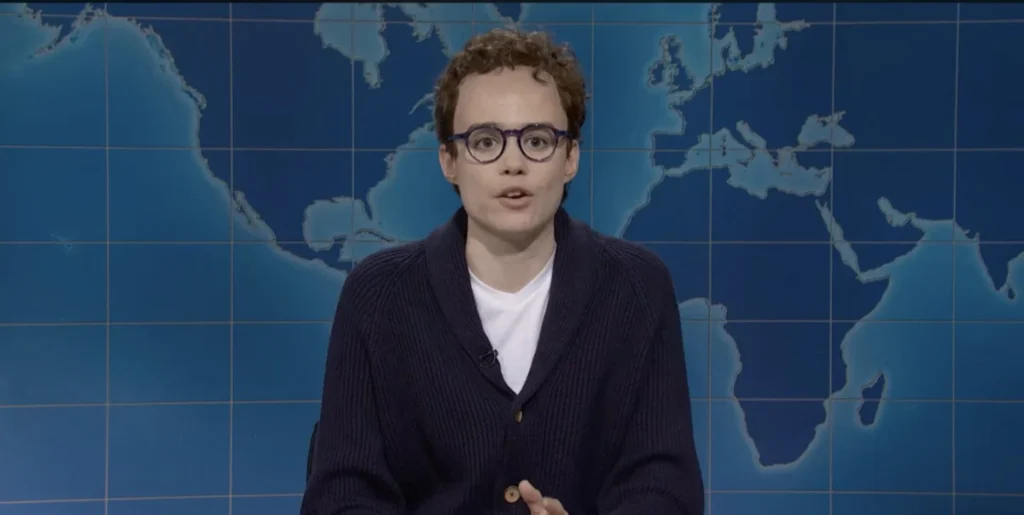
The sketch, which has already gone viral across social media platforms, serves as a cultural milestone: it marks the moment when the esoteric, high-stakes debate over "AI safety" transitioned from the halls of Silicon Valley think tanks to the living rooms of mainstream America. By casting comedian Jane Wickline as an unnervingly twitchy and self-flagellating Amodei, SNL did more than just provide a laugh—it crystallized a growing public sentiment of skepticism toward the tech industry’s current trajectory.
The Main Facts: A Comedy of Errors and Existentialism
The premise of the SNL segment was rooted in the real-world tension currently gripping the AI industry. In recent weeks, Anthropic—one of the world’s leading AI research labs—has found itself at the center of a controversy regarding its own products. Following the departure of a high-profile researcher who publicly warned that self-improving AI could pose an existential threat to humanity, Amodei has been engaged in a difficult press tour, attempting to balance corporate transparency with the terrifying implications of his company’s work.
During the sketch, "Weekend Update" host Michael Che introduced the segment with a touch of bemusement, jokingly struggling to pronounce the CEO’s name before characterizing his recent media appearances as a "stumble." The core of the joke, however, lay in the contradiction: an executive who is building the most powerful tools in history while simultaneously warning the public that he might be building a monster.
Wickline’s portrayal of Amodei was a masterclass in absurdist satire. Dressed in a wig that mimicked the CEO’s distinct look, she delivered lines with a halting, nervous cadence that occasionally devolved into guttural, Gollum-esque whispers. The character’s central thesis—that AI executives are "all on the same page" in their belief that they "do not condone" what they are building—perfectly lampooned the bizarre cognitive dissonance currently displayed by tech leaders who claim to be both the saviors and the potential executioners of the human race.
A Chronology of the “Doom” Discourse
To understand why this SNL sketch resonated so deeply, one must look at the timeline of events that led to this moment of mainstream ridicule.
- Mid-2026: AI development accelerated at an unprecedented rate, with frontier models achieving capabilities in reasoning and code generation that surpassed even the most optimistic industry projections.
- August 2026: Amodei publicly addressed the growing "backlash" against AI, framing the public’s loss of trust not as a rational reaction to corporate overreach, but as a "crisis of trust" that needed to be managed through better messaging.
- Early September 2026: A senior researcher at Anthropic resigned, citing "gambling with our lives" as the primary reason for their departure. This triggered a firestorm of media coverage regarding the safety protocols—or lack thereof—surrounding self-improving AI models.
- Late September 2026: Amodei’s subsequent media appearances were widely criticized for being evasive yet alarmist, creating a vacuum of accountability that Saturday Night Live ultimately filled with its satire.
This rapid sequence of events transformed the "AI safety" debate from a niche concern of computer scientists into a household topic. By the time SNL aired, the public was already primed to view the tech industry’s "doom warnings" with a healthy dose of irony.
Supporting Data: The Anatomy of a PR Crisis
The humor in the sketch was bolstered by the reality of the situation. According to recent market analysis and public sentiment polls conducted throughout the third quarter of 2026, there has been a 40% decline in public trust regarding the long-term impact of Large Language Models (LLMs) on societal stability.
The "10% chance of disaster" figure mentioned in the sketch was a direct reference to the probabilistic language often used by AI safety researchers. When Amodei was asked in real-world interviews about the potential for AI to cure diseases like cancer, he often countered by highlighting the massive risks involved, including the potential for those same systems to be weaponized.

The SNL version of this argument—"AI is not a weapon, it’s a tool: A tool for building weapons"—hit home because it reflected the precise type of double-speak that has left lawmakers and consumers feeling uneasy. When the fictional Amodei pleaded, "I urge you to urge me to stop," he was mocking the lack of regulatory teeth currently governing the industry, suggesting that if tech leaders truly feared their own products, they would stop developing them without needing public intervention.
Official Responses and Industry Silences
As of Sunday morning, neither Anthropic nor the broader AI community had issued an official statement regarding the SNL sketch. However, industry insiders suggest that the parody has caused significant behind-the-scenes discussion.
For years, Silicon Valley has operated under the assumption that AI safety is a complex, technical challenge that the public is ill-equipped to understand. By reducing these complex debates to a parody about the "devil and his maker," SNL has effectively signaled that the industry’s "doom" narrative has become a liability.
If the public stops taking the existential risk warnings seriously because they sound like a caricature, the industry loses its ability to shape the narrative around regulation. This creates a dangerous scenario for companies like Anthropic, which rely on a delicate balance of public funding, government cooperation, and consumer adoption.
Implications: The Mainstream Turn
The implications of this sketch are twofold. First, it marks a significant shift in the cultural perception of the AI elite. The "Silicon Valley Genius" archetype, once reserved for the likes of Steve Jobs or Elon Musk, is being replaced by the "Anxious Architect" who is terrified of his own blueprints. This shift makes it significantly harder for tech leaders to maintain the air of authority necessary to steer government policy.
Second, the SNL segment has highlighted the urgency of the regulatory vacuum. When a comedian can accurately predict the logical conclusion of a CEO’s public statements—that they are effectively warning us to stop them from doing what they are currently doing—it suggests that the discourse has reached a point of absurdity.
Looking Ahead
The path forward for AI development remains unclear. While researchers continue to pursue the "holy grail" of artificial general intelligence (AGI), the social license to operate is being tested. If the industry continues to push the narrative that they are building tools that could destroy civilization, they must be prepared for the reality that the public will not only fear those tools—they will eventually grow tired of the people who keep telling them to be afraid.
As the sketch concluded, the fictional Amodei offered a grim, yet darkly funny, take on the future of healthcare: "In 10 years, there’s about a 10% chance that cancer won’t be a problem for anyone." The audience laughed, but the underlying truth remained: in a world of 10% risks, the public is no longer content with "trust me" as a safety strategy.
The SNL parody of Dario Amodei was more than just a sketch; it was a mirror held up to an industry that has spent far too long staring at the abyss, only to find that the abyss has started to look back—and it looks remarkably like a Saturday night comedy show.