The Architecture of Exclusion: How Ancient Lessons in Oligarchy Explain Modern American Governance
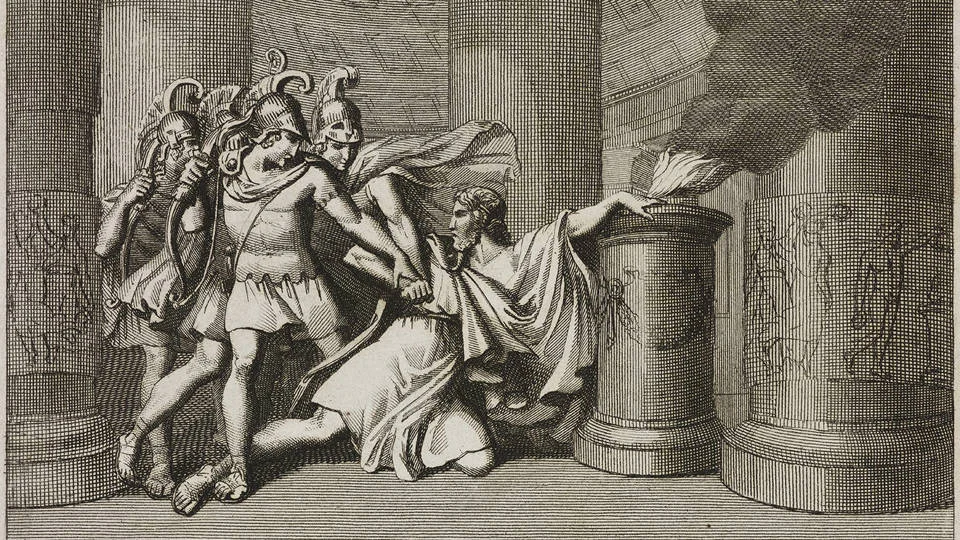
In the autumn of 403 BCE, the city of Athens witnessed a profound restoration of democratic order. The 27-year Peloponnesian War, a conflict that had decimated the city’s resources and spirit, concluded with a humiliating surrender to Sparta. In the power vacuum that followed, a brutal authoritarian regime known as "the Thirty" seized control. Despite their public rhetoric of "virtue" and "justice," the Thirty systematically purged their political rivals, executing over 1,500 citizens and residents.
This period of state-sponsored violence ignited a fierce democratic resistance, drawing support from a coalition of the working class, resident foreigners, and enslaved laborers. After a year of civil war, the democratic faction emerged victorious. To commemorate this triumph, the restored government offered sacrifices on the Acropolis to Athena, the patron goddess of the city.
However, hidden from these public festivities, the remnants of the fallen regime were busy crafting a very different legacy. They erected a monument to their deceased leader, Critias—an intellectual, poet, and relative of Plato who had spearheaded the anti-democratic movement. The monument featured a relief of a fierce woman holding a torch, setting fire to another woman. According to ancient commentators, the torchbearer represented "Oligarchy," and her victim was "Democracy."
While this specific monument may exist only in historical footnotes, it serves as a powerful metaphor for a recurring political phenomenon: the struggle between the "rule of the few" and the voice of the many. As concerns regarding the influence of extreme wealth and power grow in the United States, modern Americans are increasingly forced to ask if their own institutions are, by design or neglect, facilitating the rise of a contemporary oligarchy.
A Chronology of the Rule of the Few
The struggle between democracy and oligarchy was the defining tension of classical Greece. Between 460 and 360 BCE—a period Columbia University historian John Ma characterizes as a "Hundred Years’ War" of political systems—the Greek world was torn between these two poles.
Oligarchs viewed themselves as a rarefied minority. Their perceived superiority—rooted in wealth, lineage, and exclusive education—justified their mandate to rule. They viewed the demos (the common people) as a chaotic, inundating force, akin to a rushing river that required the "fire" of disciplined, elite governance to keep in check.
History shows that oligarchy was rarely a popular choice; it was almost always a product of force. While democracies generally relied on the consent of the majority, oligarchies often persisted through calculated institutional capture. They implemented property requirements that excluded the bottom 85–90% of the population from political office, effectively creating a "gentlemen’s club" of governance.
The mechanisms of control were sophisticated. Oligarchs utilized "divide and rule" strategies, co-opting opposition leaders into the regime, offering rewards for informants to destroy community trust, and heavily policing public spaces to prevent the assembly of protesters. If domestic control faltered, they relied on international allies—most notably Sparta—to restore their order. Yet, despite these safeguards, oligarchy could not withstand the democratic tide. By the second and third centuries BCE, democracy had become the most common form of government in the Greek world, celebrated in art and coinage as the primary guarantor of equality among citizens.
Institutional Mechanics: From Athens to Washington
The relevance of these ancient structures to modern America is not merely academic. While the US Constitution is celebrated as a beacon of liberty, its framers were deeply suspicious of "direct democracy." Alexander Hamilton, in Federalist No. 1, famously warned that "a dangerous ambition more often lurks behind the specious mask of zeal for the rights of the people than under the forbidden appearance of zeal for the firmness and efficiency of government."
The Federalists were focused on preventing the "tyranny of the majority," yet in doing so, they constructed a system of checks and balances that, in the 21st century, has been repurposed to empower a narrow minority. The most prominent example is the Senate filibuster.
In Federalist No. 22, Hamilton provided a scathing critique of super-majoritarian voting rules. He argued that giving a minority a "negative upon the majority" (requiring more than a simple majority to pass legislation) essentially subjects the greater number to the lesser. He warned that such a system allows an "insignificant, turbulent, or corrupt junto" to override the deliberations of a respectable majority.
Today, the US Senate operates under exactly the conditions Hamilton feared. With the filibuster, two-fifths of the Senate—potentially representing as little as 10% of the total US population—can effectively veto national policy. This institutional friction allows a small, monied, or ideologically extreme minority to block progress on issues ranging from climate change and healthcare to economic regulation, effectively turning the "republican principle" on its head.
Supporting Data and Economic Concentration
The contemporary American concern with oligarchy is supported by stark economic realities. The concentration of wealth in the United States has reached levels unseen since the Gilded Age. When former President Joe Biden, in his January 2025 farewell address, warned of an "oligarchy of extreme wealth, power, and influence," he was referencing a systemic consolidation that transcends individual political parties.
The "tech-bro" era has replaced the industrial barons of the 19th century, yet the political dynamic remains strikingly similar. A handful of individuals now wield influence over the information ecosystems, global trade, and infrastructure that underpin modern democracy.
Research from political scientists suggests that when policy preferences of the economic elite diverge from those of the average citizen, the elite almost invariably win. This is not necessarily due to overt bribery, but due to an institutional environment where lobbying, campaign finance, and legislative roadblocks (like the filibuster) prioritize the interests of the few over the needs of the many.
Official Responses and Political Discourse
The debate over "republic vs. democracy" has become a rhetorical battleground. Proponents of a restricted democracy often cite the founders’ intent to create a republic as a justification for why majority rule should be checked. However, contemporary scholarship, drawing on new archaeological and literary discoveries, reveals that the "tumultuous" ancient democracies were far more resilient and stable than the 18th-century founders were led to believe by biased sources like Thucydides.
Political leaders across the spectrum have begun to acknowledge the threat. The rise of populism, both on the left and the right, is a direct response to the perception that the political system is "rigged." While the solutions proposed by these factions differ wildly, the diagnosis is consistent: the mechanisms of government have been captured by forces that do not represent the public interest.
The "supermajority trap"—the requirement of a 60-vote threshold to move legislation in the Senate—has become the primary instrument of this capture. By requiring consensus in an era of hyper-polarization, the system effectively guarantees gridlock, which favors the status quo. For those who benefit from the current distribution of power, gridlock is not a failure of the system; it is its primary success.
Implications for the Future of American Democracy
The implications of this structural malaise are profound. If the American public perceives that their votes cannot translate into policy because of institutional barriers, the result is not just legislative paralysis, but a crisis of legitimacy.
In classical antiquity, when democratic institutions failed to address the grievances of the people, the result was often revolution or the eventual collapse of the polis. The United States faces a similar inflection point. The challenges of the 21st century—the ethical and economic disruption of artificial intelligence, the existential threat of climate change, and the erosion of the middle class—require decisive, majoritarian action.
To maintain the current institutional status quo is to inadvertently do the work of the oligarchs. In the imagery of Critias’s tombstone, the fire of oligarchy is not necessarily a sudden, violent explosion, but a slow, calculated burning of the structures that support public agency.
Americans today find themselves in a position similar to the citizens of Athens in 403 BCE, yet with a critical difference: the institutions that are enabling this "rule of the few" are their own. Addressing this will require more than just rhetoric; it will require a fundamental reassessment of whether the current "checks and balances" are serving the purpose of democratic stability or merely providing a veneer of legitimacy to a system that has become increasingly undemocratic.
As the internet meme culture so aptly puts it, the country currently sits in a burning building, declaring "this is fine." History suggests that the building will not save itself. Unless the institutions are reformed to reflect the will of the majority rather than the veto power of the few, the "rule of the few" will continue to dictate the terms of American life, leaving the ideals of equality and democratic self-governance to the pages of history books.