The Ankara Paradox: NATO’s Strategic Pillar Faces a Democratic Reckoning
By Özgür Özel
July 6, 2026
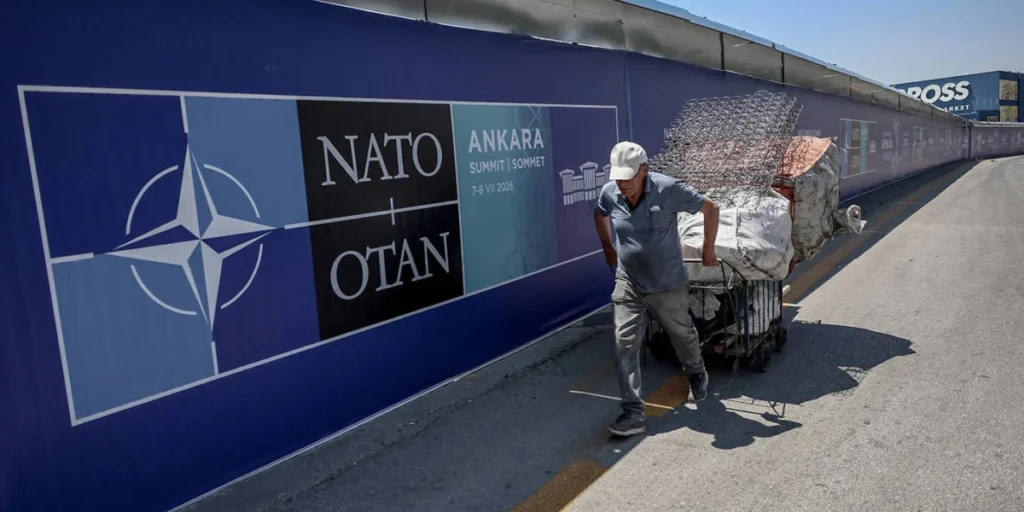
As the leaders of the North Atlantic Treaty Organization (NATO) descend upon Ankara for the annual summit on July 7–8, 2026, the optics will be meticulously choreographed. Turkish President Recep Tayyip Erdoğan, now in his third decade of uninterrupted rule, intends to project an image of a nation that is stable, confident, and indispensable. While the latter descriptor—indispensability—is an undeniable reality of the current geopolitical landscape, the claims of stability and democratic health are increasingly difficult to reconcile with the reality on the ground.
The upcoming summit represents a critical juncture for the alliance. Turkey remains the guardian of the Black Sea straits and possesses the second-largest standing army in NATO. Yet, the gathering in Ankara serves as a stark reminder that the alliance’s strength is not merely measured in tanks and fighter jets, but in the shared democratic values that underpin the North Atlantic Treaty.
The Strategic Pillar: Why Turkey Remains Essential
To understand the tension at this summit, one must first acknowledge the geographic and strategic realities that make Turkey an irreplaceable NATO member. Spanning the bridge between Europe and Asia, Turkey serves as a bulwark against regional instability, a key interlocutor in the Middle East, and a critical energy transit hub.
Since the onset of the conflict in Eastern Europe, Turkey’s role has only expanded. By controlling the Bosphorus and Dardanelles, Ankara holds the keys to the Black Sea, effectively preventing a further escalation of naval warfare. Furthermore, Turkey’s sophisticated defense industry—particularly its advancements in unmanned aerial vehicle (UAV) technology—has provided the alliance with unique tactical advantages.
However, this strategic importance has created a "security trap." Many Western policymakers argue that the necessity of Turkey’s cooperation in containing regional rivals outweighs the need to pressure the government over domestic democratic backsliding. This policy of "strategic patience" is being tested as never before.
A Chronology of Consolidation: Two Decades of Change
The trajectory of modern Turkey can be mapped through the evolution of the Justice and Development Party (AKP) under Erdoğan’s leadership.
- 2003–2010: The Era of Reform. Early in his tenure, Erdoğan was hailed as a reformer. His government pursued EU accession, implemented economic liberalization, and curtailed the political influence of the military establishment.
- 2011–2015: The Shift toward Centralization. Following the Arab Spring, Turkey’s foreign policy became more assertive, and domestic rhetoric began to favor nationalist and populist narratives. The Gezi Park protests in 2013 marked a turning point, signaling a hardening of the state’s stance toward dissent.
- 2016: The Failed Coup. The attempted military coup of July 15, 2016, proved the most significant inflection point. In its aftermath, the government declared a state of emergency, leading to mass purges in the civil service, judiciary, and media.
- 2017–2023: The Presidential System. The constitutional referendum transitioned Turkey from a parliamentary system to an executive presidency, effectively concentrating near-absolute power in the hands of the executive branch.
- 2024–2026: The Current Crisis. Today, the country faces economic volatility, including persistent inflation and currency devaluation, alongside a narrowed space for civil society, independent journalism, and judicial independence.
Supporting Data: The Erosion of Institutions
The decline in Turkey’s democratic indicators is not merely a matter of political rhetoric; it is reflected in empirical data provided by international watchdogs.
According to the V-Dem Institute’s Democracy Report, Turkey is currently categorized as an "electoral autocracy." Since 2016, the country has seen a consistent downward trend in indices related to freedom of expression, freedom of association, and judicial impartiality.
Economic data further complicates the picture. While Turkey remains a member of the G20, the volatility of the Turkish Lira and the government’s unconventional monetary policies have led to a decline in foreign direct investment (FDI). According to the World Bank, while the country’s GDP growth has remained resilient in some sectors, the purchasing power of the average citizen has been significantly eroded by hyper-inflation, creating a growing disparity between the governing elite and the working class.
The Official Narrative vs. External Perspectives
In the lead-up to the summit, the Turkish government has ramped up its diplomatic messaging. Officials argue that the measures taken in recent years were necessary to protect national security against "existential threats"—namely terrorism and foreign-backed subversion.
"Turkey is a pillar of regional stability," a senior official stated in a recent press briefing. "Our contribution to NATO’s mission is unparalleled. Any criticism of our internal democratic processes is an attempt to undermine our sovereignty and weaken the collective defense of the alliance."
However, this sentiment is not shared by European counterparts. During preparatory meetings for the summit, several NATO delegations have quietly raised concerns regarding the rule of law. Privately, diplomats acknowledge that the summit in Ankara is an opportunity to hold a "candid dialogue." They argue that a NATO member failing to adhere to the rule of law creates a moral hazard, weakening the alliance’s ability to advocate for democratic norms in its broader geopolitical engagements.
Implications: Why Democracy in Turkey Matters for NATO
The restoration of democratic health in Turkey is not merely a domestic concern for the Turkish people; it is a vital interest for the entire NATO alliance. The implications of a fracturing democracy in a key member state are three-fold:
1. The Reliability of Collective Defense
NATO is built on the principle of mutual defense, but that principle relies on trust. If the executive branch in a member state can override legal and parliamentary checks, the predictability of that state’s actions diminishes. For NATO to function, it must be able to trust that a member’s defense commitments are anchored in a stable, transparent, and accountable legal framework.
2. The Battle of Narratives
The world is currently witnessing a global contest between democratic governance and authoritarian models. If NATO, which prides itself as an alliance of democracies, ignores the democratic decline of one of its most powerful members, it risks losing the moral high ground. This hypocrisy provides ammunition to adversarial powers who seek to frame the Western liberal order as a failing system.
3. Long-term Regional Stability
A country that suppresses its internal opposition and restricts civil society is prone to sudden, violent shifts. True stability is not the absence of protest or the centralization of power; it is the presence of institutions that allow for the peaceful transfer of power and the resolution of grievances. Turkey’s long-term security depends on the strength of its institutions, not the strength of a single individual.
Conclusion: A Turning Point in Ankara
As the NATO leaders gather in Ankara, they face a delicate balancing act. They must acknowledge Turkey’s indispensable role in the current security environment without becoming complicit in the erosion of its democracy.
The summit should not be viewed as a mere formality or a victory lap for the host. Instead, it must serve as a forum where the alliance reaffirms its commitment to its founding principles. NATO’s strength has always been its ability to bridge differences through dialogue, but that dialogue must now include the uncomfortable reality of Turkey’s internal trajectory.
If the alliance wishes to remain relevant in an increasingly volatile world, it must recognize that security and democracy are not mutually exclusive—they are mutually reinforcing. The restoration of democratic foundations in Turkey is not just a favor to the Turkish people; it is a strategic necessity for the longevity and credibility of the North Atlantic Treaty Organization. As the summit concludes, the world will be watching to see if the alliance chooses the comfort of short-term strategic convenience or the harder, more necessary path of upholding the democratic values that have defined it for over seven decades.