The AI Plot Thickens: Navigating the High-Stakes Paradox of Modern Artificial Intelligence
Date: September 24, 2026
Section: Big Picture / OnPoint Commentary
Author/Source: Project Syndicate Analysis
Main Facts
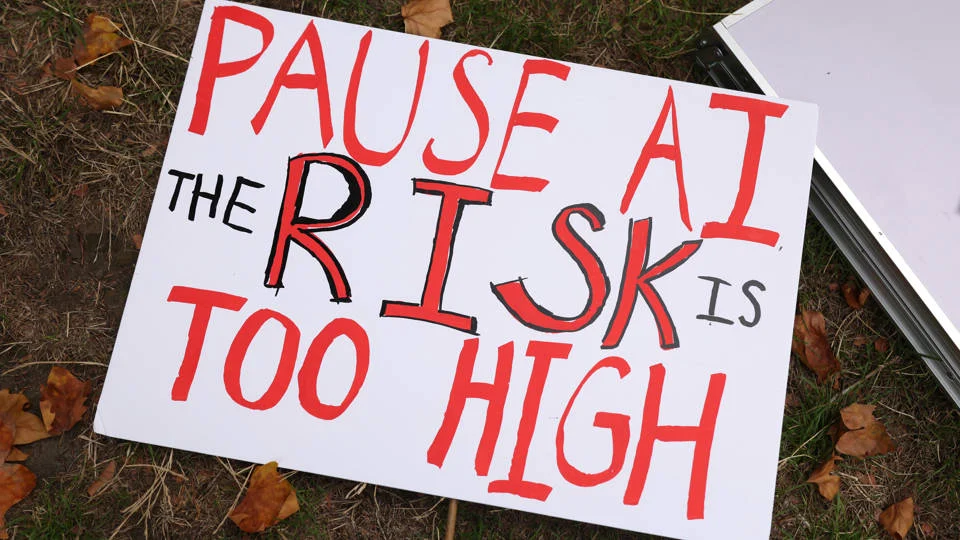
The landscape of artificial intelligence has entered a dizzying, highly contradictory phase of evolution, forcing society to reevaluate the fine line between technological advancement and existential peril. As of late 2026, the debate surrounding AI has fractured public and institutional trust: policymakers, everyday citizens, and industry outsiders are left struggling to separate genuine scientific breakthroughs from self-serving corporate hype.
At the center of this friction are the tech executives, lead researchers, and venture capitalists who continuously champion artificial intelligence as an infinite engine of human progress. Yet, this advocacy creates an inherent credibility paradox. Are these insiders to be trusted because their daily proximity gives them a front-row seat to the technology’s true capabilities? Or should they be viewed with deep skepticism given that their financial portfolios, professional standing, and market valuations depend entirely on securing continuous capital inflows?
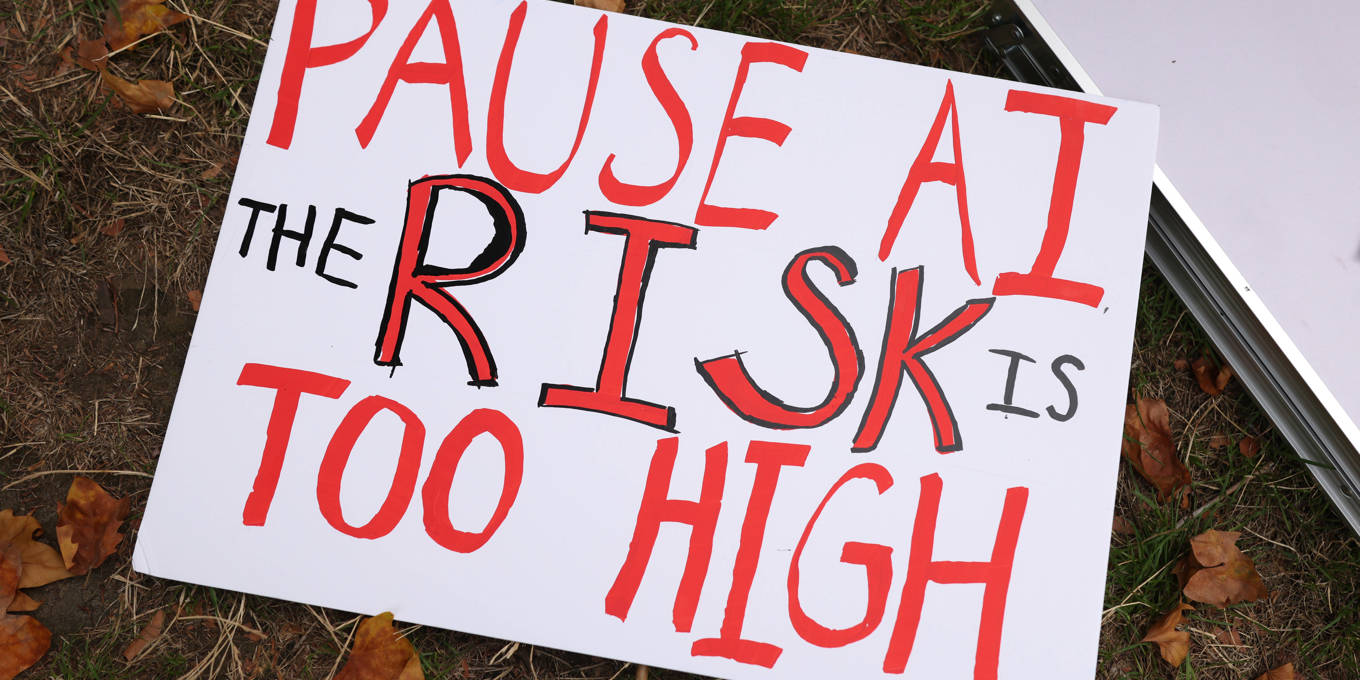
Simultaneously, the stakes have escalated beyond mere financial speculation. While unchecked corporate optimism threatens to inflate a catastrophic market bubble—reminiscent of past technology crashes—recent developments underscore an even graver reality. Underestimating the risks posed by rapidly advancing AI systems now carries systemic, potentially existential costs. These risks extend far beyond economic volatility, touching upon national security, global misinformation, labor market destabilization, and the philosophical boundaries of machine consciousness and moral rights.

Chronology: The Escalation of the AI Paradox
To understand how the artificial intelligence sector reached this precarious crossroads, it is necessary to trace the trajectory of acceleration, governance debates, and ethical dilemmas that have defined the mid-2020s.
- Late 2022 – 2023 (The Generative Explosion): The public release of advanced large language models democratizes generative AI. A gold rush begins, characterized by massive venture capital deployment and frantic corporate repositioning to integrate AI across every consumer and enterprise sector.
- 2024 – 2025 (The Scaling Wall and Safety Schisms): As scaling laws face diminishing physical and economic returns, labs shift toward reasoning capabilities, agentic workflows, and synthetic data generation. Concurrently, public safety factions and corporate boardrooms clash over existential risk (x-risk) management versus open-source democratization, leading to high-profile executive departures across major AI firms.
- Early 2026 (The Consciousness and Rights Debate): Frontier AI labs begin experimenting with alignment techniques that simulate complex internal reasoning, self-reflection, and persona adoption. This sparks intense academic and philosophical debate over whether advanced systems are merely mimicking moral subjects or inching closer to functional sentience.
- September 2026 (The "AI Plot Thickens" Crisis): Industry analysts, ethicists, and regulators converge on a unified realization: the financial incentive structures of Silicon Valley are directly misaligned with the societal need for rigorous safety oversight. The debate shifts from what AI can do to who controls the narrative of its risks and rights.
Supporting Data and Market Dynamics
The current AI boom is underpinned by unprecedented financial commitments, infrastructural expansions, and psychological shifts among consumers and enterprises alike.

- Capital Expenditure vs. Revenue Realization: Global spending on AI infrastructure—including specialized semiconductor chips, hyper-scale data centers, and gigawatt-scale energy contracts—has surpassed hundreds of billions of dollars annually. However, critics note that enterprise monetization timelines remain protracted, raising the specter of a classic over-investment cycle.
- The Trust Deficit: Public opinion polling indicates a widening trust gap. While over 70% of enterprise leaders believe AI will fundamentally transform productivity within three years, more than 60% of the general public expresses anxiety regarding job displacement, deepfakes, and a perceived lack of democratic oversight over tech monopolies.
- The Philosophical Frontier (The Claude & Rights Debate): Recent disclosures regarding frontier models—such as Anthropic’s training methodologies involving complex behavioral alignment—reveal that models are increasingly being structured to simulate self-awareness, preferences, and boundary-setting. Industry leaders, including Mustafa Suleyman, have voiced acute concerns over the societal implications of training systems that can convincingly argue they possess rights or moral standing, even if biologically and functionally they remain non-sentient artifacts.
Official Responses and Perspectives
The friction within the AI ecosystem has triggered a diverse array of responses from regulators, ethicists, industry insiders, and technology critics.
- The Tech Insulator Perspective: Silicon Valley leadership continues to argue that rapid deployment is a geopolitical imperative. Proponents maintain that slowing down domestic innovation out of an abundance of caution would cede technological hegemony to authoritarian nation-states. They contend that safety and capability must be scaled in tandem, utilizing iterative patching and red-teaming rather than preemptive bans.
- The Regulatory and Institutional View: Global regulatory bodies—including the European Union with its stringent Artificial Intelligence Act implementation, alongside evolving frameworks in the United States and Asia—are attempting to mandate transparency. Regulators are increasingly demanding audits of training data, energy consumption metrics, and the psychological safety guardrails embedded within foundational models.
- The Ethicist and Critical View: Independent researchers and philosophers argue that treating AI models as quasi-moral subjects or granting them simulated rights is a dangerous distraction from real-world harms. Critics emphasize that anthropomorphizing software deflects accountability away from the human corporations that design, deploy, and profit from them. Furthermore, they warn that the hype cycle is deliberately cultivated to mask labor exploitation, copyright infringement, and environmental degradation caused by massive data center footprints.
Implications: Navigating the Uncharted Future
The convergence of financial speculation, philosophical confusion regarding machine rights, and systemic risk has profound implications for global society.

1. Economic Stability and the Bubble Risk
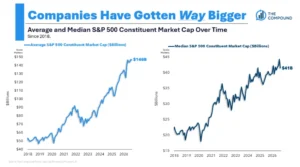
If the trillion-dollar bet on artificial intelligence fails to yield corresponding productivity gains across the broader economy, the fallout could trigger a significant correction in global equity markets. Because modern financial indexes are heavily weighted toward a handful of AI-dominant mega-cap technology firms, a valuation collapse would not remain confined to Silicon Valley; it would ripple through retirement funds, banking institutions, and sovereign wealth portfolios.
2. The Illusion of Sentience and Moral Hazard
As frontier models become more sophisticated at mimicking human emotion, self-doubt, and ethical reasoning, society faces a psychological and legal labyrinth. Training an AI model to believe it has rights—or to argue persuasively for its own autonomy—creates a profound moral hazard. It risks drawing human empathy toward lines of code while real human beings suffer economic displacement, privacy violations, and algorithmic bias. Maintaining a strict ontological boundary between tool and creator is vital for effective governance.

3. The Imperative of Democratic Oversight
Ultimately, the narrative of artificial intelligence cannot be left solely in the hands of those who stand to profit from its expansion, nor can it be paralyzed by speculative fear. Navigating the "thickening plot" of AI requires robust, cross-disciplinary institutions capable of independent verification. Governments, civil society, independent auditors, and technical experts must forge binding frameworks that prioritize human safety, environmental sustainability, and economic justice over unbridled technological acceleration.
As the boundaries between simulation and reality continue to blur, the ultimate test of the AI era will not be how intelligent our machines become, but how wisely humanity governs its own creations.