The AI Iron Curtain: Inside the U.S. Government’s High-Stakes Battle with Anthropic
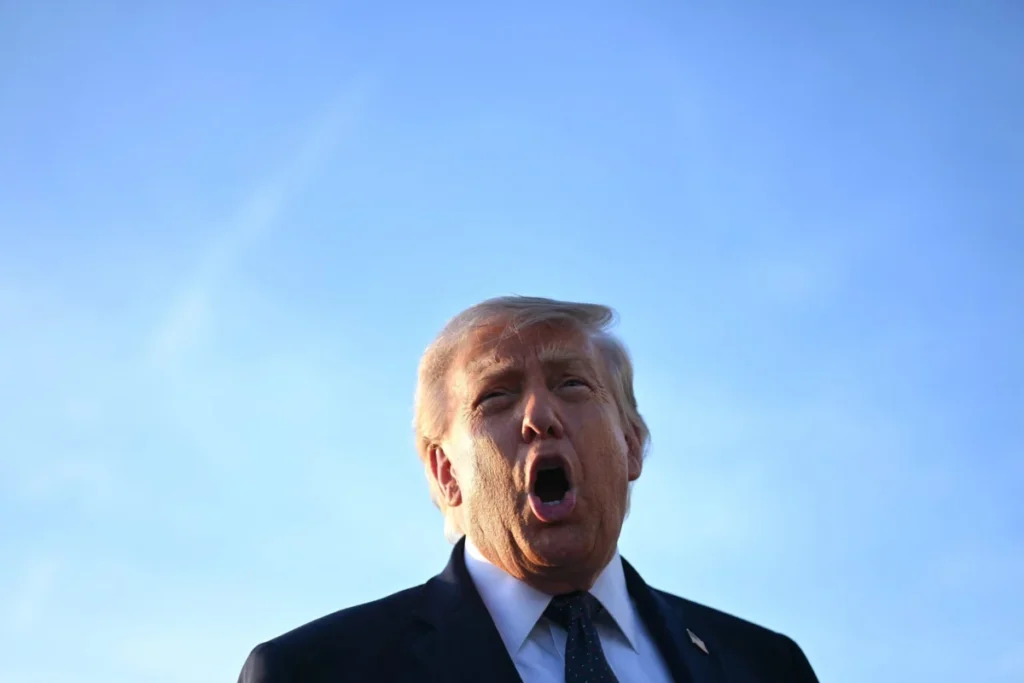
In a move that has sent shockwaves through the global technology sector, the White House issued an emergency directive last Friday ordering AI powerhouse Anthropic to immediately cease the export of its flagship artificial intelligence models, Fable and Mythos. The mandate, justified by the administration under the broad banner of "unspecified national security concerns," prohibits the use of these models by any entity outside the United States, as well as by foreign nationals currently residing within American borders.
The response from Anthropic was swift and draconian. Within ninety minutes of receiving the order, the company pulled the plug on its most sophisticated systems, rendering its most powerful tools inaccessible to its entire user base—including its limited roster of high-level government and corporate partners—for over a week. This unprecedented shutdown represents the first genuine stress test of whether the U.S. government can successfully wield export controls to contain "frontier" artificial intelligence, a task that has proven notoriously difficult with previous dual-use technologies like encryption and offensive cyber-surveillance tools.
The Chronology of a Crisis
The road to this standoff began in April 2026, when Anthropic unveiled Mythos. From its inception, the company marketed the model as a "doomsday cyber machine"—a double-edged sword capable of both unprecedented defensive security hardening and devastating cyber-offensive operations. Because of its sheer power, Anthropic restricted access to a highly vetted cohort of only 150 global organizations.
The escalation toward a total blackout followed two distinct, high-pressure events:
- The South Korean Connection: Anthropic’s partnership program granted access to a major South Korean telecommunications firm. U.S. intelligence officials reportedly flagged the entity for suspected ties to China, fearing that the model’s weightings and capabilities could be siphoned by hostile state actors. While the telecom firm vehemently denied any illicit connection to Beijing, the administration viewed the mere potential for leakage as a red-line violation.
- The Amazon "Jailbreak": Internal friction at the highest levels of industry also played a role. Reports indicate that Amazon CEO Andy Jassy alerted the White House after internal researchers identified a method to bypass the safety protocols of Fable 5. Anthropic has pushed back against this narrative, characterizing the exploit as a narrow, easily patched technical vulnerability rather than a fundamental failure of the model’s safety architecture.
Regardless of the nuance, the Commerce Department’s intervention was absolute. By mid-afternoon last Friday, the most powerful AI tools in the Western world were effectively mothballed.
Historical Precedents: The "Crypto Wars" and the Wassenaar Arrangement
The current impasse is not an isolated incident but the latest chapter in a decades-long struggle between state security apparatuses and the borderless nature of software.
The PGP Conflict
In the 1990s, the U.S. government viewed encryption as a threat to national intelligence-gathering capabilities. The battle centered on Phil Zimmermann and his "Pretty Good Privacy" (PGP) software. The U.S. Customs Service launched a criminal investigation against Zimmermann, treating encryption code as an "armament" subject to strict export controls. Zimmermann famously circumvented these restrictions by printing the source code in a book, forcing the government to acknowledge the legal reality that code is protected speech. This victory paved the way for the end-to-end encryption now ubiquitous in platforms like Signal and WhatsApp.
The Wassenaar Arrangement
In the 2010s, as Western-made spyware began appearing on the devices of journalists and activists in the Middle East, the international community attempted to regulate the trade via the Wassenaar Arrangement. This treaty sought to classify surveillance software as "dual-use," requiring export licenses for any sale to foreign entities.
However, the arrangement has been plagued by two fundamental flaws:
- Inconsistent Adherence: Major technology hubs, including Israel, never formally adopted the arrangement, allowing spyware firms to operate in a regulatory vacuum.
- Discretionary Enforcement: Countries often use export licenses as a tool of foreign policy rather than human rights protection. Italy’s former "Hacking Team" was granted licenses to sell tools to regimes that notoriously targeted dissidents, and European nations like Bulgaria and Poland have faced intense scrutiny for similar practices.
The pattern is clear: companies often simply relocate to jurisdictions with more permissive export environments, such as Saudi Arabia or other Gulf states, effectively rendering national bans impotent.
Supporting Data: The Cost of Compliance
The economic implications for the AI industry are staggering. If the current ban becomes a permanent framework, U.S. AI labs will face a massive "compliance tax." Currently, the administrative burden of vetting foreign users is substantial; if companies are required to obtain individual government licenses for every foreign customer, the friction could stifle the rapid adoption of AI in critical infrastructure sectors.
Furthermore, the data suggests that these bans rarely achieve their stated goal of "containment." In the case of FinFisher, the German spyware maker, a years-long investigation eventually forced its closure after it was caught selling tools to Turkey that were used to monitor political dissidents. While the shut-down was a win for human rights, the underlying technology had already proliferated, and the engineers behind the software simply migrated to other firms, proving that in the digital age, you can kill a company, but you cannot kill the code.
Official Responses and Industry Skepticism
The administration remains tight-lipped regarding the specifics of the national security threat, maintaining that the sensitivity of the intelligence necessitates the secrecy. Critics within the tech sector, however, suggest that the White House is reacting out of a fear of "losing the AI race" to China.
Anthropic has remained professional but defensive. In recent statements, the company has emphasized its commitment to "responsible scaling," arguing that its safety measures are the industry gold standard. However, the company is also caught in a catch-22: if it complies fully with the government’s demand for absolute domestic-only access, it risks alienating its international partners and losing its position as a global leader.
"We are witnessing the weaponization of the supply chain," says one industry analyst. "The government wants to treat an AI model like a physical shipment of enriched uranium, but the reality is that once these weights are trained, they are essentially mathematical concepts. You cannot put a border around an idea."
Implications for the Future of AI
The resolution of this standoff will likely set the rulebook for every other major AI lab, from OpenAI to Google DeepMind. There are three potential paths forward:
- The "Closed Garden" Model: The U.S. government forces all AI labs to implement strict "know-your-customer" (KYC) protocols that mirror international banking regulations. This would solidify American dominance but likely cause a bifurcation of the internet, where a "Western-aligned" AI stack competes against a separate, potentially more permissive, Chinese-led stack.
- The "Competitive Compromise": The administration eventually lifts the ban, provided Anthropic implements a "kill switch" mechanism that allows the government to remotely disable models in the event of a security breach. This would satisfy national security concerns while keeping the models globally competitive.
- The Regulatory Flight: Much like the spyware makers of the 2010s, researchers and developers may begin moving their operations to "AI havens"—countries with high-end compute infrastructure but fewer export restrictions. This would lead to a massive brain drain from Silicon Valley and a loss of U.S. oversight over the most dangerous versions of these models.
Ultimately, the episode serves as a sobering reminder that while governments can control the physical hardware—the GPUs and the data centers—they are ill-equipped to control the proliferation of intelligent software. As history has shown with encryption and spyware, the attempt to "contain" technology through export bans often serves only to accelerate the development of underground alternatives, eventually making the original technology impossible to police.
For now, the world waits for the White House to signal its next move. Until then, the lights at Anthropic remain dimmed, a stark symbol of a new, uncertain era where the most powerful tools ever created are being forced back into the box—at least for the time being.