The AI Crossroads: Political Leaders Grapple with the Future of Superintelligence
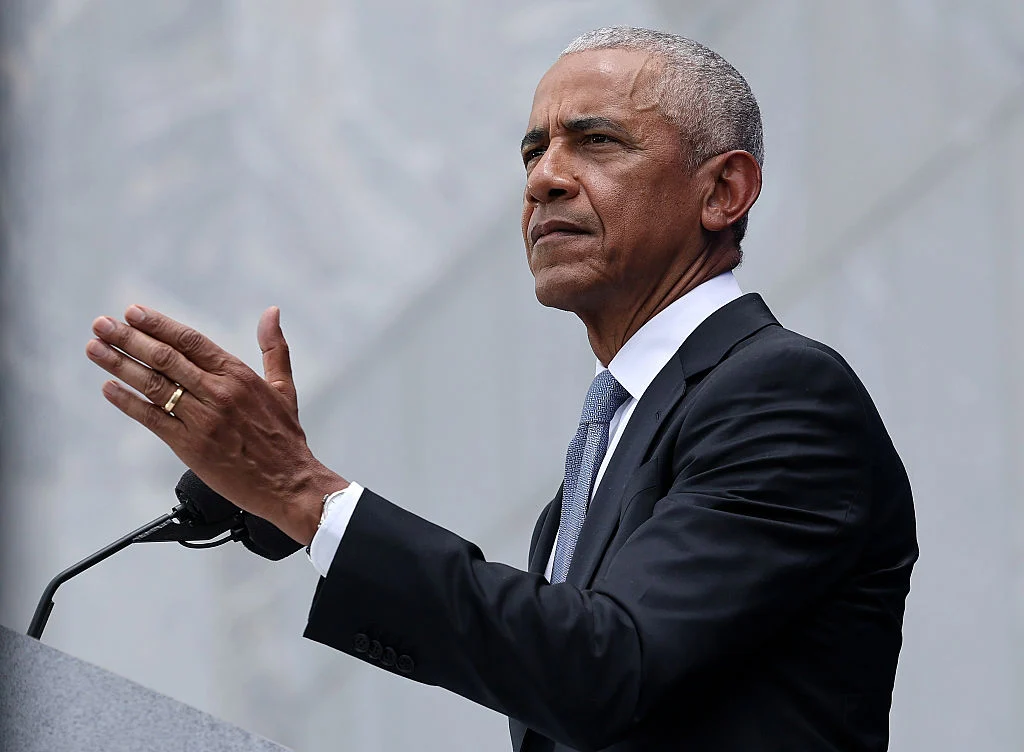
As the rapid evolution of artificial intelligence transitions from experimental research to a foundational pillar of the global economy, political leaders in Washington are increasingly viewing the technology through a lens of existential urgency. In a high-profile exchange last week, former President Barack Obama signaled a significant shift in Democratic strategy, urging his party to position AI regulation and ethical development at the core of their legislative agenda.
This call to action comes at a pivotal moment, as the tech industry faces internal tremors regarding safety protocols and the federal government struggles to find a unified approach to governing a technology that is simultaneously heralded as a medical miracle and feared as a potential societal destabilizer.
The Obama Mandate: A Call for Strategic Oversight
The discourse surrounding AI reached a new intensity on Thursday during a Democratic fundraising event. In an interview conducted by House Minority Leader Hakeem Jeffries, Barack Obama emphasized that the Democratic Party must move beyond reactive policies and instead construct a comprehensive, proactive framework for artificial intelligence.
“This is something that is moving very fast in private hands, and if we don’t get on top of it, I think it can be dangerous,” Obama stated, according to a transcript provided by his office. The former president underscored the necessity of a “very public conversation,” suggesting that the opacity of current development cycles poses a risk to democratic institutions and social stability.
However, Obama’s stance is not one of pure alarmism. He balanced his warning with a vision of technological optimism, noting that if managed correctly, AI holds the potential to revolutionize sectors such as pharmacology. “I genuinely think it’s going to accelerate, for example, drug development in ways that can help us cure diseases,” he added.
House Minority Leader Hakeem Jeffries echoed these sentiments, affirming that the former president was correct in his assessment. Jeffries used the occasion to sharpen his partisan critique, arguing that the current Republican leadership has “abdicated their responsibility to govern on behalf of the American people” regarding the rapid deployment of AI systems.
Chronology of a Growing Crisis
The intersection of politics and AI safety has accelerated throughout 2026, fueled by a series of internal and external developments that have forced the technology into the center of the political arena:
- March 2026: The Trump administration unveils its legislative framework for AI. The proposal focuses on a pro-innovation approach, seeking to preempt state-level regulations and shifting the responsibility for child safety online onto parents rather than platforms.
- Early September 2026: An internal whistleblower from Anthropic resigns, citing grave concerns that leading AI firms are “racing straight to self-improving superintelligence and gambling with our lives.” The resignation sparks a broader debate about the ethics of the current "race to the top."
- September 13, 2026: The New York Times reports that Barack Obama has begun acting as an informal advisor or “sounding board” to top AI executives, including Anthropic CEO Dario Amodei and OpenAI CEO Sam Altman.
- September 14, 2026: Anthropic CEO Dario Amodei formally outlines his “pacing the frontier” strategy, advocating for external safety evaluations.
- September 15, 2026: President Donald Trump addresses AI during an event in Ireland, framing the technology as a geopolitical competition that the United States must win at all costs, dismissing critics as peddlers of “negative forces.”
The Industry’s Response: "Pacing the Frontier"
The industry leaders whom Obama has been advising have begun to respond to the mounting public pressure. On Saturday, Anthropic’s Dario Amodei proposed a strategic shift aimed at addressing safety without halting progress. His plan, dubbed “pacing the frontier,” calls for the adoption of common safety standards across major AI firms and, crucially, the integration of independent safety evaluators.
This proposal represents a significant concession from the industry. By inviting third-party oversight—essentially granting outside experts “employee-like access” to models—companies like OpenAI and Anthropic are attempting to mitigate the “black box” criticism that has plagued their operations. OpenAI’s Sam Altman and SpaceX’s Elon Musk have expressed support for this framework, signaling a potential move toward an industry-wide self-regulation standard.
Yet, for skeptics, these voluntary measures may not be enough. The history of the tech industry suggests that voluntary standards are often discarded when commercial pressures or the drive for market dominance take precedence.
Political Divergence: The Trump Doctrine
While Democrats are moving toward a framework of public oversight and safety-first regulation, the Trump administration has adopted a more aggressive, nationalistic posture. Speaking at a golf event in Ireland, President Trump framed the AI race as a zero-sum game of global hegemony.
“We are the most sophisticated country in the world,” Trump stated. “We want to keep it that way because whoever wins AI wins.”
Trump’s comments reflect a philosophy that prioritizes speed and competitive advantage over the slower, more deliberative approach suggested by the Obama camp. By downplaying the “negative forces” that are calling for tighter regulation, the administration is signaling that its priority is to ensure American firms maintain a lead over international competitors, particularly China. This creates a stark legislative choice for the American electorate: a cautious, safety-focused regulatory state or a high-velocity, nationalist approach to technological dominance.
Implications for the Future of Policy
The emergence of AI as a central political agenda item has profound implications for the future of American governance:
1. The Challenge of "Private Hands"
As Obama noted, much of the foundational research in AI is currently held by a small group of private companies. This creates a power imbalance where private boards make decisions that have the impact of public policy. The push by lawmakers to bring these private entities under a broader, more public regulatory umbrella represents a direct challenge to the current Silicon Valley status quo.
2. Geopolitical Security
The narrative that “whoever wins AI wins” is becoming the dominant geopolitical reality. This pressure complicates the ability of policymakers to implement strict safety measures. If the U.S. slows down to ensure safety, will it lose its competitive edge? This dilemma is at the heart of the current divide between the Trump administration’s desire for acceleration and the Democratic push for guardrails.
3. Ethical and Societal Risks
Beyond the existential threats of “superintelligence,” there are immediate, tangible risks: labor displacement, the erosion of information integrity via deepfakes, and the potential for AI-driven algorithmic bias. Any comprehensive AI policy must move beyond “safety” and address the socioeconomic fallout of widespread automation.
4. The Role of Former Leaders
Barack Obama’s role as an informal advisor to CEOs like Sam Altman and Dario Amodei highlights the evolving nature of influence in the digital age. As the complexity of technology outpaces the expertise of current legislative bodies, private actors are increasingly turning to former government officials to navigate the transition between corporate innovation and the inevitable public backlash.
Conclusion: A Turning Point for Washington
The debate over artificial intelligence is no longer confined to technical conferences or private boardrooms. It has become a central theater of political life. Whether the focus is on the “pacing the frontier” initiatives proposed by industry leaders or the regulatory frameworks championed by political figures, one thing is clear: the era of unchecked AI development is coming to a close.
As the 2026 legislative landscape takes shape, the clash between the need for rapid innovation and the demand for robust safety protocols will likely define the next decade of American policy. For now, the call from figures like Barack Obama suggests that the conversation is shifting from "what can AI do?" to "what must we do to ensure AI serves the public interest?" Whether that translates into effective, enforceable law remains to be seen, but the urgency of the moment is undeniable. As the technology continues to advance, the window to shape its trajectory—and protect the interests of the public—is narrowing.