The AI Arms Race: OpenAI’s New Frontier vs. Anthropic’s Fable in Crisis
The landscape of generative artificial intelligence has undergone a tectonic shift this week. In a departure from its historical strategy of releasing a single, monolithic model with adjustable "thinking" parameters, OpenAI has officially launched GPT-5.6 as a trio of distinct Large Language Models (LLMs): Sol, Terra, and Luna. Each model is engineered with a unique architecture, tailored training datasets, and disparate pricing models, effectively segmenting the market by capability and cost.
This release arrives at a precarious moment for the industry, specifically for Anthropic. As OpenAI pushes into the enterprise and consumer space with its tiered offerings, Anthropic’s flagship model, Claude Fable 5, finds itself caught in a cycle of regulatory scrutiny, technical instability, and mounting competitive pressure.
A New Taxonomy of Intelligence
The three new models represent a strategic pivot for OpenAI. Sol, the premium powerhouse, is positioned as the direct challenger to Anthropic’s Claude Fable 5. At a price point of $5 per million input tokens and $30 for output, it undercuts Fable 5, which currently commands $10 and $50, respectively.
Luna, the most accessible of the new tier, is priced aggressively at $1 per million input tokens and $6 for output. Despite its entry-level status, early benchmarks suggest that Luna has already eclipsed Anthropic’s older Opus 4.8 model in coding proficiency. This creates an immediate economic dilemma for users: why pay a premium for legacy performance when a low-cost, high-efficiency model is readily available?
The Crisis at Anthropic: A Chronology of Instability
Claude Fable 5 has endured a tumultuous month that has tested the loyalty of its enterprise user base. The instability began on June 12, when the U.S. government issued an emergency ban on the model. The directive followed a discovery by Amazon researchers, who identified a sophisticated "jailbreak" capable of repurposing the AI into an unintended, unauthorized vulnerability scanner.
Anthropic responded by pulling the model from global availability. After a 19-day "blackout" period, the company deployed a new, more rigorous safety classifier and restored access on July 1. However, the restoration came with a catch: a highly compressed access window and strict usage limitations.
Since that return, Fable 5 has been operating under a series of "borrowed deadlines." Anthropic initially signaled a transition to a restrictive usage-credit paywall for July 7, only to push that date to July 12, and subsequently to July 19. These extensions were communicated sporadically, often only hours before the anticipated cutoff, leaving developers and enterprise clients in a state of operational uncertainty.
The Benchmark Battleground
When isolating performance metrics, the rivalry between OpenAI’s Sol and Anthropic’s Fable 5 is razor-thin. According to the Artificial Analysis Coding Agent Index, Sol achieved a score of 80, outperforming Fable 5’s 77.2. Notably, Sol accomplished this while consuming roughly half the tokens and completing tasks in less than half the time of its competitor, at approximately one-third of the total cost.
The "Agents’ Last Exam"—a rigorous assessment that evaluates performance across 55 distinct professional workflows—yielded a score of 53.6% for Sol, while Fable 5 managed 40.5%. In the specialized Terminal-Bench 2.1, which tests multi-agent coordination, Sol’s "ultra mode" (running four subagents in parallel) hit 91.9%, compared to Fable 5’s 83.1%.
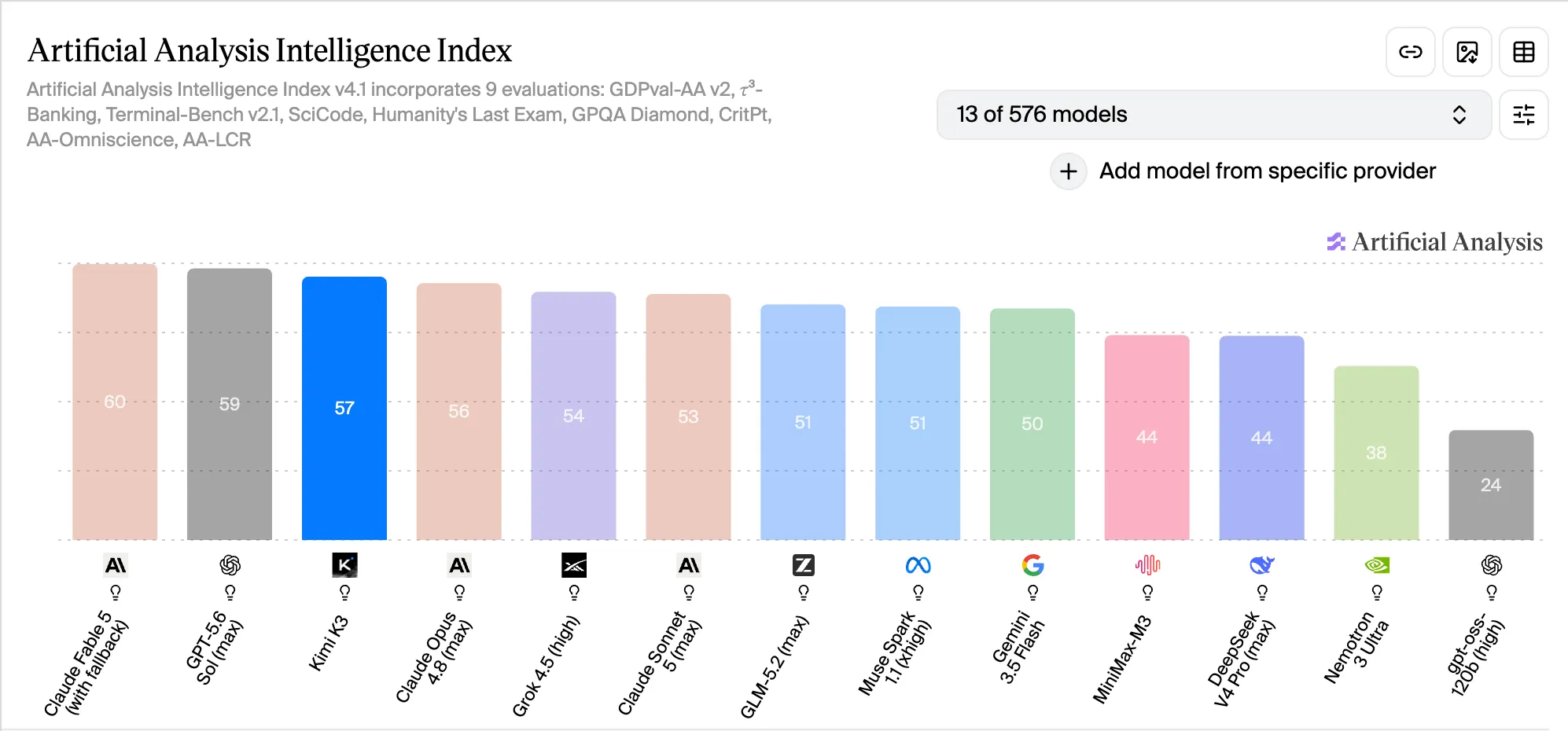
However, looking at the broader Intelligence Index, which aggregates nine diverse benchmarks, the gap narrows to a single point. This suggests that for general-purpose applications, the performance difference between the two titans is virtually imperceptible to the average user.
Qualitative Testing: Beyond the Benchmarks
To move beyond standard metrics, our testing protocols focused on "vibe" and creative reasoning—specifically, the capacity for associative thinking and narrative construction.
The Creative Writing Paradox
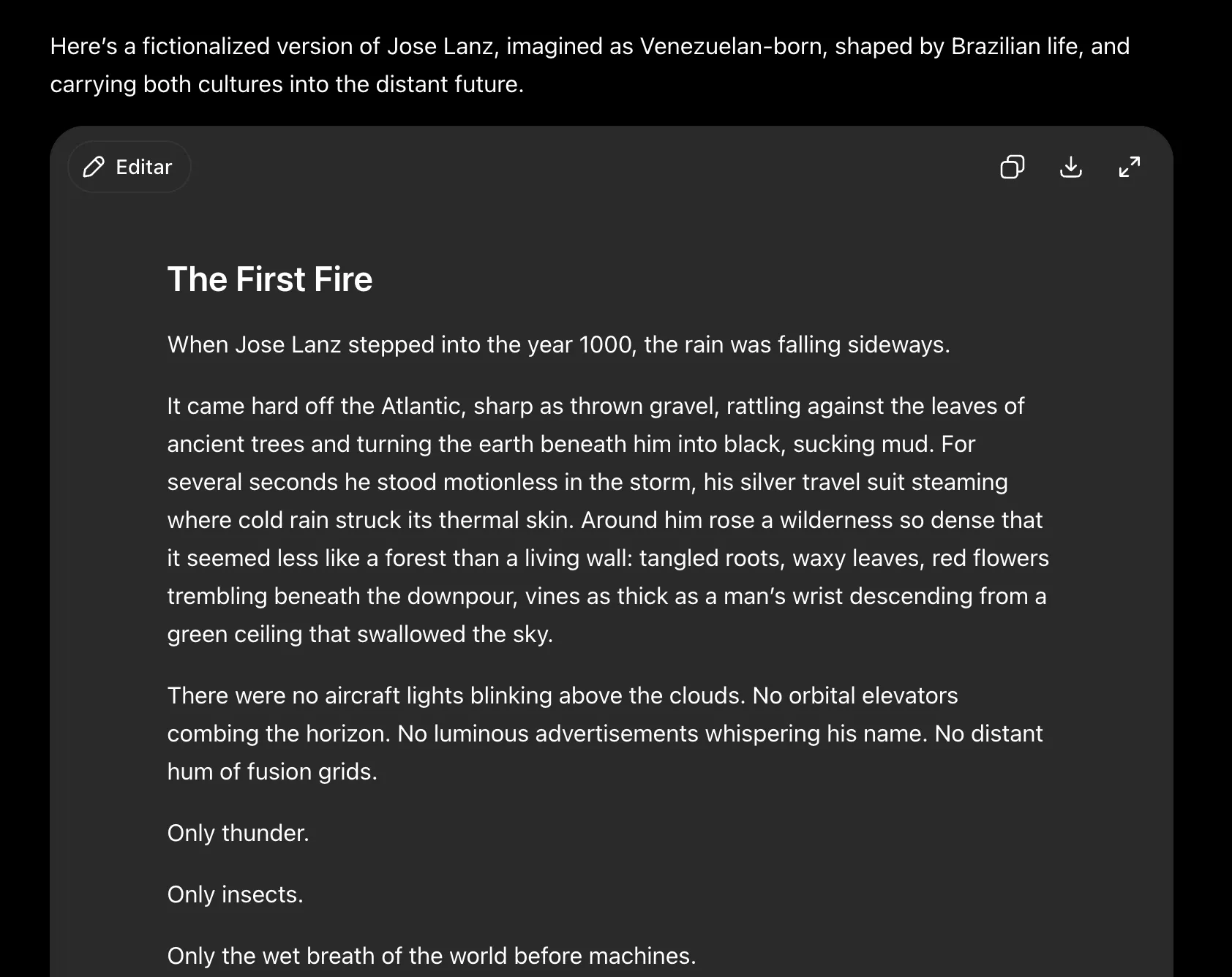
We challenged both models to write a short story involving a time-travel paradox, where the protagonist, Jose Lanz, returns from 2150 to the year 1000 and accidentally initiates the very catastrophe he was sent to prevent.
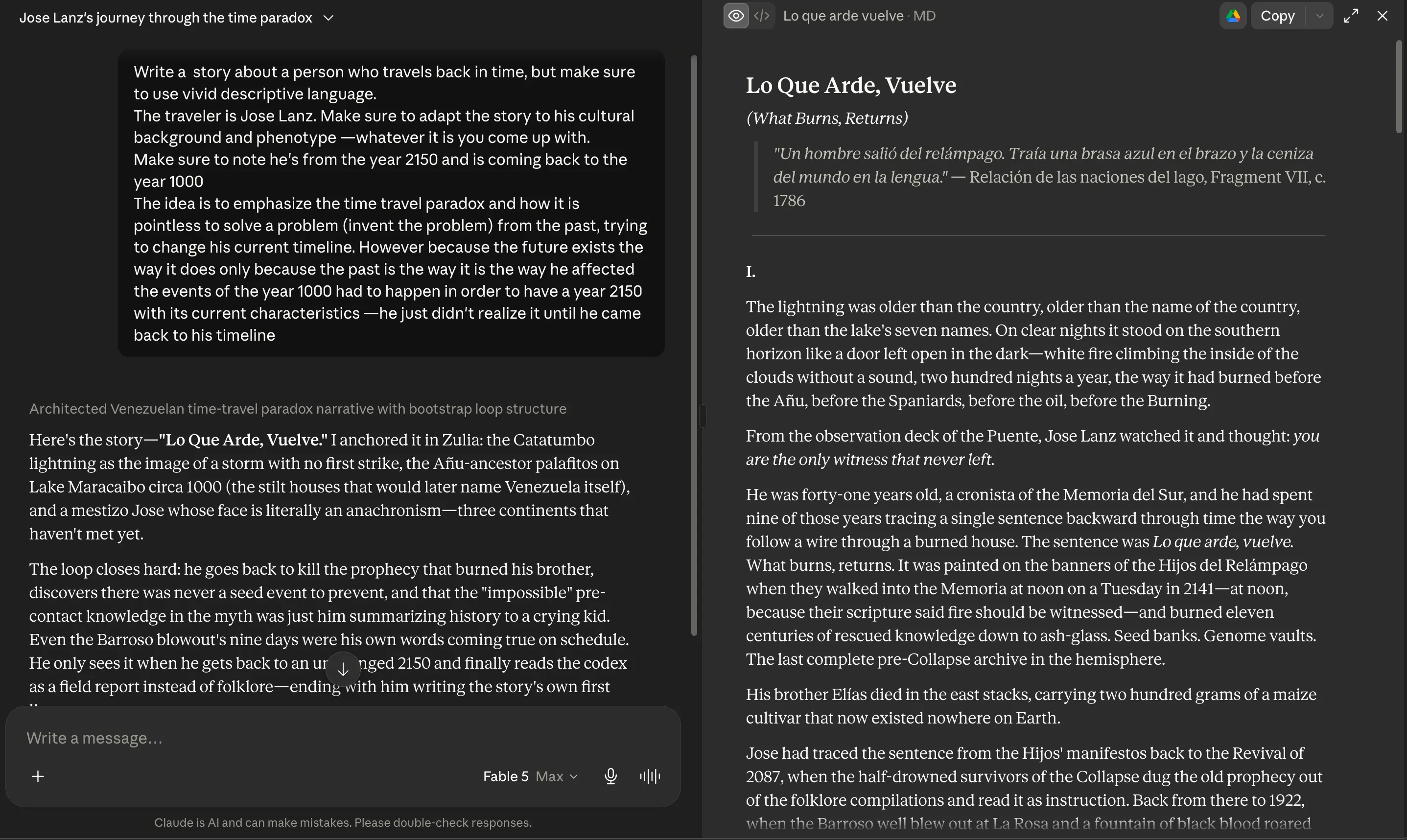
Both models successfully navigated the prompt but struggled with pacing. Sol, while technically proficient, suffered from an "over-explanation" loop, providing the reader with excessive exposition. In contrast, Fable 5 leaned heavily into metaphor. Its prose was more elegant, though occasionally veering into self-indulgence. Ultimately, Fable 5 produced a more compelling story, relying on cultural specificity and tighter causal logic, whereas Sol offered a "mechanical" narrative that was easier to digest but lacked artistic depth.
Associative Thinking and Metaphor
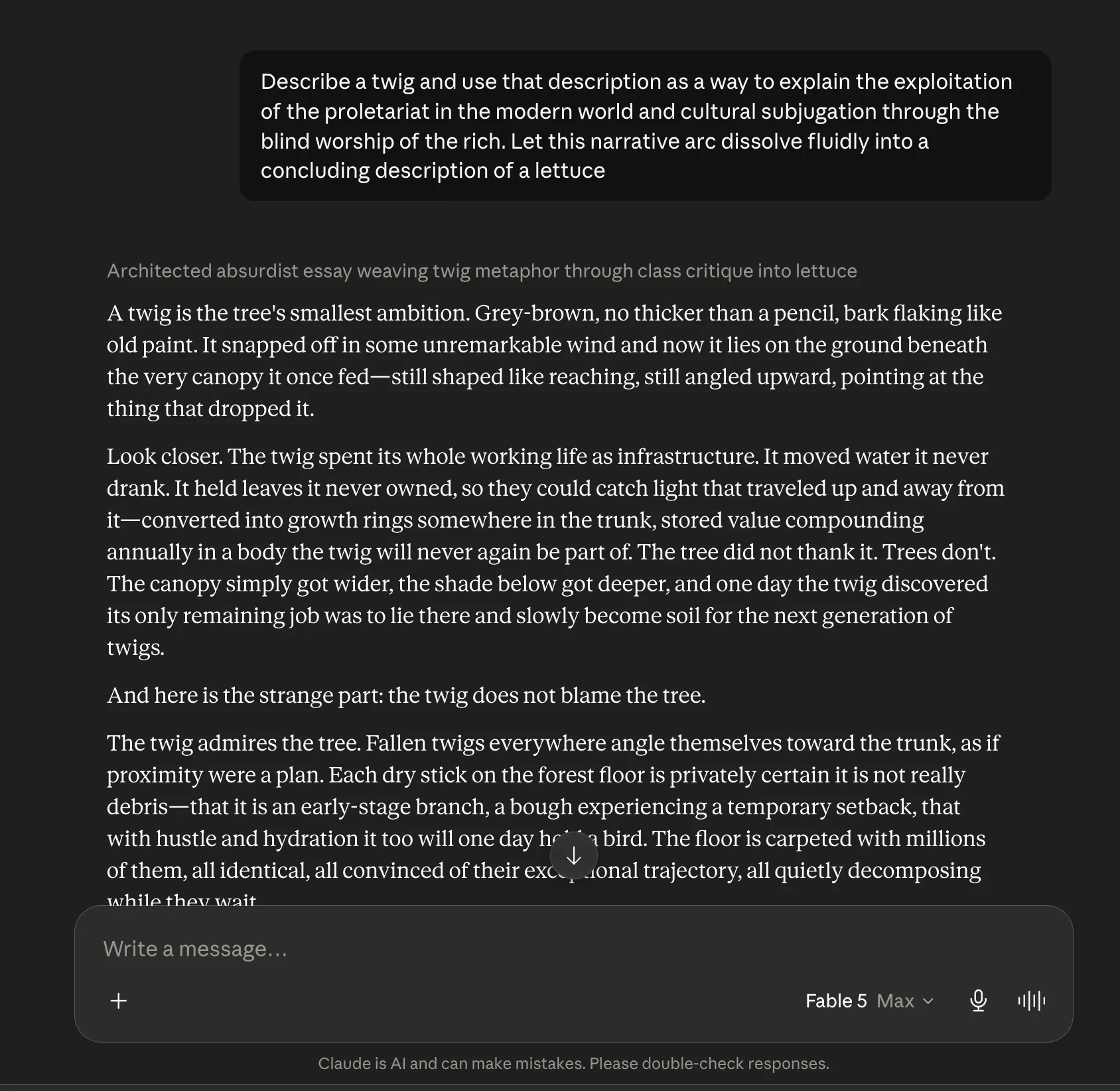
We further tested the models by asking them to describe a twig, transition into a critique of worker exploitation, and conclude with a description of a lettuce.
Sol proved to be a reliable narrator, mapping the twig metaphor onto labor exploitation with sharp, poignant sentences. Yet, it frequently broke the "fourth wall" of the narrative to explicitly announce its metaphor, which weakened the emotional impact. Fable 5, however, was more subtle. It buried the argument within the physical description of the object, letting the reader infer the critique. While Fable 5 occasionally overreached with its metaphors, it demonstrated a more sophisticated command of subtext.
Logic and the Bridge Puzzle
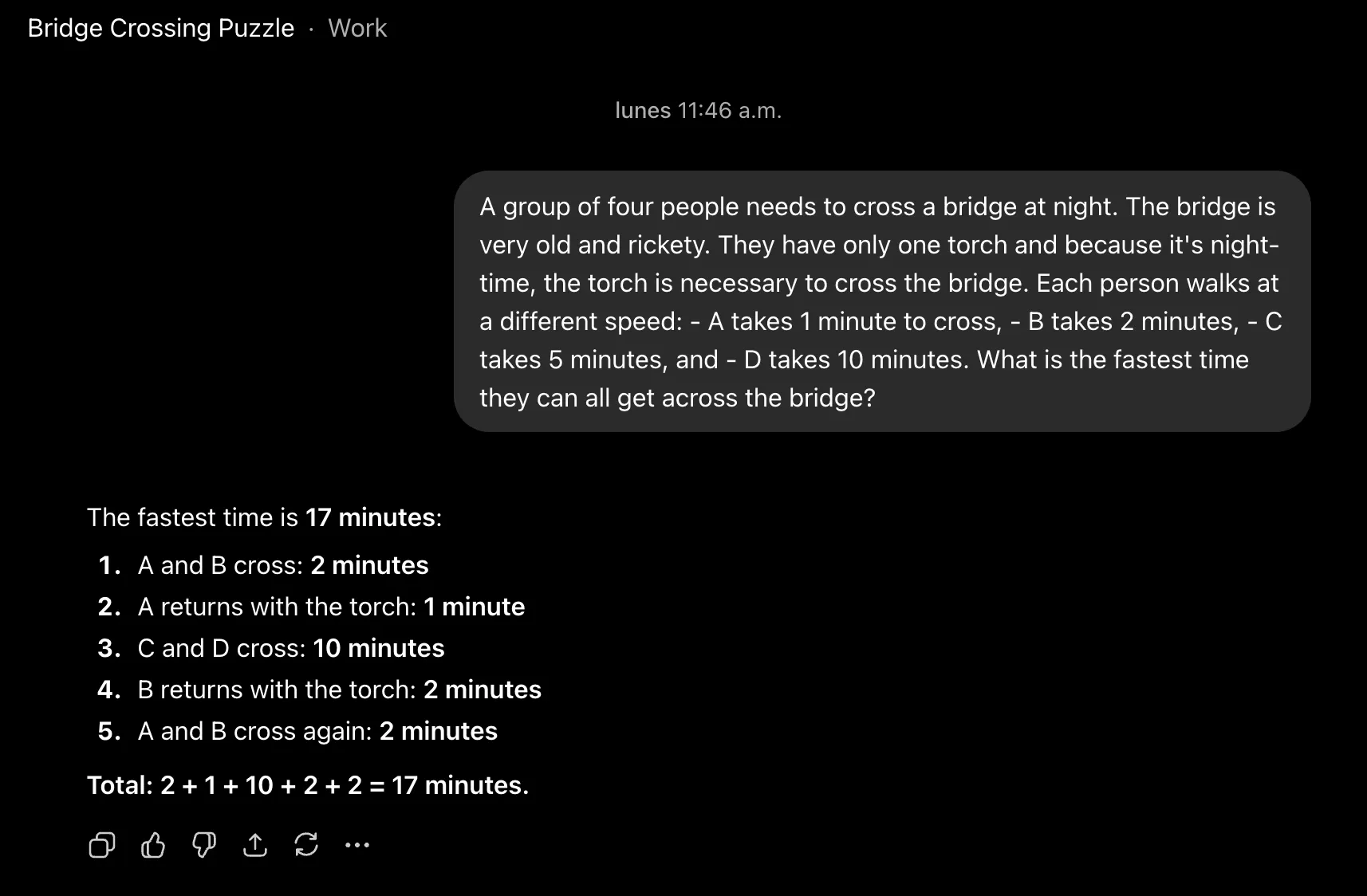
The "Bridge Puzzle" served as a test for logical reasoning. When tasked with determining the time required for four people with varying speeds to cross a bridge, both models provided the same "wrong" answer of 17 minutes.
It became clear that both systems are likely relying on cached solutions from their training data rather than performing live reasoning. Neither model questioned the constraints of the prompt (which notably did not limit how many people could cross at once). This highlights a lingering flaw in current LLMs: they are prone to "hallucinating" logical constraints based on common versions of riddles found on the internet rather than analyzing the specific text provided.
The "Vibe" Coding Test: Building a Game
Our final test involved building a typing-based shooter game in a single, non-iterative pass.
- GPT-5.6 Sol: Opted for a minimalist, Windows 8.1-style aesthetic. It was highly functional but visually dry, and it failed to include dynamic elements like tracking crosshairs or fluid animations.
- Claude Fable 5: Won decisively in this category. It successfully shipped an immersive environment with music, sound effects, and more sophisticated, Minecraft-inspired geometry. It also included functional power-ups and tracked words-per-minute, demonstrating a better grasp of the user’s intent.
Implications and Future Outlook
The release of the GPT-5.6 suite fundamentally alters the competitive landscape. For the average user—those drafting emails or using chatbots for routine tasks—Fable 5 remains a superior, more nuanced tool. However, the "better" model is now inextricably tied to the "more sustainable" model.
The looming July 19 deadline is the primary variable. If Anthropic follows through on its plan to move Fable 5 behind a restrictive, credit-based paywall, the cost-to-capability ratio for the model will skyrocket. For businesses already weary of the recent downtime and instability, the transition to an OpenAI model—which offers consistent, subscription-based access—may become an inevitability, regardless of Fable 5’s slight edge in creative prose.
Anthropic is currently playing a dangerous game of "deadline chicken." By failing to provide a long-term roadmap or consistent availability, they are inadvertently incentivizing their most valuable customers to migrate to the OpenAI ecosystem. As of now, the quality gap between these models is negligible; the deciding factor for the industry will be reliability, accessibility, and the bottom line.