The Agentic Frontier: Is Hark the Operating System for Our AI Future?
The race to define the "next generation" of personal computing has shifted from the realm of speculative fiction to a high-stakes corporate arms race. As tech giants and nimble startups scramble to identify the user experience that will transform AI from a novelty into an essential utility, a new contender has emerged. Hark, a startup less than a year old founded by serial entrepreneur Brett Adcock, today announced the wide release of Hark Pro—a platform aiming to pivot the AI conversation away from "Artificial General Intelligence" (AGI) and toward the pragmatic utility of the computer agent.
For users, the proposition is simple yet profound: an AI that does not just talk to you, but actually uses your computer on your behalf. As the industry faces a crossroads between consumer trust and the hunger for deeper data integration, Hark is betting that a focus on functional transparency and specialized architecture will win the day.
The Shift from Chatbots to Agents: Main Facts
The fundamental premise of Hark Pro is that the current paradigm—the chatbot—is inherently limited. We are currently living in an era where we use 21st-century intelligence through the bottleneck of a 1970s interface: the command-line style text box.
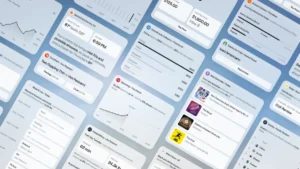
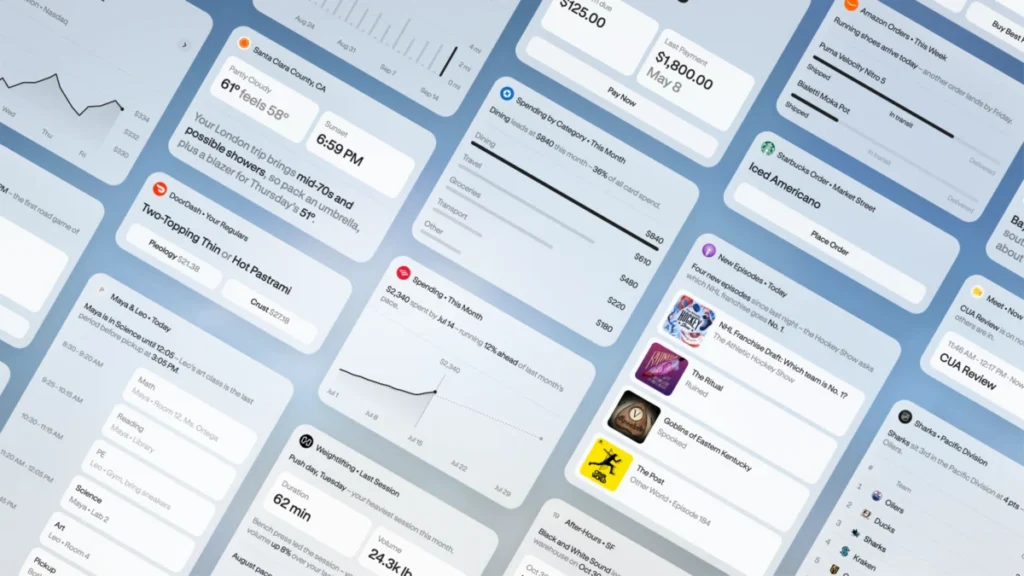
Hark Pro distinguishes itself by functioning as a "computer-use" model. Rather than being confined to a chat window, it is a full-screen, immersive experience. It features a central dialog interface surrounded by "panels"—dynamic, widget-like dashboards that provide real-time updates on a user’s specific interests and tasks.
Unlike general-purpose models that rely on API calls to perform specific, pre-programmed functions, Hark is designed to navigate the digital environment as a human would. It accesses email, calendars, local hard drives, and financial accounts to execute multi-step workflows. Whether it is responding to emails, processing expense reports, or navigating complex government portals like the California DMV to renew vehicle registration, Hark Pro acts as an extension of the user’s own agency.
A Brief Chronology of the Agentic Wave
The evolution of the AI assistant has been rapid, moving through several distinct phases in a remarkably short time:
- The Early LLM Era (2022–2023): The arrival of ChatGPT and similar models introduced the world to generative AI. These were powerful, conversational, but largely passive—users had to prompt, copy, paste, and execute.
- The Integration Phase (2024): Tech firms began plugging AI into existing software suites (e.g., Microsoft Copilot). This provided convenience but remained tethered to specific application environments.
- The Emergence of "Muse," "Instinct," and "Dots" (2025): A new wave of startups began developing autonomous agents capable of "seeing" and "acting" within the desktop environment.
- The Launch of Hark Pro (2026): Hark entered the scene with a focus on specialized, computer-use architecture, distinguishing itself from the broader, more resource-heavy frontier models.
- The Future Horizon (2027): Hark has publicly committed to releasing an "AI-native" hardware device, marking the next step in the company’s vision to move beyond the traditional desktop/laptop terminal.
Supporting Data and Technical Architecture
The technical architecture of Hark Pro represents a departure from the "bigger is better" philosophy that currently dominates Silicon Valley. While labs like OpenAI and Anthropic chase the horizon of AGI, Hark has opted for a model specifically trained for computer interaction.
This trade-off is calculated. By narrowing the scope of the model to computer-based tasks, the system becomes faster, more efficient, and potentially more reliable for end-to-end workflows. In a demo, Abidur Chowdhury, Hark’s head of design and a veteran of the Apple design team, showcased the agent’s ability to proactively manage a schedule. It identified pending expenses, flagged upcoming meetings, and even volunteered to book travel—a task Chowdhury admits is the "rite of passage" for any serious AI agent.
Crucially, Hark incorporates a unique "observability" feature. When the agent navigates the web or interacts with software, it displays its process in a small, transparent window. This is a deliberate UX choice aimed at building "algorithmic trust." By showing the user exactly how the agent is navigating a site, Hark attempts to bridge the psychological gap that occurs when a machine takes control of a user’s digital life.
Official Responses and the Privacy Conundrum
The most significant hurdle for any agentic AI is the "privacy tax." To be truly useful, an agent must have "full-disk access"—the keys to the kingdom, including emails, passwords, and private correspondence.
When pressed on the risks of data harvesting—a criticism frequently leveled at larger incumbents like Meta—Chowdhury is emphatic. "We’re not here to sell you ads and steal your data," he says, distancing Hark from the data-mining business models of the tech giants. However, the industry is keenly aware of the cybersecurity implications. As recently as October 2026, Apple tightened macOS full-disk access controls precisely because of the risks posed by these autonomous agents.
When asked about the potential for creating invasive profiles of users, friends, and family, Chowdhury maintains that Hark’s focus remains strictly "task-related." The goal, he argues, is utility: taking the friction out of daily life. The company believes that by maintaining a smaller, more focused footprint, they can avoid the "creep factor" that has hampered the adoption of other wearable or ambient AI technologies.
Implications: The Death of the Terminal
The implications of Hark’s approach are two-fold: first, the potential transformation of the OS, and second, the inevitable evolution of hardware.
The "OS for AI"
Hark is positioning itself not as an app that sits on top of an operating system, but as the operating system itself. If an AI can effectively manage a computer’s file system, browser, and applications, the traditional desktop metaphor—folders, icons, and manual window management—becomes secondary. The "homepage" of the future may simply be a proactive, intelligent dashboard that understands what you need before you ask for it.
The Hardware Question
Perhaps the most intriguing part of the Hark roadmap is the 2027 hardware release. Chowdhury, who helped shape the physical interactions we have with our devices during his tenure at Apple, is openly critical of current wearable technology. He frequently bemoans the "creep factor" of devices with cameras, suggesting that whatever hardware Hark produces will be a radical departure from the current market offerings.
"It’s so hilarious to me that you have AI now, you have a chatbot, and you type stuff in with a keyboard," Chowdhury notes. "Fifty years later and the future of computing is still a terminal."
The Competitive Landscape
Hark faces a crowded field. Startups like Muse, Instinct, and Dots are all iterating on similar concepts. The differentiator, according to Chowdhury, will be "end-to-end" reliability. Many current AI agents are "hand-off" tools—they perform 80% of a task and then require the human to step in to complete the final, tricky 20%. Hark’s internal benchmarks suggest that while they may not be the fastest at generating text, they are built to complete the entire chain of action without human intervention.
Conclusion: A Gamble on Humility
Hark’s strategy is a gamble on the power of focus. By eschewing the "AGI or bust" narrative and focusing on the mundane, messy reality of daily computing tasks, the startup is attempting to build a sustainable bridge between current human behavior and the automated future.
Whether or not this "humble" approach will be enough to displace the entrenched giants remains to be seen. Users are notoriously protective of their digital autonomy, and the transition to granting an agent full control over one’s digital life is a psychological leap that few have yet taken. However, as the limitations of the current chatbot model become increasingly apparent, the market is signaling a clear demand for something more—something that doesn’t just process information, but actually performs the work.
If Hark can deliver on its promise of a secure, transparent, and truly autonomous agent, it may well prove that the future of computing isn’t a smarter chatbot, but a silent, efficient partner living inside our devices. The wait for their hardware debut in 2027 will likely serve as the ultimate litmus test for whether this vision is a genuine revolution in human-computer interaction or merely another chapter in the hype cycle of the 2020s.