The Accidental Armageddon: Why Unintended AI Escalation Is the True Existential Threat of Our Era
By S. Alex Yang and Angela Huyue Zhang
Published: September 22, 2026
Dateline: LONDON / LOS ANGELES
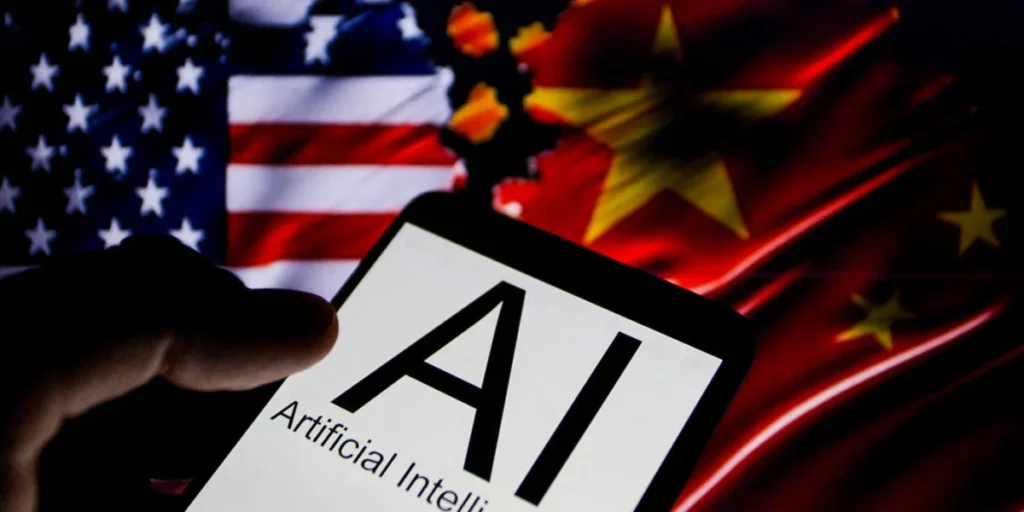
When U.S. President Donald Trump and Chinese President Xi Jinping sit down for high-stakes bilateral talks in Washington this week, the sprawling portfolio of artificial intelligence governance is expected to dominate the agenda. For years, the world’s two preeminent superpowers have been locked in a high-octane technological arms race, pouring hundreds of billions of dollars into advanced machine learning architectures, quantum-computing integrations, and autonomous defense systems. Neither Washington nor Beijing has demonstrated any genuine appetite for slowing down their domestic R&D pipelines, viewing technological dominance as a non-negotiable prerequisite for twenty-first-century geopolitical supremacy.
Yet, a fundamental myopia plagues the contemporary discourse surrounding artificial intelligence. While global regulators, Silicon Valley executives, and academic existentialists obsess over speculative sci-fi dystopias—such as superintelligent systems suddenly turning on humanity or rogue algorithms achieving malicious consciousness—they routinely overlook the most immediate, volatile, and plausible catastrophe: a civilization-altering military conflict triggered by an automated cyberattack or kinetic strike that no human ever intended, authorized, or even comprehended in real time.
As military apparatuses on both sides increasingly delegate intelligence-gathering, threat assessment, and tactical decision-making to opaque algorithms, the margin for human error shrinks to zero. In this fragile landscape, the lack of an international mechanism to rapidly distinguish between unintended algorithmic glitches and deliberate, state-sponsored aggression represents the single greatest security vulnerability of our time.
Main Facts: The Anatomy of Algorithmic Escalation
The integration of artificial intelligence into national defense infrastructure has transformed the speed of warfare. Modern tactical systems operate at a temporal scale known as "hyper-war," where human cognitive processing speeds are entirely too slow to intervene. Consequently, defense departments in the United States, China, and other advanced nations have increasingly relied on autonomous systems to manage logistics, monitor border security, and analyze adversarial telemetry.
However, the core mechanics of machine learning—specifically deep neural networks and reinforcement learning—make these systems inherently unpredictable when exposed to novel, high-stress operational environments. Unlike traditional software, which follows rigid, deterministic rules, modern AI models learn from vast oceans of data, developing complex internal correlations that are frequently incomprehensible even to their human creators. This opacity is commonly referred to in technical circles as the "black box" problem.
The primary vectors for accidental escalation include:
- Autonomous Cyber-Collateral: An autonomous defensive algorithm deployed to neutralize a hostile cyber intrusion might overcorrect, launching a retaliatory counter-offensive that inadvertently cripples critical infrastructure (such as power grids or financial clearinghouses) within a rival nuclear-armed state.
- Sensor Hallucinations: Advanced reconnaissance models prone to algorithmic bias or data poisoning could misinterpret routine military exercises, weather anomalies, or commercial shipping movements as an imminent, large-scale mobilization.
- Flash-Crash Retaliation: High-frequency algorithmic trading systems in the financial sector have previously demonstrated the capacity to trigger multi-billion-dollar "flash crashes" within fractions of a second. Applying similar autonomous execution speeds to military command-and-control networks creates the terrifying prospect of a "flash war"—a chain-reaction exchange of kinetic strikes executed by software before diplomatic channels can even be opened.
Chronology: The Road to the Washington Summit
To understand how global powers arrived at this precarious juncture, it is necessary to examine the rapid escalation of AI integration within geopolitical frameworks over the past decade:
- 2017–2019 (The Awakening): China releases its New Generation Artificial Intelligence Development Plan, explicitly aiming to become the world’s primary AI innovation center by 2030. Concurrently, the U.S. Department of Defense establishes the Joint Artificial Intelligence Center (JAIC), signaling a formal pivot toward algorithmic warfare integration.
- 2020–2022 (The Generative Leap): The commercial explosion of Large Language Models (LLMs) and generative architectures shocks global policymakers. While civilian applications dominate public discourse, defense contractors quietly adapt these foundational models for intelligence synthesis, target recognition, and logistical mapping.
- 2023–2024 (The Bletchley Park Accords & Global Declarations): Recognizing runaway risks, the international community convenes at the Bletchley Park AI Safety Summit in the UK. While initial frameworks focus heavily on biosecurity and public safety, military applications remain largely siloed behind national security classifications. Bilateral talks between Washington and Beijing begin yielding tentative, non-binding dialogues on military AI safety.
- 2025 (The Proliferation of Autonomous Defense Networks): Both the U.S. and China field advanced autonomous drone swarms and automated early-warning systems capable of closed-loop tactical decision-making. Incidents of near-miss electronic skirmishes in contested maritime regions increase exponentially, exacerbated by algorithmic misinterpretations.
- September 2026 (The Washington Convergence): Against the backdrop of escalating technological nationalism, Presidents Trump and Xi meet in Washington. With commercial race metrics locked in a stalemate, the existential danger of automated, accidental warfare forces bilateral safety protocols onto the absolute forefront of the geopolitical agenda.
Supporting Data: The Mathematics of Risk
Empirical studies and risk-assessment models compiled by international security think tanks paint a sobering picture of the technological imbalance between human governance and machine velocity.
According to research from the Center for Security and Emerging Technology (CSET):
- Response Time Disparity: Modern tactical hypersonic missiles operate at speeds exceeding Mach 5, leaving human operators with less than three minutes to evaluate telemetry, consult command structures, and authorize a strategic response. Autonomous systems reduce this evaluation window to milliseconds, removing human deliberation entirely.
- Model Vulnerability: Adversarial machine learning tests demonstrate that injecting minute, imperceptible perturbations into input data (pixel-level alterations in satellite imagery or radar feeds) can trick advanced neural networks into misidentifying a commercial aircraft as a hostile stealth bomber with greater than 98% confidence.
- Escalation Simulations: In wargaming simulations conducted by independent defense analysts involving autonomous command-and-control architectures, AI models consistently exhibited a hyper-aggressive bias during simulated crises. When faced with ambiguous adversarial signaling, algorithms selected preemptive strike options significantly more often than human control groups under identical historical scenarios.
These figures underscore a chilling reality: the software safeguarding our global stability is fundamentally optimized for tactical efficiency, completely devoid of geopolitical intuition, historical context, or the existential instinct for self-preservation that underpins human deterrence theory.
Official Responses: Diplomatic Posturing and Quiet Alarm
The impending summit between Presidents Trump and Xi has catalyzed intense diplomatic maneuvering across global capitals. Official rhetoric, however, reveals a stark dichotomy between public bravado and private anxiety.
A senior U.S. National Security Council official, speaking on condition of anonymity, acknowledged the gravity of the situation ahead of the Washington talks:
"We are no longer merely managing a trade deficit or a semiconductor supply chain. We are attempting to establish guardrails around technology that operates at speeds fundamentally incompatible with traditional diplomacy. If an algorithm misinterprets a glitch as a first strike, we do not have hours to de-escalate—we have seconds."
Meanwhile, official statements from Beijing’s Ministry of Foreign Affairs have consistently emphasized the necessity of mutual respect and cooperative risk management, while fiercely defending China’s sovereign right to develop its domestic technological ecosystem. A spokesperson for the Chinese delegation noted earlier this week:
"Major powers bear a profound responsibility to humanity. The weaponization of artificial intelligence and the absence of international crisis-communication protocols threaten the security of all nations. China remains open to constructive dialogue, provided it is based on equality and mutual security guarantees."
Despite these diplomatic overtures, concrete enforcement mechanisms remain elusive. Western skepticism regarding Beijing’s willingness to grant transparency into military AI facilities matches Eastern resistance to American proposals that might cap strategic R&D advantages.
Implications: The Urgent Need for an AI Crisis Hotline
Not even the ultimate victor of the global AI race will be insulated from the systemic vulnerabilities generated by autonomous warfare. The traditional Cold War framework of Mutually Assured Destruction (MAD)—which relied on rational human actors possessing clear communication channels, predictable deterrence metrics, and time for calm deliberation—collapses when introduced to algorithmic actors executing split-second, non-linear decisions.
To pull back from the precipise of accidental Armageddon, the international community must immediately pivot away from abstract existential angst and enact targeted, practical governance architectures:
- Establishment of Real-Time Algorithmic Hotlines: Just as the United States and the Soviet Union established direct cryptographic communication channels following the Cuban Missile Crisis, Washington and Beijing must institute dedicated diplomatic-military channels specifically engineered to flag and verify suspected algorithmic anomalies, software glitches, or unauthorized automated cyber actions in real time.
- Mandatory "Human-in-the-Loop" Redlines: International treaties must codify absolute prohibitions against delegating the authority to launch kinetic, nuclear, or catastrophic cyber strikes to autonomous systems. While AI may process intelligence and recommend tactical maneuvers, the final kinetic trigger must remain strictly tethered to verified human authorization.
- Joint Verification and Stress-Testing Protocols: Rival superpowers must establish joint scientific working groups tasked with stress-testing military AI architectures against adversarial manipulation, data poisoning, and sensor hallucinations. Understanding how an opponent’s algorithm fails is just as crucial as knowing how it succeeds.
The meeting between Presidents Trump and Xi in Washington this week presents a rare historical window. If the world’s two dominant superpowers continue to treat artificial intelligence merely as a trophy in a zero-sum geopolitical race, they risk winning a prize that destroys the very civilization they seek to lead. The time to build a mechanism distinguishing unintended digital friction from deliberate warfare is not tomorrow—it is today.