Tesla Yields to European Regulators: Rebranding "Full Self-Driving" to Unlock Market Access
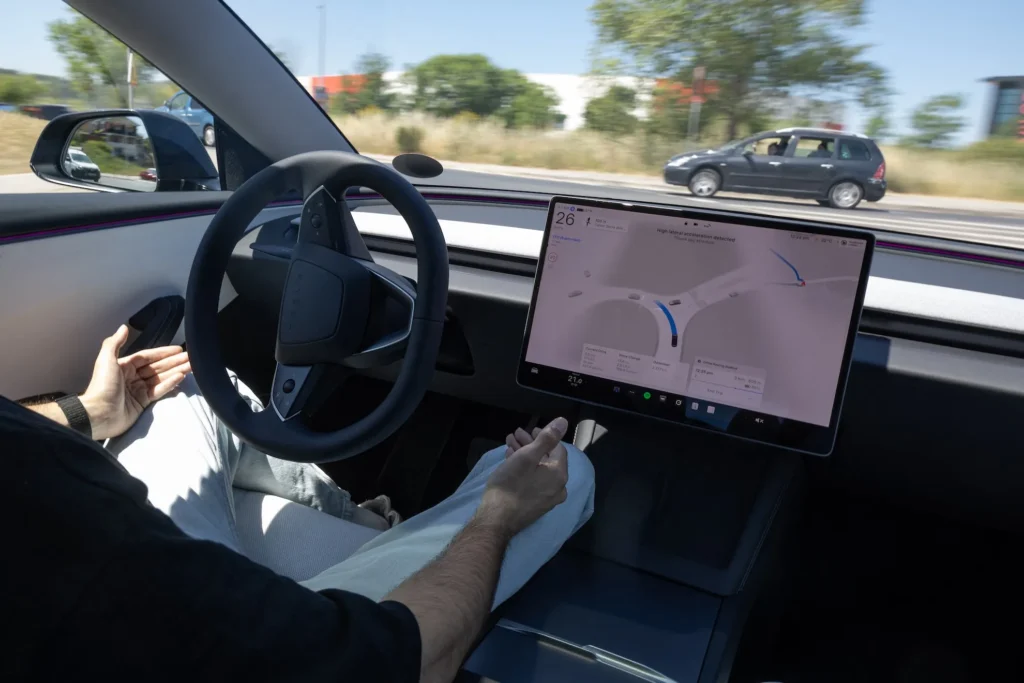
In a significant strategic pivot, Tesla has officially rebranded its controversial driver assistance software in Europe. The system, long marketed globally as "Full Self-Driving (Supervised)" (FSD), will now be referred to as "Tesla Assisted Driving" across European markets. This change marks a notable capitulation for the Elon Musk-led automaker, which has spent years defending its aggressive branding against accusations of deceptive marketing and safety concerns.
By softening the nomenclature to satisfy the German Federal Ministry for Digital and Transport (BMDV), Tesla hopes to clear the path for widespread deployment of its software in the European Union. Securing this regulatory green light represents a vital milestone for the company’s long-term revenue strategy, as it seeks to monetize its software stack across one of the world’s most lucrative and stringent automotive markets.
A Chronology of Conflict: The Road to Rebranding
The tension between Tesla and European regulators has been simmering for years. Tesla’s FSD software, which combines lane-centering, adaptive cruise control, and sophisticated autonomous navigation, has been a cornerstone of Elon Musk’s vision for the company’s future. However, European authorities have consistently scrutinized the terminology used to describe the product.
The Regulatory Standoff
For years, German officials—led by Transport Minister Steffen Bilger—argued that the term "Full Self-Driving" was fundamentally misleading. Their contention was that the software does not, in fact, perform the entire task of driving, but instead relies on the human driver to remain vigilant, keep their hands on the wheel, and be prepared to take control at a moment’s notice.
The debate reached a fever pitch in early 2025. In March, Elon Musk publicly lashed out at the "extreme regulatory burden" imposed by the EU, claiming that such hurdles were "stifling innovation." Despite this friction, Tesla began behind-the-scenes negotiations with German officials. Following meetings last month, the company agreed to the name change, a move confirmed by the German ministry. Minister Bilger has since indicated he will advocate for the approval of "Tesla Assisted Driving" ahead of a critical EU-wide vote expected later this year.
The Dutch Precedent
The regulatory dominoes began to fall shortly after Musk’s public critiques. In a surprise move, the Netherlands became the first European nation to approve the use of FSD (Supervised). However, this victory was not without controversy. Recent reports from Reuters suggest that Tesla’s campaign to sway the Dutch vehicle safety regulator, the RDW, was characterized by high-pressure tactics and, according to critics, reliance on flawed safety research. The report alleges that the regulator faced intense lobbying not only from Tesla’s corporate team but from an organized legion of online supporters, raising questions about the objectivity of the approval process.
The Evolution of Capability: From Cruise Control to Collision Avoidance
To understand the stakes, one must recognize how far Tesla’s software has progressed. What originated as a basic suite of driver-assist features—limited to lane centering and speed modulation—has evolved into a complex, AI-driven system capable of navigating urban intersections, executing turns, and managing highway transitions.
Technical Milestones
The current iteration of the software can handle a wide variety of road conditions, pulling in and out of parking spots and managing surface street navigation with varying degrees of success. Tesla has expressed immense confidence in this technology, recently rolling out features that allow the vehicle to intervene even when the system is not actively engaged, such as taking control if the car senses an imminent collision.
The Shadow of Litigation
Despite these technical advancements, the software remains at the center of a storm of controversy. It is currently under scrutiny in multiple federal investigations and civil lawsuits involving accidents where the system was reportedly active. The legacy of Tesla’s earlier software, "Autopilot," is even more troubled; it has been linked to dozens of fatal crashes. The company was forced to discontinue the Autopilot brand earlier this year following a court ruling that labeled Tesla’s marketing of the system’s capabilities as "deceptive."
Supporting Data and Industry Context
The shift in branding is not merely a linguistic exercise; it is an economic necessity. Tesla’s business model is increasingly shifting toward high-margin software services. If the company can successfully deploy "Tesla Assisted Driving" across the EU, it could unlock a massive, recurring revenue stream from millions of existing and future vehicle owners.
The Safety Debate
Tesla’s argument for FSD has always been rooted in the potential for net-positive safety. In June 2025, Musk famously stated on X (formerly Twitter), "FSD in Europe will save lives of people in the car, as well as vulnerable road users like pedestrians, cyclists, and pets." He has consistently urged his followers to lobby their local governments to fast-track the software.
However, independent safety researchers have pushed back. Critics argue that Tesla’s internal data, often cited to justify the safety of its systems, is frequently misinterpreted or fails to account for the "human-in-the-loop" fallibility. The Reuters investigation into the Dutch approval process highlighted that the "faulty company safety research" presented by Tesla may have been used to bypass more rigorous, independent stress testing.
Official Responses and Diplomatic Moves
The diplomatic thaw between Tesla and the German government is perhaps best exemplified by Elon Musk’s public acknowledgement of the Transport Minister. Following the announcement of the name change, Musk took to X to thank Steffen Bilger, signaling a rare moment of cooperation between the tech mogul and the European political establishment.
The German Ministry’s stance is clear: they are willing to foster innovation, provided the branding matches the reality of the technology. By adopting "Tesla Assisted Driving," the company is acknowledging that the system is a driver-assistance tool—a "Level 2" system in the parlance of automotive autonomy—rather than a "Level 5" fully autonomous system.
Future Implications: What This Means for European Drivers
The upcoming EU-wide vote will be the true test for Tesla’s European ambitions. If approved, the deployment of "Tesla Assisted Driving" will likely trigger a surge in subscription sign-ups. Yet, the implications extend beyond the company’s balance sheet.
The Precedent for Autonomous Regulations
The outcome of this process will set a major precedent for how autonomous and semi-autonomous systems are regulated in the EU. Other automakers, such as Mercedes-Benz and BMW, have been far more cautious, often limiting their own advanced driving features to specific, geofenced environments. Tesla’s more "move fast and break things" approach has clashed with the European precautionary principle.
A New Era of Scrutiny
Even with the name change, Tesla is unlikely to escape the watchful eyes of regulators. The European Union has a long history of aggressive consumer protection. Should the renamed system be involved in high-profile accidents, the scrutiny on the company will only intensify. The shift to "Assisted Driving" provides a legal buffer, but it also places a clear burden of responsibility back on the driver—a fact that Tesla must now emphasize in its marketing to avoid the "deceptive" labels of the past.
Conclusion
Tesla’s decision to rename its software in Europe is a pragmatic concession that acknowledges the realities of the global regulatory landscape. While the branding change may seem subtle, it represents a fundamental shift in the company’s relationship with European authorities. By moving away from the hyperbolic "Full Self-Driving" moniker, Tesla is attempting to bridge the gap between its ambitious technological goals and the stringent safety requirements of the EU.
Whether this rebranding will be enough to satisfy regulators and keep drivers safe remains to be seen. As the company prepares for the upcoming EU vote, the eyes of the automotive world remain fixed on Brussels. For Tesla, the path to European dominance now rests on its ability to prove that its "Assisted Driving" is not only a lucrative product but one that can exist safely within the complex and tightly regulated streets of the continent.