Tensions Surge in the English Channel: UK Investigates Warning Shots Fired by Russian Frigate
By Investigative Desk
The maritime tranquility of the English Channel was abruptly shattered this week as a series of events involving the British government and the Russian military reached a new, volatile peak. The United Kingdom has launched a formal investigation following reports that a Russian warship fired warning shots in the vicinity of a British-registered yacht. The incident, which occurred just 20 nautical miles south of the Isle of Wight, has prompted immediate concern among defense analysts and security officials, occurring against a backdrop of escalating tensions between the West and the Kremlin.
The Anatomy of the Incident
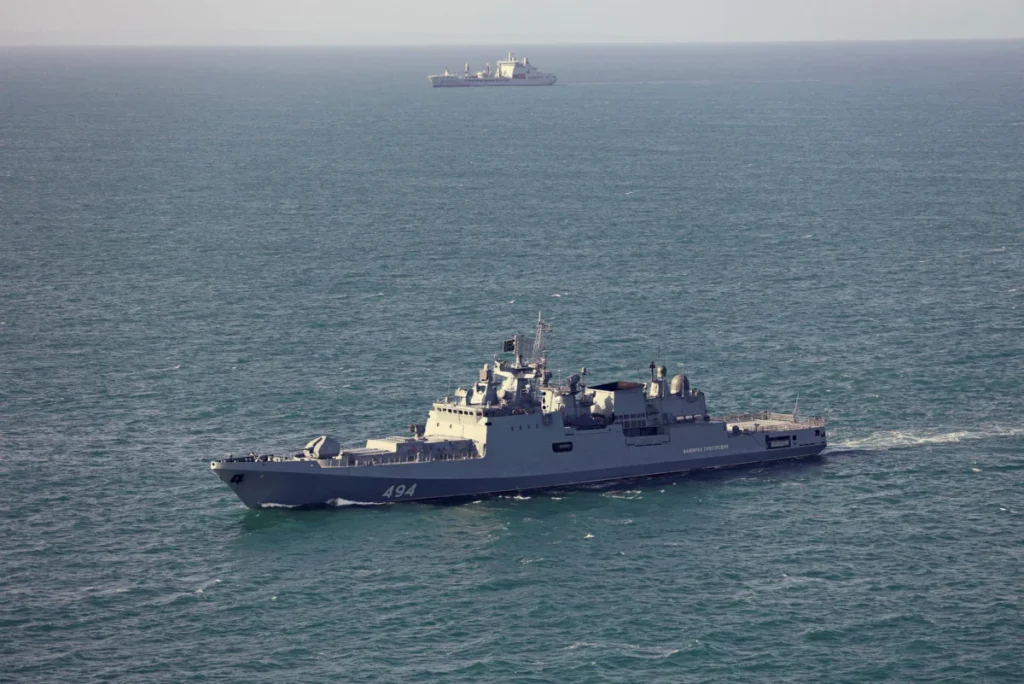
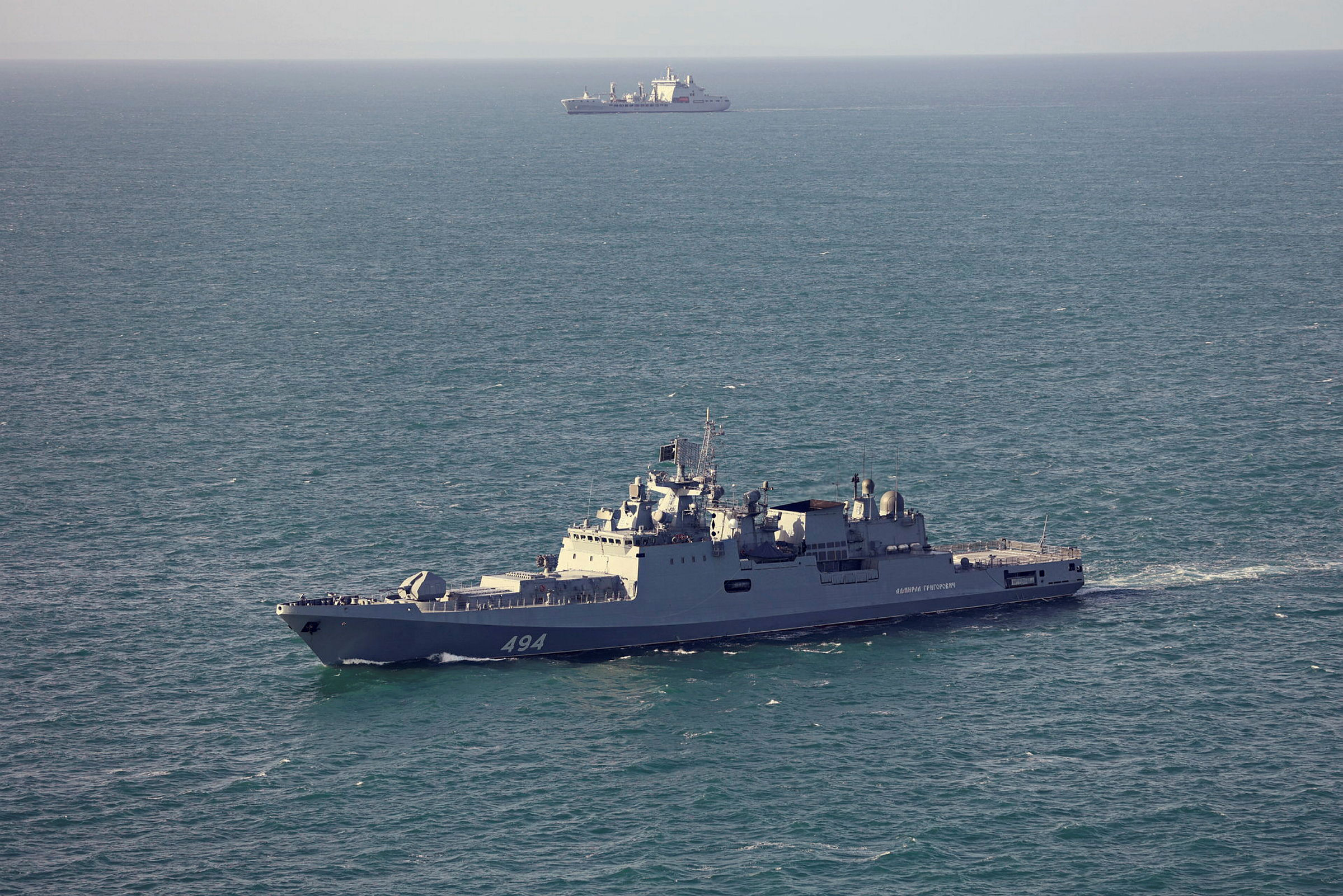
The encounter involved the Admiral Grigorovich, an advanced Krivak IV-class frigate of the Russian Navy, which has been conducting a prolonged presence in the English Channel. According to initial reports received by British authorities, the Russian warship discharged warning shots at a distance of approximately 500 yards (457 meters) from a private British-flagged yacht.
While the incident could have easily resulted in a maritime tragedy, officials confirmed that no injuries or property damage were reported. The yacht, which was sailing through international waters, continued its journey shortly after the confrontation. A British naval patrol vessel, which had been monitoring the Admiral Grigorovich as part of standard maritime security procedures, was in the vicinity and was dispatched to assess the safety of the yacht’s passengers and gather evidence.
Chronology of a High-Stakes Confrontation
The sequence of events, as reconstructed from official statements and maritime logs, paints a picture of a tense, high-stakes standoff.
- The Approach: The British-flagged yacht, sailing in the busy shipping lanes of the Channel, began to close the distance with the Admiral Grigorovich.
- Warning Signals: According to the Russian Ministry of Defense, the frigate’s crew attempted to establish communication with the yacht through standard maritime protocols. This reportedly included repeated radio calls, the firing of flares, and the use of sound signals to indicate that the yacht was encroaching on a restricted zone or creating a navigation hazard.
- The Escalation: The Russian military claims that the yacht failed to respond to these warnings and continued to close the distance until it was within approximately 150 meters of the warship. At this juncture, the commander of the frigate ordered the use of small arms to fire "preemptive" warning shots to force a change of course.
- The Departure: The Russian Ministry of Defense stated that the yacht immediately altered its course and moved away from the warship following the discharge of fire.
- Post-Incident Audit: British naval forces arrived on the scene shortly thereafter to ensure the safety of the civilians on board. The yacht has since resumed its course, while the Admiral Grigorovich remains under surveillance by the Royal Navy.
Official Responses and Conflicting Narratives
The divergence in the framing of the incident reflects the broader geopolitical divide. The UK Ministry of Defence issued a terse, professional statement: "We are investigating reports of an incident in the Channel."
British officials, speaking on the condition of anonymity due to departmental policy, have sought to de-escalate the rhetoric. They have explicitly characterized the event as an "isolated incident" and a "near miss at sea" rather than a deliberate act of military aggression. Crucially, London has emphasized that this event is not linked to the high-profile boarding of a Russian-linked tanker that occurred just days earlier.
Conversely, Moscow has utilized the Telegram platform to frame the incident as a matter of standard procedure. "The crew of the frigate Admiral Grigorovich acted in strict compliance with international navigation regulations and took all necessary measures to prevent the incident," the Russian Defense Ministry asserted. Moscow’s narrative focuses heavily on the failure of the civilian vessel to adhere to the warnings of a sovereign warship, portraying the Russian action as a necessary safety measure in a high-traffic maritime corridor.
A Backdrop of Maritime Confrontation: The ‘Shadow Fleet’ Raid
To understand the sensitivity of this week’s event, one must look at the operation that preceded it. On Sunday, just days before the yacht incident, the UK executed a landmark operation targeting the "shadow fleet"—a network of aging tankers used by Russia to bypass Western oil sanctions.
Royal Marine Commandos, supported by officers from the National Crime Agency, successfully boarded the vessel Smyrtos while it was in UK territorial waters. The ship was subsequently diverted to an anchorage off the south coast of England, where the captain was formally charged with breaching international sanctions.
This raid was the first of its kind, authorized by Prime Minister Keir Starmer in March as part of a wider strategy to choke off the revenue streams funding the Kremlin’s war effort in Ukraine. The boarding of the Smyrtos was a calculated move to demonstrate that the UK would no longer tolerate the unchecked movement of illicit Russian cargo through its backyard.
Economic and Strategic Implications
The incident with the yacht serves as a sobering reminder of the pressure on the "shadow fleet" and the volatility of the English Channel. The UK has taken an aggressive stance on sanction enforcement, having now sanctioned nearly 600 vessels linked to the shadow fleet. This fleet, estimated to number over 700 ships, is responsible for moving approximately 75% of Russia’s sanctioned oil exports.
The economic impact of these sanctions is measurable. According to British government data, ships sanctioned by the UK carried $1.6 billion less Russian oil in the first quarter of 2025 compared to the previous year. This loss of revenue, combined with the logistical headaches of evading Western naval monitoring, has clearly placed the Kremlin under significant strain.
Analyzing the Escalation
The presence of the Admiral Grigorovich in the Channel is not an anomaly; it is a strategic signal. For months, Russia has been systematically "probing" NATO airspace and maritime boundaries. This includes increased activity from drones, long-range bombers, and naval assets.
Security analysts argue that the firing of warning shots—even if deemed "preemptive" by Moscow—is a departure from the usual "cat-and-mouse" games seen in the North Sea. It signals a shift toward a more aggressive, less predictable posture by Russian naval commanders. The proximity of this event to the Smyrtos seizure cannot be entirely dismissed; while British officials maintain they are separate, the psychological weight of the boarding operation likely colored the mood in the Channel.
Conclusion: A Fragile Equilibrium
The English Channel, one of the world’s most vital shipping arteries, has become a theater of low-intensity, high-stakes psychological warfare. While both London and Moscow appear keen to prevent the yacht incident from spiraling into a direct military confrontation, the risk of miscalculation remains high.
As the investigation continues, the focus will likely remain on navigation safety and the interpretation of international maritime law. However, beneath the procedural discussions lies a deeper reality: the UK and its NATO allies are locked in a persistent test of wills with the Russian Federation. Each vessel boarding, each drone incursion, and each "near miss" at sea serves as a barometer for a relationship that has moved past the stage of cold diplomacy and into an era of active, dangerous friction.
For now, the yacht continues its journey, the Admiral Grigorovich remains under watch, and the international community waits to see if this "isolated incident" remains truly isolated, or if it marks the beginning of a more perilous phase in the struggle for control of the seas.