Succession at the Summit: Inside JPMorgan Chase’s Strategic Management Reshuffle
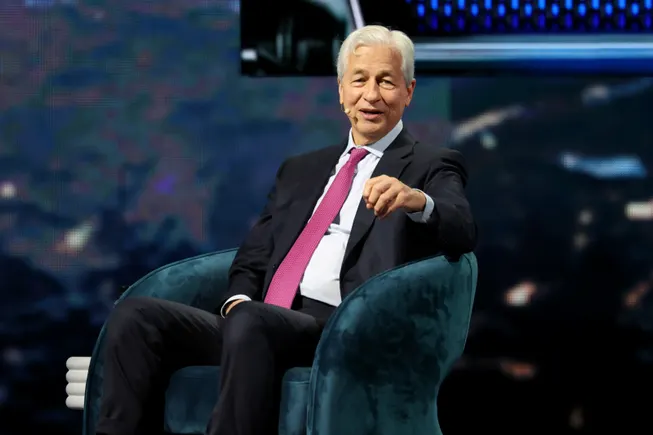
The long-running question surrounding the future of Jamie Dimon, the most influential figure in American banking, remains a central theme of Wall Street discourse. As the CEO of JPMorgan Chase for two decades, Dimon has steered the financial behemoth through the 2008 global financial crisis, the COVID-19 pandemic, and the rapid digitization of global finance. However, as the 70-year-old executive prepares for the eventual transition of power, the bank’s latest management reshuffle offers the clearest window yet into the board’s long-term succession strategy.
The Architecture of Succession: A New Leadership Paradigm
On June 25, JPMorgan Chase unveiled a significant management reorganization, positioning two longtime lieutenants—Troy Rohrbaugh and Mary Callahan Erdoes’ counterpart, Jennifer Piepszak (who serves as COO), alongside other key figures—to navigate the post-Dimon era. The most striking elements of this shift were the appointments of Troy Rohrbaugh and Viswas Raghavan’s former co-head, Marc Petno, as co-presidents.
This transition is not merely a lateral move; it is a deliberate "stress test" for the bank’s future leadership. By elevating these executives, the board is creating a broader bench of candidates who possess deep institutional knowledge while ensuring that the bank’s various silos—investment banking, commercial banking, and consumer services—are bridged by leaders with cross-functional experience.
The Core Appointments
- Troy Rohrbaugh: Previously co-CEO of the corporate and investment bank (CIB), Rohrbaugh has now transitioned to lead the massive consumer and community banking segment. This appointment is arguably the most radical aspect of the shift, as it moves a markets veteran into the retail-heavy consumer space.
- Marc Petno: Taking on the role of sole CEO of the CIB while serving as co-president, Petno remains the bedrock of the bank’s wholesale and investment banking operations.
- Strategic Retention: To maintain stability, the bank awarded $20 million in one-time retention and continuity grants to Chief Operating Officer Jennifer Piepszak and Asset & Wealth Management CEO Mary Erdoes, signaling that both remain vital to the bank’s future, regardless of the ultimate choice for the top job.
Chronology of the Dimon Era and Succession Planning
The path to this moment has been paved with years of meticulous, if sometimes opaque, planning.
- 2004–2006: Jamie Dimon assumes the presidency of JPMorgan Chase in 2004, taking the helm as CEO in 2006. His tenure is marked by a "fortress balance sheet" philosophy that defines the bank’s survival during the 2008 financial crisis.
- 2019–2021: Following a health scare in 2020, questions about Dimon’s retirement began to intensify. The board consistently reiterated that a robust succession plan was in place, involving a rotation of executives through different divisions.
- February 2024: During the company’s investor update, Dimon provided his most explicit timeline to date, noting: "I’m here for a few years as CEO, and maybe a few after that as executive chairman, pending whatever the board wants to do."
- June 25, 2024: The formal announcement of the co-president structure, effectively narrowing the field of potential successors and forcing a rotation of key leaders into new operational domains.
- July 2024 (Earnings Call): Dimon addresses analysts regarding the reshuffle, doubling down on the importance of "cross-pollination" of executive talent.
Supporting Data: Financial Strength Amidst Transition
The management changes come at a time of immense financial vigor for JPMorgan Chase. The firm’s recent quarterly earnings report highlights why the board is so cautious about disrupting the status quo; the machine is currently running at peak efficiency.
The bank reported a staggering $16.9 billion in quarterly profit, excluding one-time gains related to Visa shares and specific equity investments. Net revenue climbed 28% to $57.3 billion, a testament to the bank’s scale and its diversified business model. Notably, the equity markets division saw an 86% surge in revenue, reaching $6 billion. This performance underscores the strength of the CIB, which remains the bank’s crown jewel and the training ground for its current leadership cohort.
Official Responses and Strategic Rationale
During the most recent earnings call, Dimon faced direct inquiries regarding the logic of moving investment banking experts like Rohrbaugh into consumer-facing roles. The skepticism from analysts was clear: Can a master of back-office technology and markets truly master the nuances of consumer banking?
Dimon’s response was a vigorous defense of the bank’s culture and its future-proofing efforts. "It’s very important that people have experience across the company," Dimon asserted. He cautioned against the risks of appointing a CEO who lacks holistic knowledge of the franchise. According to Dimon, if a leader "only cares about the investment bank," the rest of the institution—the consumer, commercial, and wealth management arms—could suffer from neglect.
"You need respect for the rest of the franchise," Dimon stated. He outlined the specific attributes the board is hunting for in his eventual successor:
- Analytical Rigor: The ability to digest complex financial data and market trends.
- Emotional Intelligence: The capacity to lead a workforce of hundreds of thousands across disparate cultures.
- Culture Carriers: Individuals who embody the "JPMorgan way"—a blend of meritocracy, high standards, and long-term risk management.
- Operational Versatility: The agility to interact seamlessly with both the back-office technology teams and the C-suite global leadership.
"No one has all those things in the perfect way," Dimon admitted, "but you know it when you see it."
Implications: The Road Ahead for the Industry
The implications of this reshuffle extend far beyond the offices of 270 Park Avenue. As the largest bank in the U.S., JPMorgan’s leadership evolution serves as a blueprint for the rest of the financial services industry.
The "Generalist" Mandate
The move to force leaders like Rohrbaugh into consumer banking signals a shift in the philosophy of executive development. In an era where fintech and digital disruption threaten traditional banking, the bank is betting that a "siloed" executive is a liability. By forcing its top-tier talent to run different lines of business, the board is effectively creating a new generation of "generalist" CEOs who can pivot the bank as the regulatory and technological landscape changes.
Stability vs. Innovation
The use of $20 million retention awards for Piepszak and Erdoes demonstrates that JPMorgan is prioritizing stability. The bank cannot afford a "war of succession" that leads to talent flight. By keeping all key potential successors within the tent, the board is ensuring that when the transition eventually occurs—"plus or minus" a few years from now—the organizational cohesion remains intact.
The "Dimon Premium"
Investors have long baked a "Dimon Premium" into JPMorgan’s stock price. The market trusts the firm because it trusts the CEO. The challenge for the board is to ensure that this premium does not evaporate once the transition begins. By involving the board deeply in the selection of the co-presidents and ensuring these candidates have had the public-facing experience of managing the entire firm’s reputation, the bank is attempting to transfer that trust from an individual to a system.
Conclusion
As JPMorgan Chase navigates this period of managed transition, the message from the top is one of continuity, rigor, and strategic diversification. Jamie Dimon is not walking away tomorrow, but he is systematically dismantling the idea that the bank relies solely on his personal oversight. By rotating his most trusted lieutenants, empowering a new class of co-presidents, and emphasizing the necessity of cross-franchise expertise, Dimon is attempting to perform the most difficult task in corporate history: ensuring that a company’s culture and success survive the departure of its most iconic leader.
The future of the bank will likely rest on the ability of these new co-presidents to prove that they are not just masters of their specific domains, but stewards of the entire, sprawling, and complex JPMorgan Chase empire. For now, the numbers remain strong, the succession plan is in motion, and the "fortress" remains as guarded as ever.