Regulatory Watershed: SEC Clears Token Buybacks for Functional Crypto Networks in Monumental Policy Shift
By Tyler Warner
Morning Minute
Main Facts
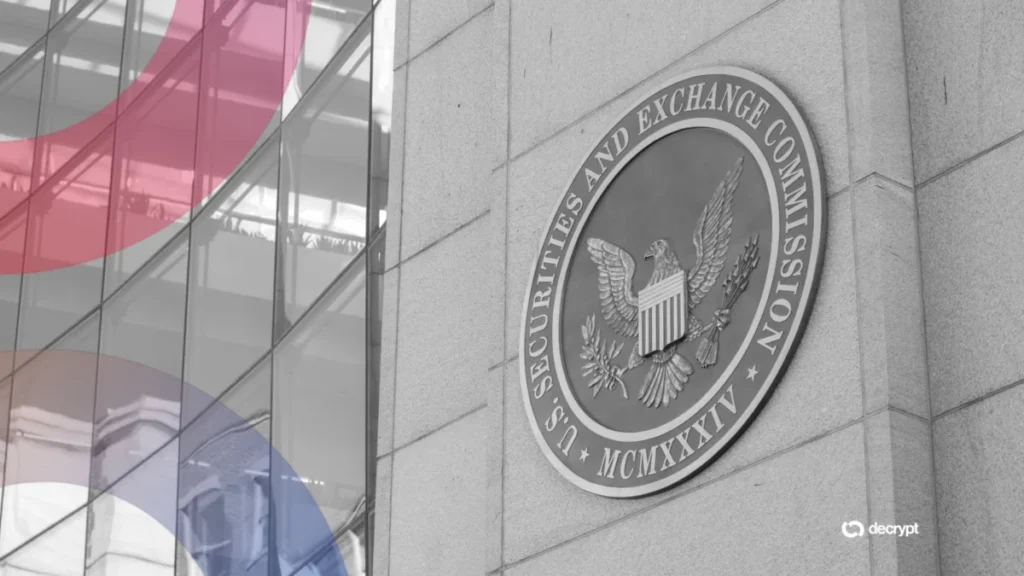
In a regulatory development that is already reverberating through global digital asset markets, the U.S. Securities and Exchange Commission’s (SEC) Division of Corporation Finance has fundamentally altered the legal landscape for decentralized finance (DeFi). The agency updated its crypto Frequently Asked Questions (FAQ) portal to establish a groundbreaking precedent: once a blockchain network is fully functional, the public announcement and execution of a token buyback program do not constitute a promise of "essential managerial efforts" under federal securities law.
For years, the crypto industry has operated under a cloud of regulatory ambiguity, largely dictated by the application of the Howey test—a 1946 Supreme Court precedent that determines whether a transaction qualifies as an "investment contract" and, consequently, a security. Under the traditional interpretation, any token whose value was tied to the ongoing managerial efforts of a core team or issuer ran a severe risk of being classified as an unregistered security.
The SEC’s newly clarified guidance draws a sharp, pragmatic line in the sand. It asserts that maintaining, upgrading, or scaling a live network—or promoting its existing utility—does not satisfy the prongs of the Howey test. Furthermore, routine statements regarding network functions or aspirational goals that do not explicitly tout speculative financial profits fall outside the scope of securities violations.
Legal experts have called the guidance a watershed moment. Gabriel Shapiro, a prominent securities attorney at MetaLeX Labs and former general counsel at Delphi Labs, noted that the division’s stance on buybacks "goes further than I expected," adding that under this modern interpretation, compliance with securities laws is beginning to resemble an "opt-in" framework for legitimate, operating protocols.
However, the SEC’s updated stance is far from a blanket amnesty. The agency maintained a strict statutory boundary regarding pre-launch activities. If a network remains non-functional and an issuer pitches a prospective token buyback as a source of yield, dividends, or speculative returns to prospective holders, federal securities laws will apply with full force. The new guidance acts as a filter: ship a working product with a revenue-generating model and execute buybacks lawfully, or promise speculative returns before building a product and face severe regulatory exposure.
Chronology
To understand the magnitude of this policy shift, it is necessary to examine the timeline of events that led to the current regulatory environment.
- 1946 (The Foundation): The U.S. Supreme Court establishes the "Howey Test" in SEC v. W.J. Howey Co., defining an investment contract as an investment of money in a common enterprise with a reasonable expectation of profits derived predominantly from the efforts of others.
- 2017–2018 (The Initial Coin Offering Boom): The crypto market experiences an explosion of ICOs, prompting the SEC to issue warnings that most digital tokens sold via fundraising campaigns are securities. Over the following years, enforcement actions target numerous high-profile projects.
- 2021–2024 (The "War on Crypto"): Under prior administrative leadership, the SEC adopts a regulation-by-enforcement approach. Dozens of decentralized protocols, infrastructure providers, and exchanges face Wells notices or lawsuits, plunging the DeFi sector into profound legal limbo and forcing many teams to restrict U.S. operations.
- Late 2024–Early 2025 (The Revenue Meta Emergence): Defying regulatory pressure, the DeFi ecosystem organically pivots. Instead of relying on token inflation and speculative governance rewards, protocols begin tying token utility directly to real-world revenues, utilizing cash flows to purchase tokens off the open market.
- Friday, SEC Policy Update: The SEC’s Division of Corporation Finance quietly yet decisively updates its crypto FAQ section. It publishes the specific guidance clarifying that buybacks on functional networks do not trigger the Howey test, effectively legalizing the emerging "revenue meta" overnight.
Supporting Data
The regulatory clearance immediately brings billions of dollars in decentralized economic activity out of a legal gray zone. Data aggregator DefiLlama actively tracks active token buyback and revenue-sharing mechanisms across a wide cross-section of the cryptocurrency economy.
Prominent networks operating live, revenue-generating products that stand to benefit directly from the SEC’s clarification include:
- Hyperliquid (HYPE): Routes USDC reserve yield directly into HYPE token buybacks under its AQAv2 framework.
- Pump.fun: Has aggressively burned $451 million worth of tokens, representing approximately 16.6% of its total circulating supply, funded entirely through platform transaction revenues.
- Pons: Directs roughly 80% of its V1 protocol revenue toward open-market token buybacks.
- Ethena (ENA): Following a community governance vote, holders agreed to route an unprecedented 95% of net protocol revenue directly to ENA token-related mechanisms.
- Other Notable Protocols: The list of projects engaging in similar revenue-backed token operations includes AAVE, SKY, LDO, PENDLE, AERO, RAY, JTO, NEAR, ETHFI, SYRUP, LIT, ASTER, KMNO, MET, CC, CARDS, and STONK.
Every single one of these projects shares a common operational denominator: they operate live, functional software products that generate tangible cash flow. Prior to Friday’s guidance, these mechanisms were deployed at the mercy of shifting administrative priorities. Today, they possess a clear runway.
Official Responses and Legal Analysis
The reaction from the legal and financial communities was swift, characterized by a mixture of cautious optimism and astonishment at the breadth of the SEC staff’s interpretations.
Gabriel Shapiro’s commentary captured the sentiment of many institutional advisors. By explicitly separating the maintenance of a functional network from the managerial efforts proscribed by the Howey test, the SEC has effectively acknowledged the unique operational realities of decentralized software.
"When you decouple software maintenance from the promise of entrepreneurial return, you strip away the primary legal weapon the SEC has used against utility tokens for nearly a decade," remarked one anonymous DeFi defense attorney. "The staff is acknowledging a fundamental economic truth: a decentralized network can run on its own code without turning every participant into a passive investor in a centralized enterprise."
Market analysts also pointed out that the guidance offers a clear blueprint for institutional capital allocators. Traditional venture capital firms and institutional funds, which had previously avoided tokens with aggressive buyback mechanisms due to compliance fears, can now underwrite these assets with a degree of regulatory certainty previously thought impossible.
Implications
The implications of this regulatory pivot are profound, fundamentally reshaping the trajectory of tokenomics and enterprise design across the global blockchain ecosystem.
1. The Death of Pure Speculation, the Rise of Cash Flow
For years, the crypto market was dominated by tokens whose value proposition relied almost entirely on future promises, roadmap milestones, and speculative liquidity mining incentives. The SEC’s endorsement of functional network buybacks validates the "revenue meta"—a structural shift where tokens act as direct claims on protocol cash flows, akin to corporate dividends or share buybacks in traditional equity markets. Protocols are no longer rewarded merely for what they might build, but for the economic utility they currently provide.
2. A Massive Re-Rating of Product-Market Fit
Projects with active, revenue-generating products have historically traded under a heavy regulatory discount. With the legal ambiguity lifted, market participants anticipate a sweeping re-valuation of tokens tied to tangible economic activity. As protocols like Hyperliquid, Ethena, and Pump.fun demonstrate the power of feeding real-world yields and revenues back into circulating supplies, fundamental valuation metrics are finally replacing pure hype-driven speculation.
3. Regulatory Clarity Driving Domestic Innovation
By providing a clear, bright-line rule—ship a working product, handle your revenues responsibly, and avoid pre-launch yield promises—the SEC has created an environment where builders can innovate without the constant existential threat of retroactive enforcement. This regulatory transparency is widely expected to draw talent, capital, and engineering teams back to U.S. jurisdictions, fostering a healthier, more mature digital asset economy.
Ultimately, the SEC’s policy update marks the end of crypto’s wild west era and the beginning of its institutional maturity. By recognizing that decentralized protocols can operate as self-sustaining, revenue-generating utilities, the regulatory framework has finally caught up with the reality of the technology.
Disclaimer: The analysis and opinions expressed in this article are those of the author and do not necessarily reflect the official positions of Decrypt or any affiliated institutions. This report is for informational purposes only and does not constitute financial or legal advice.