SEC Signals Green Light for Crypto Token Buybacks in New Guidance—With One Major Condition
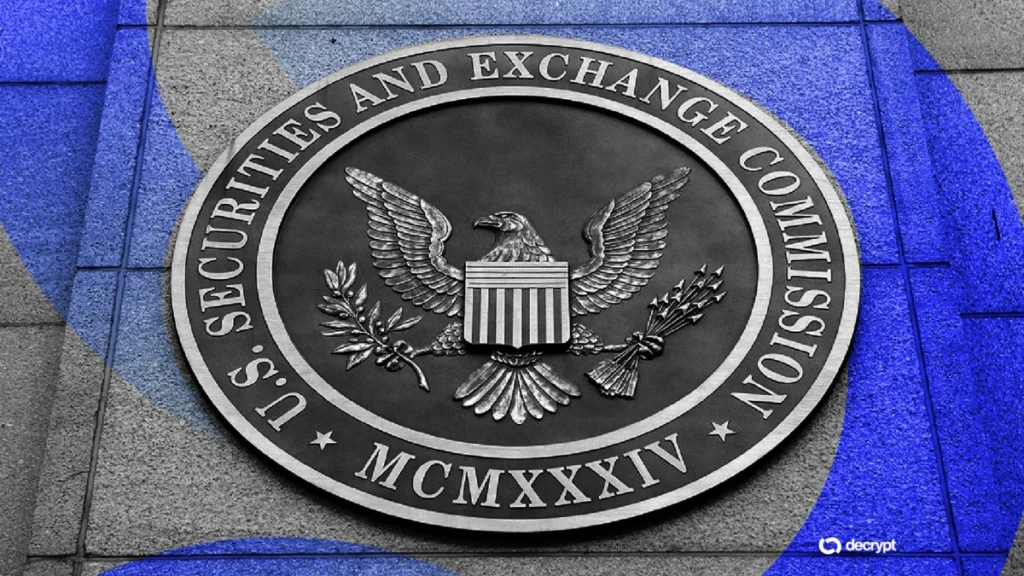
WASHINGTON — In a regulatory development that could fundamentally alter how digital asset projects manage their token economies, the Securities and Exchange Commission’s (SEC) Division of Corporation Finance has issued a clarifying set of frequently asked questions (FAQs). The guidance offers a significant path forward for decentralized and centralized crypto projects seeking to implement token buyback programs, provided their underlying networks have achieved functionality.
However, the SEC’s newfound flexibility draws a sharp regulatory line in the sand, distinguishing between operational protocols and speculative ventures that have yet to deliver a working product.
The announcement arrives amid a broader strategic pivot by U.S. financial regulators. As legislative efforts like the Clarity Act stall in Congress, federal agencies are stepping into the vacuum, rolling out tailored exemptions, interpretive releases, and staff guidance to integrate digital assets into the existing financial framework.
Main Facts: Decoding the SEC’s New Guidance
At the heart of the SEC staff’s latest guidance is an interpretation of the Howey test—the landmark 1946 Supreme Court standard used to determine whether a transaction constitutes an "investment contract" and is therefore subject to federal securities laws.
Under the Howey test, an investment contract exists if there is an investment of money in a common enterprise with a reasonable expectation of profits derived primarily from the entrepreneurial or managerial efforts of others.
According to the SEC staff’s new FAQs published on Friday:
- The Functional Network Rule: Once a crypto system or network is fully functional, a project’s announcement of a token buyback program does not automatically amount to a promise of "essential managerial efforts."
- The Pre-Launch Exception: For networks that are not yet functional, the narrative changes. If an issuer pitches a buyback program as a mechanism to generate yield, financial returns, or price appreciation for early holders, it crosses the regulatory line, likely triggering securities laws.
- Operational Maintenance vs. Profit-Driving Promises: The guidance further clarifies that after a network becomes functional, routine promises to maintain, upgrade, or grow the system do not satisfy the Howey test’s requirement for managerial efforts tied to profit generation. Similarly, promoting current utility or issuing vague, aspirational statements devoid of profit guarantees will generally escape classification as a security offering.
By insulating post-launch buybacks from automatic securities categorization, the SEC has effectively provided a mechanism for projects to support their native token economies without instantly registering as traditional public companies.
Chronology: How We Got Here
The release of the latest FAQs did not happen in a vacuum; it is the culmination of a rapid, high-stakes evolution in U.S. crypto regulation over the past several months:
- July: SEC Chair Paul Atkins signaled that if legislative efforts—specifically the heavily debated Clarity Act—failed to pass in the Senate, the Commission was fully prepared to step in with administrative rules and regulatory guidance to provide clarity to the market.
- August: Following the trajectory forecasted by Chair Atkins, the Commodity Futures Trading Commission (CFTC) issued parallel warnings and guidance regarding digital asset oversight.
- September: The SEC ramped up its administrative output. This included a major interpretive release regarding digital asset fundraising, alongside the unveiling of Regulation Crypto Assets—a proposal designed to allow crypto projects to sell tokens without undergoing the arduous, full-scale registration process mandated for traditional initial public offerings (IPOs).
- Late September: Following the legislative collapse of the Clarity Act in Congress, the SEC quickly introduced an "innovation exemption" specifically tailored for tokenized stocks.
- Friday: The Division of Corporation Finance released its comprehensive FAQs on crypto assets, officially unlocking the door for functional token buyback programs under specific conditions.
Supporting Data and Regulatory Mechanics
To understand the weight of the SEC staff’s guidance, one must look at how corporate equity buybacks operate in traditional finance and how crypto projects have attempted to mimic these structures.
In traditional equity markets, corporate share buybacks are a common mechanism used by public companies to return capital to shareholders, reduce outstanding share supply, and signal financial health. When a company repurchases its stock, it typically boosts the earnings per share (EPS) and supports market price stability.
Crypto projects have long sought to emulate this mechanism. By utilizing protocol revenue to buy back and burn (or lock up) native tokens, projects aim to create a deflationary supply shock that rewards token holders. However, under historical SEC enforcement actions—most notably under former administrations—any active intervention by a founding team to prop up token prices was viewed as evidence that holders were relying on the "managerial efforts" of the team to generate profits.
The new SEC staff guidance draws a functional boundary:
- Pre-Functionality (Speculative Phase): If the network is still a blueprint or under active development, the promise of a buyback is viewed as an inducement based on future managerial prowess. It suggests: "Give us your money now, we will build the tech, and then we will use revenues to pump the token price." This remains firmly in security territory.
- Post-Functionality (Utility Phase): If the network is live, decentralized, or functioning as intended, the purchase of tokens by the project is viewed more akin to an open-market transaction or utility-driven supply management. The token’s value is theoretically anchored to network usage rather than the ongoing managerial life-support of the founders.
Official Responses and Industry Reactions
The crypto legal and development communities have responded to the SEC’s guidance with a mixture of cautious optimism and sharp critical analysis regarding regulatory loopholes.
Gabriel Shapiro, a prominent corporate securities attorney at MetaLeX Labs and former general counsel at Delphi Labs, took to social media platform X to share his exhaustive analysis of the guidance.
"The securities laws are starting to look opt-in now, at least as applied by the SEC to crypto," Shapiro wrote, adding that the buyback section "goes further than I expected."
Shapiro argued that the SEC’s interpretation opens up a powerful strategic avenue for crypto project teams. In his view, development teams can continue building infrastructure, deploy buybacks to support token pricing, and harvest many of the economic perks associated with traditional public equity—all without being forced to grant token holders standard shareholder rights, voting privileges, or legal recourse.
"They have opened a loophole in a regulatory regime whose whole point was supposed to be that you couldn’t draft your way around economic reality," Shapiro noted. He characterized the broader trend in crypto not as the rise of tokenized equity, but rather as an aggressive industry-wide push to "get all the benefits of equity with none of the burdens."
Despite the industry largely shifting toward embracing regulators as a pragmatic path forward—rather than waiting indefinitely for legislative gridlock in Congress to clear—veteran legal minds like Shapiro warn against absolute complacency. Because SEC staff FAQs carry no binding legal force in a court of law, the door remains open for future legal challenges. As Shapiro succinctly reminded the market: "A private plaintiff or a future SEC could have other ideas."
Implications: The Future of Token Economics and Regulatory Volatility
The SEC staff’s clarification on token buybacks carries profound implications for the digital asset ecosystem moving forward:
- A Shift in Token Design: Projects will likely rush to establish network functionality as quickly as possible to cross the regulatory threshold set by the SEC. Proving that a network is "functional" will become the premier legal defense for issuers looking to deploy treasury funds for token buybacks.
- The End of "Yield" Hype: Projects operating pre-launch or in early development phases face heightened regulatory peril if they lean on marketing strategies that promise buyback-driven yield. Issuers must carefully scrub marketing materials of any language hinting at price appreciation driven by founder intervention.
- Regulatory Reliance vs. Legislative Permanence: The crypto industry’s pivot toward accepting administrative guidance from agencies like the SEC and CFTC highlights a pragmatic tactical shift. However, agency rules and staff interpretations are notoriously fragile compared to statutory legislation; they can be revised, rescinded, or reinterpreted by subsequent administrations or challenged by private litigants in federal courts.
As the SEC continues to construct a bespoke regulatory perimeter through interpretive releases, innovation exemptions, and staff FAQs, the crypto sector finds itself operating in a newly mapped territory—one where token buybacks are permissible, provided the code is live, the network is running, and the promises of profit are left off the table.