Reclaiming Sovereignty: Indigenous and Trans Legacies at the 250th Anniversary of the United States
As the United States approaches its 250th anniversary, the national discourse is predictably saturated with celebratory rhetoric regarding democratic ideals, founding documents, and the pursuit of liberty. However, for many, this milestone serves not as a celebration, but as a somber memorial—a stark reminder of a history built upon the erasure of Indigenous sovereignty and the imposition of colonial structures. For those who exist at the intersection of Indigenous and transgender identities, this anniversary is a moment to reckon with the violent history of the state while honoring a profound, resilient legacy of resistance that long predates the American experiment.
The Myth of the "Founding" and the Erasure of Turtle Island
The founding documents being touted during this semiquincentennial mark the point at which the United States was given its name—a designation that effectively erased the long-held Indigenous understanding of the land. For countless North American Indigenous communities, this continent is known as Turtle Island, a name that signifies more than geography; it represents a sacred, reciprocal relationship with the natural world.
The freedoms currently being championed by civil rights advocates—the right to migrate, to age with dignity, to live in a clean environment, and to celebrate diverse gender expressions—are not novel inventions of the 18th century. They were foundational tenets of Indigenous life long before European colonizers arrived. The imposition of a strict gender binary, for example, was a colonial tool used to disrupt, categorize, and control Indigenous populations.
Prior to European contact, many Native cultures, including the Diné, Ojibwe, and Sioux, recognized gender identities that were not tethered to biological physiology but to an individual’s spirit and social role. While Indigenous communities utilized various terms to describe these individuals, the umbrella term "Two-Spirit" has emerged in the modern English lexicon to bridge these traditional, multifaceted approaches to gender identity.
Historical Chronology: From Celebration to Colonial Erasure
To understand the present, one must look at the historical trajectory of Two-Spirit visibility and subsequent suppression.
- Pre-Colonial Era: Indigenous societies across North America held Two-Spirit individuals in high esteem. These individuals were often revered as healers, visionaries, and keepers of sacred tradition, possessing a unique ability to access both feminine and masculine spirits.
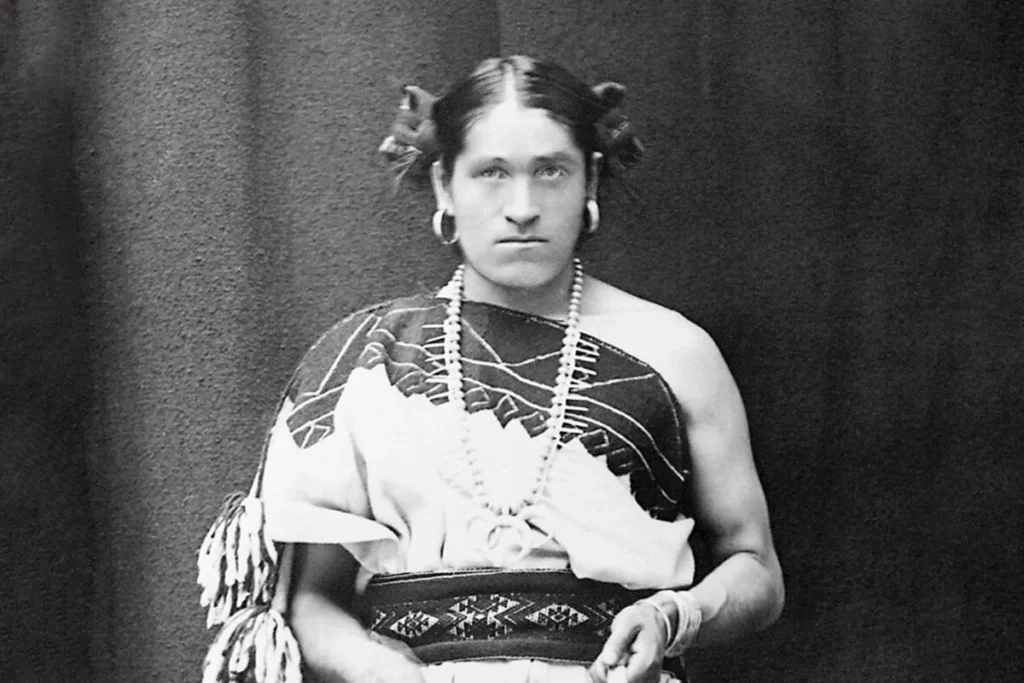
- 1885: The Zuni weaver and potter We’wha traveled to Washington, D.C., as an ambassador for Zuni culture. Meeting President Grover Cleveland, We’wha was received as a renowned female artist. This moment was groundbreaking, as Indigenous women—and gender-diverse Indigenous people—were rarely seen in the halls of federal power. We’wha leveraged this visibility to advocate for the Zuni people, who were then suffering under the heavy hand of U.S. government intervention.
- The Era of Forced Assimilation: Following the 19th-century expansion, the U.S. federal government initiated a systematic campaign to steal Indigenous land and sever the ties between Native children and their families. This included boarding schools designed to erase Indigenous understandings of gender, foodways, and community relationships.
- Reconstruction and Beyond: During the post-Civil War era, figures like Frances Thompson, a formerly enslaved Black transgender woman, stood on the front lines of political resistance. Her testimony before Congress helped shape the discourse around citizenship and political representation during Reconstruction, proving that trans people have always been foundational to the American struggle for civil rights.
Supporting Data: The Interconnectedness of Marginalization
The contemporary political landscape reveals that the exclusionary tactics of the past have evolved into modern systems of surveillance and suppression. Data from civil rights organizations and human rights watchdogs consistently show that trans people, particularly those who are Black, Indigenous, or people of color (BIPOC), face disproportionate levels of state violence.
Current trends reflect a disturbing pattern:
- State Surveillance: Trans communities are frequently subjected to heightened policing and data surveillance, mirroring historical efforts to track the movements of marginalized groups.
- Economic Barriers: Trans individuals face systemic barriers to housing, healthcare, and employment. When access to these basic human needs is denied, the state creates an environment of dependency and precarity.
- Cross-Movement Solidarity: The "siloing" of civil rights movements has historically weakened efforts for liberation. However, the legacy of leaders like Marsha P. Johnson, who advocated simultaneously for LGBTQ+ rights and the disability community, provides a blueprint for modern activism. Johnson’s push against nonconsensual psychiatric treatment and forced hospitalization remains a critical pillar in the fight for bodily autonomy today.
Official Responses and the Reality of Policy
The current federal approach to trans existence has shifted toward an explicit effort to deny the legitimacy of gender identity through legislation. Across various states, policy initiatives have targeted the ability of trans individuals to access healthcare, participate in public life, or even exist in public spaces.
Advocacy groups like the Transgender Education Network of Texas and Intransitive in Arkansas have responded by building the necessary infrastructure for community survival. These organizations operate on the principle of mutual aid, providing legal support, medical resources, and spaces of collective care. These efforts serve as a direct response to the "darker parts of history" repeating themselves, where detention centers for migrants function in ways that mirror historical sites of mass incarceration, and civil rights protestors face increasing suppression from state actors.
Implications: Building a Future of Collective Care
The implication of this historical analysis is clear: the United States, as currently structured, has often operated by securing freedom for a select few at the expense of the many. Yet, the persistent work of Indigenous and trans leaders suggests a path forward that is rooted in "returning to our roots."
The Rise of Mutual Aid
In states across the U.S., trans-led mutual aid networks are filling the gaps left by the state. From neighborhood groups protecting immigrant neighbors from ICE to organizers rallying outside of detention centers to stop human rights abuses, these networks are proving that liberation is not a solitary endeavor.
The Legacy of Leadership
Figures such as the late Lorena Borjas and Cecilia Gentili represent the modern evolution of the "ambassador" role first pioneered by figures like We’wha. By dedicating their lives to trans migrants and sex workers, Borjas and Gentili demonstrated that the liberation of the most marginalized is the true barometer of a democracy’s health. Their work highlights that one cannot advocate for the rights of one community without acknowledging the systemic intersections of class, race, and migration status.
A Call to Re-evaluate the 250th Anniversary
As the nation prepares to celebrate its 250th year, the voices of Indigenous and trans people serve as a necessary counter-narrative. The question is no longer whether the United States can live up to its founding principles, but whether it can evolve to include those it has historically excluded.
For the Indigenous trans person, the 250th anniversary is a reminder of loss, but also a celebration of survival. It is an acknowledgment that despite the violence of colonization, the traditions of gender diversity, land stewardship, and community care have not been extinguished.
The future, as envisioned by these modern leaders, is one that centers shared humanity and material needs. It is a future where the definition of "freedom" is expanded beyond the narrow parameters of the 18th century to encompass the dignity, bodily autonomy, and collective power of all people. As we reflect on the history of this country, we must remember who has been leading the way, who has been feeding the hungry, protecting the vulnerable, and holding the state accountable. It is those who have been most excluded from the American Dream who are now building the structures of a more just and inclusive reality.