Reckoning with the Past: The Ongoing Struggle for Land and Truth in Indian Country
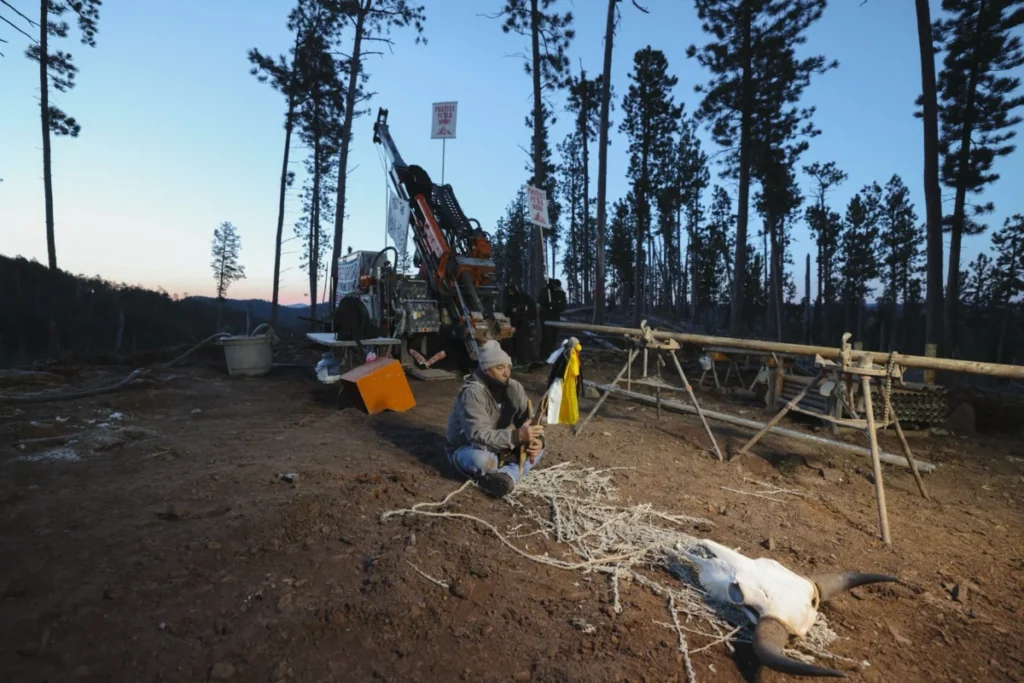
This spring has been a season of significant, hard-won victories for Indigenous communities across Turtle Island. From the Black Hills of South Dakota to the halls of Congress in Washington, D.C., a dual movement is gaining momentum: one focused on the physical protection of sacred lands, and another dedicated to the moral imperative of uncovering the dark, often suppressed history of the federal Indian boarding school system.
These victories—most notably the withdrawal of a mining permit at the sacred site Pe’Sla and the legal challenges stalling uranium drilling in Craven Canyon—serve as more than just environmental wins. They represent a reclamation of sovereignty and a refusal to allow the systematic erasure of Indigenous existence. As the NDN Collective explores in their LANDBACK for the People podcast series, these contemporary battles for the land are inextricably linked to the intergenerational trauma caused by historical policies designed to "kill the Indian, save the man."
Main Facts: A Dual Front for Justice
The current state of Indigenous advocacy is defined by two primary objectives: the protection of sacred geography and the pursuit of national truth-telling regarding the federal Indian boarding school era.
The mining victories in South Dakota highlight the effectiveness of grassroots organization and legal intervention. When tribes and their allies stand in defense of sites like Pe’Sla, they are not merely protecting land; they are protecting the spiritual infrastructure of their cultures. However, these successes are framed by a broader, more painful context: the systemic, government-funded attempt to strip Indigenous children of their language, culture, and identity through the boarding school system.
The National Native American Boarding School Healing Coalition (NABS) has emerged as a central pillar in this effort. Since its founding in 2011, the organization has grown from a single-person operation to a robust team of 25, reflecting the overwhelming need for a formal, national reckoning. Their work encompasses legislative advocacy, such as support for the Truth and Healing Commission on Indian Boarding School Policies Act (H.R. 7325), and the preservation of survivors’ voices through the Oral History Project.
Chronology: From Erasure to Revelation
To understand the current urgency, one must look at the timeline of events that brought the boarding school tragedy to the forefront of the American consciousness.
- Late 19th Century – Mid-20th Century: The height of the federal Indian boarding school era. The U.S. government, often in partnership with religious institutions, forces thousands of Indigenous children into residential schools, where physical, emotional, and sexual abuse are rampant.
- 2011: The National Native American Boarding School Healing Coalition is established, providing the first coordinated national effort to address the long-term impacts of the boarding school system.
- 2021: The discovery of 215 unmarked graves at the Kamloops Indian Residential School in Canada acts as a catalyst for a global reckoning. The news sends shockwaves through North America, forcing the U.S. government to confront its own history.
- 2021-2022: Former Secretary of the Interior Deb Haaland creates the Federal Indian Boarding School Initiative. In a historic move, the Department of the Interior begins a comprehensive review of the scope and impact of these institutions.
- 2022-2023: Secretary Haaland’s "Road to Healing" tour brings federal officials face-to-face with survivors, creating a public forum for the sharing of traumatic testimonies.
- 2026 (Present): Legislative efforts like the Truth and Healing Commission bill gain traction, and oral history projects begin to archive the experiences of the final generation of boarding school survivors.
Supporting Data: The Scope of the Crisis
The scale of the boarding school system is staggering. According to the U.S. Department of the Interior’s initial reports, hundreds of such schools were operational across the country for over a century. The "Kill the Indian, save the man" policy was not a fringe concept; it was a taxpayer-funded, state-sanctioned enterprise.
NABS reports emphasize that the trauma is not confined to the past. It is intergenerational. The Oral History Project, born from the urgent need to capture testimonies before survivors pass away, has become a vital tool for healing. By providing a safe container for these stories, the coalition helps counter the shame and stigma often imposed upon victims.
Archiving these stories is not just an academic exercise. As Jason Packineau of NABS notes, the act of recording and archiving is a direct challenge to the historical narratives that have long denied the abuses. It provides empirical, human-centered evidence that the atrocities occurred, ensuring that future generations cannot claim ignorance.
Official Responses and the Legislative Path
The federal government’s posture toward this history has shifted from denial and silence to a measured, albeit slow, acknowledgement. The creation of the Federal Indian Boarding School Initiative by Secretary Haaland was a watershed moment. As Lacey Kinnart of NABS observed, the initiative’s rapid development—within just 30 days of the Kamloops revelations—was unprecedented for a federal bureaucracy.
However, activists argue that acknowledgment is not enough. The Truth and Healing Commission bill (H.R. 7325) is viewed as the next essential step. The bill seeks to:
- Formally investigate the government’s role in boarding school abuses.
- Establish a process for accountability.
- Create a national repository of records that are easily accessible to tribal communities.
The goal is to ensure that the findings are not buried in government archives but are returned to the families and communities that were shattered by the policies.
Implications: A Collective Responsibility
The struggle for land and the struggle for truth are one and the same. The displacement of Indigenous peoples from their land was the foundational act that enabled the boarding school system; the removal of children was the mechanism used to ensure they could never return to, or fight for, that land.
The Role of Allies
The work being done by NABS and the NDN Collective is not for Indigenous people alone. As Charlee Brissette emphasizes, this is "everybody’s history." For non-Indigenous people, the implication is a call to action. It requires moving beyond passive sympathy toward active solidarity. This means staying informed about legislative progress, supporting tribal land rights, and acknowledging that the prosperity of the modern United States is built upon the systemic destruction of Indigenous cultures.
The Power of Testimony
The collaboration between NABS and figures like Leonard Peltier highlights the transformative power of storytelling. When survivors speak, they are doing more than recounting trauma; they are reclaiming their narrative agency. Watching a survivor address the camera—and by extension, the world—is a powerful act of resistance against an educational system that sought to render them silent.
Moving Toward Healing
The path forward is defined by "LandBack" initiatives and truth-telling. The recent victories in the Black Hills prove that when Indigenous communities leverage their rights and mobilize public opinion, they can force corporations and government agencies to retreat. The protection of sacred sites like Pe’Sla provides the physical space necessary for healing, while the truth-telling commissions provide the psychological space.
In the words of those leading these efforts, the work is vast, but the progress is tangible. By centering the voices of survivors and descendants, and by continuing to hold the state accountable, the movement is successfully shifting the paradigm. We are witnessing a transition from a history of erasure to a future of restoration. The land is being defended, the truth is being documented, and the healing, though long overdue, has begun.
For those seeking to engage with this history or support the ongoing efforts, visit boardingschoolhealing.org to learn more about the Truth and Healing Commission, donate to the cause, or contribute your own stories as a survivor or descendant.