Philippines Tightens Regulatory Stranglehold: New BSP Guidelines Reshape Crypto Landscape
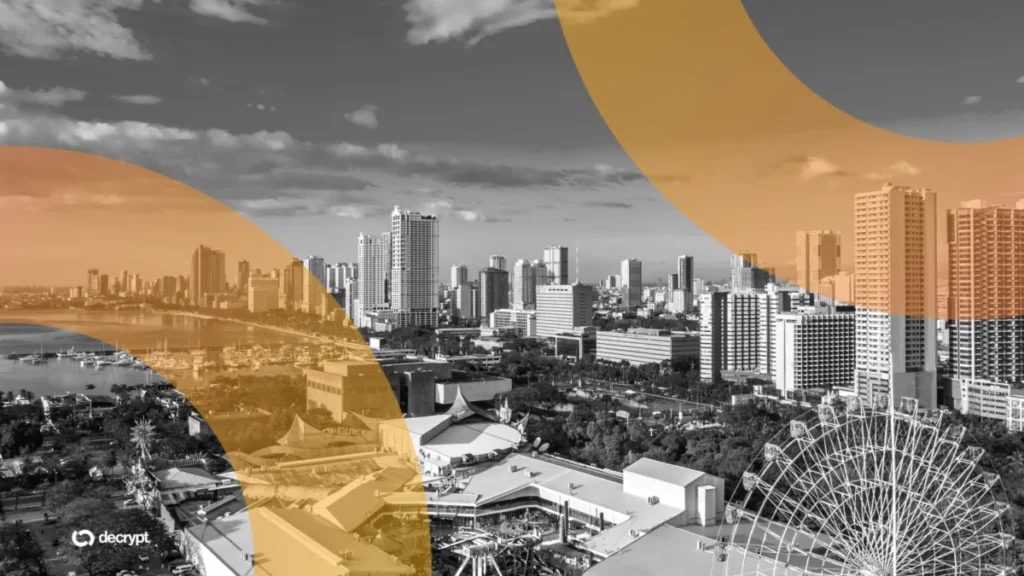
The Philippines, a nation consistently ranked among the top tier of global crypto adopters, is undergoing a seismic shift in its regulatory environment. In a move aimed at fortifying the country’s financial stability and protecting retail investors, the Bangko Sentral ng Pilipinas (BSP)—the nation’s central bank—has issued a comprehensive new directive. This mandate imposes rigorous due diligence and accreditation processes on all licensed Virtual Asset Service Providers (VASPs), effectively raising the bar for which digital assets can legally be traded within the archipelago.
The Mandate: A New Era of Due Diligence
Under the memorandum signed by Deputy Governor Lyn Javier, the BSP has signaled that the days of "listing everything" are over. The new guidelines require exchanges to implement stringent, ongoing monitoring of every digital asset on their platforms. It is no longer enough to perform a cursory review at the time of an asset’s launch; platforms must now maintain a continuous evaluation framework.
Central to this policy is the establishment of "trigger thresholds." Exchanges are now legally required to define specific scenarios—such as a sudden loss of liquidity, the insolvency of an asset issuer, involvement in high-profile security breaches, or misleading public disclosures—that mandate the immediate suspension or delisting of a token.
Perhaps most controversially, the BSP has implemented a blanket ban on "privacy coins." Assets specifically designed to obfuscate transaction trails, such as Monero (XMR), Zcash (ZEC), and Dash (DASH), are now prohibited from being supported or listed by any licensed VASP in the Philippines. The central bank argues that these tools are antithetical to the "safe, sound, and consumer-centric" ecosystem they intend to cultivate.
Chronology: A Regulatory Evolution
The recent BSP memorandum is the latest chapter in a multi-year effort by Philippine authorities to bring order to the Wild West of digital assets.
- Early 2023: Regulatory scrutiny begins to intensify as the Philippines solidifies its position as an APAC hub for grassroots crypto adoption.
- June 2024: The Securities and Exchange Commission (SEC) enacted Memorandum Circular No. 5. This landmark regulation forced all Crypto-Asset Service Providers (CASPs) to register locally, hold a minimum of 100 million PHP ($1.8 million) in paid-up capital, and localize data storage.
- August 2024: The SEC took aggressive action against offshore entities, successfully blocking access to ten major international exchanges, including Kraken, Bybit, KuCoin, and OKX, for failing to comply with local licensing requirements.
- November 2024: Binance, the world’s largest exchange, attempted a strategic reentry into the Philippine market via a partnership with BlockShoals Technologies Inc. through the SEC’s regulatory sandbox.
- January 2025: The BSP issues the new VASP listing guidelines, effectively creating a "dual-regulator" hurdle for any firm wishing to operate legally in the country.
Supporting Data: The Philippines as a Crypto Powerhouse
The intensity of these regulations is not without cause. According to the Chainalysis 2025 Global Crypto Adoption Index, the Philippines ranks ninth globally, a testament to the deep-seated integration of digital assets into the daily lives of Filipinos. The broader APAC region saw a 69% year-over-year increase in crypto adoption, with the Philippines serving as a primary engine for this growth.
However, this rapid adoption has brought risks. The government’s pivot to stricter oversight comes amid broader economic concerns, including a controversial public works budget debate where billions of dollars in spending were flagged for potential mismanagement. This has fueled political momentum for Senate Bill 1330, which proposes putting the national budget "on-chain" to ensure transparency—a move that would require a highly regulated and stable digital asset infrastructure to function.
Official and Industry Responses: A Mixed Reception
The reaction from the industry has been nuanced, reflecting the tension between the need for innovation and the mandate for consumer protection.
Alden Yburan, Head of Crypto at GCash—the Philippines’ leading mobile wallet—offered a candid assessment of the new rules. "This is long overdue, and I think this is the right call," Yburan stated. "I don’t think this is bureaucratic red tape; this is the minimum bar any responsible platform should already be applying before listing an asset to retail users. Stronger listing standards would lead to better products."
However, Yburan acknowledged the complexity of the privacy coin ban. "Assets like Monero and Zcash exist for legitimate reasons," he noted, citing privacy as a "foundational value in crypto." Yet, he conceded the reality of the local market: "The Philippines is remittance-heavy. We can’t be positioning the ecosystem as a trusted financial infrastructure while simultaneously allowing anonymity-enhancing assets to flow freely."
Luis Buenaventura, President of the Blockchain Council of the Philippines, has previously observed that while the regulatory crackdown is painful for some, it ultimately rewards compliant players. By weeding out offshore entities that ignore local laws, the SEC and BSP are effectively creating a protected market for licensed, domestic firms.
Implications: The Binance Dilemma
The most prominent test case for these new regulations is the ongoing saga surrounding Binance’s attempt to return to the Philippine market. While BlockShoals Technologies Inc. received initial clearance from the SEC under a regulatory sandbox, the BSP has remained unmoved.
In a recent clarification, the central bank underscored that participation in a sandbox program is not a substitute for a formal VASP license. Furthermore, the SEC has refined its stance, reclassifying Binance as a "global crypto-asset service provider" rather than a VASP, and mandating that BlockShoals must integrate with a licensed domestic VASP within 90 days. This creates a "bottleneck" where global giants must essentially play by the rules of local, smaller, but fully compliant entities.
Future Outlook: Navigating the Dual-Regulator Framework
The Philippine crypto landscape is now defined by a bifurcated regulatory structure. The SEC oversees the "securities" aspect—the nature of the tokens themselves and the corporate governance of the providers—while the BSP manages the "payment rail" aspect, focusing on the movement of value and anti-money laundering compliance.
For investors and service providers, this means that compliance is no longer a "one-stop shop." Firms must navigate two distinct frameworks, both of which are increasingly aggressive in their demands for transparency, liquidity, and data sovereignty.
As the Philippines continues to move toward a more digitized economy, the government’s message is clear: crypto adoption is welcome, but it must be domesticated, transparent, and fully subordinated to the national financial regulatory apparatus. While this may slow the pace of speculative trading and drive out anonymous assets, proponents argue it is the necessary price of entry for a nation looking to legitimize crypto as a pillar of its modern financial system.
The coming months will likely see a wave of delistings as platforms scramble to meet the BSP’s strict asset evaluation requirements. For the average Filipino crypto user, the experience will become more restrictive, but theoretically, significantly safer. Whether this "safe, sound, and consumer-centric" model will stifle the vibrant grassroots innovation that put the Philippines on the global crypto map remains the primary question facing regulators in 2025 and beyond.