Navigating Wealth Management in the Digital Era: A Comprehensive Analysis of the Leading Investment Tracking Applications
1. Main Facts: The Modern Portfolio Challenge
In an increasingly complex financial landscape, retail investors are facing a fragmentation of their wealth. Gone are the days when a household’s entire net worth resided in a single local bank or a solitary brokerage account. Today, a modern portfolio is often distributed across multiple financial institutions, encompassing workplace 401(k) plans, individual retirement accounts (IRAs), taxable brokerage accounts, cryptocurrency wallets, real estate holdings, and alternative assets.
Managing this decentralized wealth has created a critical demand for sophisticated investment tracking software. The ideal portfolio tracking application must transcend the role of a passive ledger; it must actively monitor portfolio performance, flag hidden fees, evaluate asset allocation, project dividend income, and model future retirement scenarios.
![8 Best Investment Tracking Apps [2026 Guide] – ROB BERGER](https://robberger.com/wp-content/uploads/2024/02/Empower-Logo.jpeg)
This analysis evaluates the premier investment tracking tools currently dominating the market—including Empower, Kubera, Monarch Money, and Stock Rover. Each of these platforms addresses distinct investor demographics, ranging from high-net-worth individuals (HNWIs) requiring multi-currency alternative asset tracking to passive index fund investors seeking to minimize fee drag.
2. Chronology: The Evolution of Portfolio Tracking Technology
The technology behind portfolio tracking has undergone a multi-decade evolution, transitioning from offline manual entry to automated, real-time data aggregation.
![8 Best Investment Tracking Apps [2026 Guide] – ROB BERGER](https://robberger.com/wp-content/uploads/2025/11/monarch-money-logo.png)
[1980s-1990s: Desktop Era]
   └── Quicken establishes offline desktop financial tracking via manual entry.
[2000s-2010s: API & Aggregation Revolution]
   └── Personal Capital (now Empower) pioneers automated, secure API linkages (Yodlee).
[Late 2010s: Multi-Asset & Crypto Boom]
   └── Rise of alternative assets drives platforms like Kubera to support crypto, real estate, and VIN tracking.
[2020s-Present: Unified Ecosystems & AI Integration]
   └── Budgeting and investing merge (Monarch Money); platforms integrate AI for document scanning and predictive analytics.
The Desktop Era (Late 1980s–1990s)
The early days of digital personal finance were defined by desktop software, with Quicken emerging as the industry pioneer. Investors manually entered transaction data or uploaded periodic QFX/OFX files from their banks. While revolutionary for its time, this era was constrained by localized data storage and a lack of real-time market updates.
The Aggregation Revolution (2000s–2010s)
The launch of personal financial management (PFM) platforms like Mint and Personal Capital (now rebranded as Empower) marked a major paradigm shift. Leveraging third-party data aggregators like Yodlee and Plaid, these platforms allowed users to securely link their accounts, enabling automatic, daily synchronization of balances and transactions.
![8 Best Investment Tracking Apps [2026 Guide] – ROB BERGER](https://robberger.com/wp-content/uploads/2024/01/Kubera-Logo.jpeg)
The Multi-Asset and Cryptocurrency Boom (Late 2010s)
As retail investing expanded beyond traditional equities and mutual funds, legacy trackers struggled to account for decentralized assets. This gap prompted the rise of next-generation tracking tools like Kubera, designed to aggregate volatile assets such as cryptocurrencies, domain names, physical real estate, and private equity alongside traditional brokerages.
The AI and Unified Ecosystem Era (Present)
Today, the industry is converging toward all-in-one financial dashboards that merge detailed budgeting with institutional-grade portfolio analysis. Simultaneously, platforms are beginning to deploy artificial intelligence (AI) to scan financial documents, automate asset valuation, and deliver personalized optimization strategies.
![8 Best Investment Tracking Apps [2026 Guide] – ROB BERGER](https://robberger.com/wp-content/uploads/2025/08/Snowball-Analytics-logo.png.webp)
3. Supporting Data: Comparative Breakdown of Leading Platforms
To assist investors in identifying the optimal tool for their financial architecture, the following data details the pricing structures, target audiences, and standout capabilities of the market’s leading applications.
Key Metrics of Leading Investment Tracking Applications
| Investment Tracking App | Target Audience | Pricing Structure | Core Strength |
|---|---|---|---|
| Empower | Passive Index Investors & Retirees | Free | Automated Fee Analysis & Retirement Planning |
| Kubera | High-Net-Worth Individuals (HNWIs) | $249/year (14-day free trial) | Alternative Asset & Multi-Currency Tracking |
| Monarch Money | Budget-Conscious Household Investors | $99/year (7-day free trial; 50% off first year with code ROB50) | Unified Cash Flow and Investment Dashboard |
| Stock Rover | Active Stock & ETF Researchers | Free tier; Paid plans from $79.99 to $279.99/year | Institutional-Grade Equity Analytics |
| Snowball Analytics | Dividend-Growth Investors | Free plan; Paid plans from $6.00 to $18.80/month | Automated Portfolio Rebalancing & Dividend Tracking |
| Simply Wall St. | Visual Equity Investors | Free plan; Premium plans from $10.95/month | Visualizing Risk and Fundamental Analysis |
| Morningstar Investor | Fund and Mutual Fund Researchers | $249/year or $34.95/month (7-day free trial; $50 off first year) | Industry-Standard Mutual Fund Ratings & X-Ray Analysis |
| Quicken Premier | Desktop Traditionalists | Approx. $75/year (varies with introductory promotions) | Offline Security and Comprehensive Tax Planning |
In-Depth Platform Analysis
1. Empower: The Premier Free Portfolio Analyzer
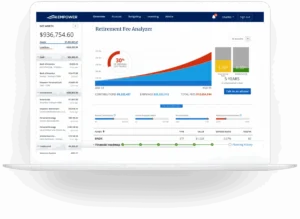
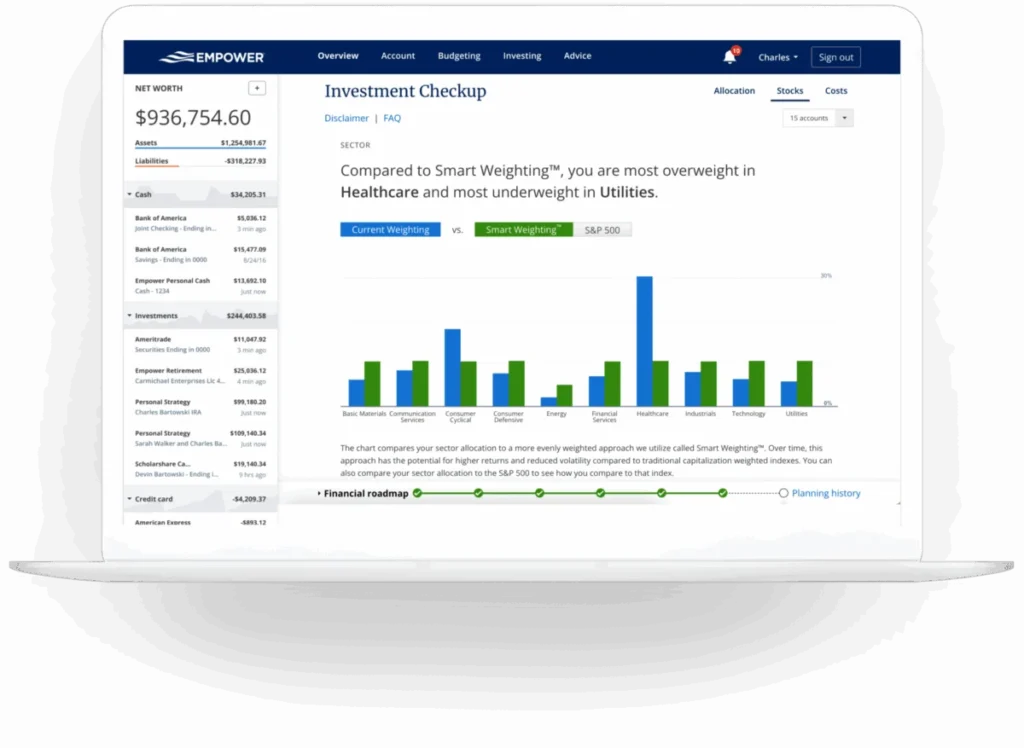
Empower remains the gold standard for automated, zero-cost investment tracking. Its primary value proposition lies in its institutional-grade financial calculators.
![8 Best Investment Tracking Apps [2026 Guide] – ROB BERGER](https://robberger.com/wp-content/uploads/2023/02/desktop-invst-chek-stock-EMP-1024x748.png)
- The Retirement Fee Analyzer: This tool scans linked mutual funds and ETFs, isolates their expense ratios, and projects the cumulative dollar impact of those fees over decades. For long-term investors, visualizing how a seemingly minor 0.75% fee can erode tens of thousands of dollars in retirement wealth is highly eye-opening.
- Asset Allocation & Retirement Planner: Empower integrates linked accounts into a dynamic asset allocation map, highlighting over- or under-exposure to specific market sectors. These data points feed into a Monte Carlo-powered retirement calculator, simulating various market conditions to project retirement success.
2. Kubera: Designed for High-Net-Worth Complexity
For affluent investors with diverse portfolios, Kubera offers unmatched aggregation capabilities. Rather than relying on a single aggregator, Kubera utilizes multiple industry-standard connections to minimize connection dropouts.
- Alternative Asset Integration: Beyond equities, Kubera tracks real estate values via advanced valuation APIs, monitors automobile depreciation using Vehicle Identification Numbers (VINs), tracks domain portfolio values, and integrates directly with major cryptocurrency exchanges and Web3 wallets.
- The Virtual "Safe Deposit Box": Recognizing the estate-planning needs of HNWIs, Kubera features a secure digital vault for vital documents and a "beneficiary" release protocol, automatically sharing portfolio details with designated heirs in the event of the account holder’s death or prolonged inactivity.
- AI Document Processing: Kubera uses proprietary AI models to parse uploaded PDFs, CSV files, and brokerage screenshots, converting unstructured documents into clean, trackable ledger entries.
Kubera Portfolio Sheet Architecture:
[Taxable Equities] ──> Real-time Brokerage Feeds
[Alternative Assets] ─> VIN Depreciation + Real Estate API Valuations
[Crypto Wallets] ────> Direct Blockchain Address Monitoring
[Legacy Documents] ──> AI Document Reader Parsing (PDFs/CSVs)
3. Monarch Money: The Unified Cash Flow Solution
Monarch Money addresses the historic division between budgeting software and investment trackers. Designed by the original product creators of Mint, Monarch offers a clean, ad-free environment where household cash flow directly connects to long-term wealth building.
![8 Best Investment Tracking Apps [2026 Guide] – ROB BERGER](https://robberger.com/wp-content/uploads/2024/01/Kubera-Investment-Dashboard-983x1024.png)
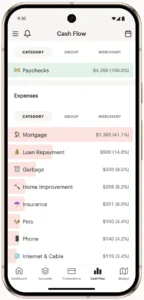
- Integrated Cash Flow Tracking: Monarch categorizes daily transactions and maps them against long-term investment contributions, allowing families to see how adjusting monthly discretionary spending impacts their net worth.
- Collaborative Design: The platform allows partners to link separate accounts to a unified dashboard, establishing a single source of truth for household finances.
4. Stock Rover: The Active Researcher’s Engine
For investors managing concentrated portfolios of individual stocks and specialized ETFs, Stock Rover offers institutional-grade research tools.
- Deep Financial Analytics: Stock Rover provides decades of fundamental financial data, active earnings calendars, custom alerts, and comparative charting engines that far exceed standard brokerage dashboards.
- Model Portfolio Benchmarking: Users can backtest their portfolios against historical market data or compare their holdings directly to pre-set index models and institutional portfolios.
5. Snowball Analytics: Optimized for Dividend and Rebalancing Strategies
Snowball Analytics has carved out a distinct niche for dividend-growth investors and passive allocators who want to keep their portfolios aligned with their target profiles.
![8 Best Investment Tracking Apps [2026 Guide] – ROB BERGER](https://robberger.com/wp-content/uploads/2025/08/Screenshot-2025-08-03-at-1.10.26-PM-1024x455.png.webp)
- Dividend Income Projections: The platform tracks historical payouts and calculates future dividend and interest payments, mapping out cash-flow events on an interactive calendar.
- Interactive Rebalancing Tool: Snowball compares an investor’s current asset allocation against their target model, calculating the exact buy or sell orders required to restore the desired risk profile.
4. Expert Perspectives and User Case Studies
The Power of Expense Ratio Awareness
Financial planning experts consistently emphasize that minimizing fees is one of the few guaranteed ways to boost long-term investment performance.
According to historical fee studies, an investor who contributes $10,000 annually over 30 years to a portfolio yielding 7% annually will end up with roughly $100,000 less if their portfolio carries an average expense ratio of 1.0% compared to a low-cost portfolio charging 0.10%.
![8 Best Investment Tracking Apps [2026 Guide] – ROB BERGER](https://robberger.com/wp-content/uploads/2024/07/2024-07-16_07-42-34-1024x743.png.webp)
Tools like Empower’s Retirement Fee Analyzer and Morningstar’s Portfolio X-Ray translate these abstract percentages into clear dollar figures, prompting many investors to swap expensive actively managed mutual funds for low-cost, broad-market ETFs.
Solving the API Stability Challenge
A frequent frustration among digital wealth management users is the instability of automated bank connections. Financial aggregators like Plaid must navigate diverse security firewalls and multi-factor authentication (MFA) protocols across thousands of global institutions.
![8 Best Investment Tracking Apps [2026 Guide] – ROB BERGER](https://robberger.com/wp-content/uploads/2026/01/Screenshot-2026-01-13-at-7.32.22-AM-1024x607.png.webp)
Industry analysts point to Kubera’s multi-aggregator strategy as a highly effective solution to this challenge. By partnering with several data aggregation engines, Kubera provides alternative pathways when a specific connection fails, ensuring consistent updates for complex portfolios.
5. Implications: The Future of Personal Wealth Management
The rapid advancement of investment tracking technology has several major implications for retail investors and the broader financial services industry.
![8 Best Investment Tracking Apps [2026 Guide] – ROB BERGER](https://robberger.com/wp-content/uploads/2026/01/Screenshot-2026-01-14-at-6.08.09-AM-1024x591.png)
1. The Democratization of Family Office Services
Historically, comprehensive wealth tracking, multi-currency accounting, and structured estate planning were services reserved for ultra-high-net-worth families utilizing private wealth management firms. Modern tracking applications have democratized these capabilities, giving everyday retail investors access to sophisticated portfolio analysis and estate-planning tools for a fraction of the cost.
2. The Rise of Hyper-Personalized AI Financial Advisors
As platforms continue to integrate advanced machine learning models, the role of portfolio trackers will likely shift from retrospective reporting to prospective advice. Future iterations of these platforms will not only track asset allocation, but will also use AI to identify tax-loss harvesting opportunities, flag asset class imbalances in real time, and suggest personalized, tax-efficient withdrawal strategies during retirement.
![8 Best Investment Tracking Apps [2026 Guide] – ROB BERGER](https://robberger.com/wp-content/uploads/2024/02/2024-02-01_05-45-49-1024x576.png)
3. Heightened Focus on Data Security and Privacy
The convenience of automated aggregation requires users to share read-only access to their financial accounts. As cyber threats evolve, the security protocols of personal finance applications will face intense scrutiny. Platforms that prioritize bank-level 256-bit encryption, multi-factor authentication, and strict ad-free privacy policies (such as Monarch Money and Kubera) are increasingly favored by security-conscious investors over free, ad-supported alternatives that monetize user data.
Ultimately, the choice of an investment tracking application depends on an investor’s unique portfolio complexity. For those with simple, consolidated portfolios, the tools provided by a single brokerage may suffice. However, for investors managing fragmented accounts across multiple asset classes, choosing the right tracking platform is a vital step toward optimizing wealth, minimizing fees, and securing long-term financial independence.