Navigating the Mid-Life Financial Crossroads: A Case Study in Debt, Stability, and Future Aspirations

For many, the transition into their mid-thirties represents a period of profound reflection—a time when the blurred lines of early adulthood solidify into the concrete realities of career, housing, and long-term financial security. For Brian and Michael, a professional couple based in central Connecticut, the milestone of their upcoming 10-year anniversary has prompted a deep dive into their collective financial trajectory.
While the couple—both 34—boasts stable employment and a combined household income of nearly $168,000, they find themselves grappling with the persistent weight of consumer debt and the elusive dream of homeownership. In a recent "Frugalwoods" reader case study, the couple opened their books to public scrutiny, seeking a roadmap to move from a cycle of temporary debt management to permanent financial independence.

The Chronology of a Financial Balancing Act
The couple’s current apprehension is rooted in a year of significant, albeit taxing, life changes. Following an eight-year tenure in a compact studio apartment, rising rental costs and the complexities of the 2022-2023 housing market forced an unexpected relocation. This transition, compounded by the rising costs of pet care for their two kittens, strained their savings and delayed their goal of re-entering the housing market.
Brian and Michael’s financial history is a study in contrasts. Brian, who successfully paid off $58,000 in student loans, has since seen his career trajectory ascend through the private non-profit sector into the public sector, currently serving as a quality assurance manager for a state-run hospital. Michael serves as a project coordinator for a state behavioral health agency, augmenting his income with disability advocacy work. Despite these professional successes, the couple feels a sense of stagnation, largely driven by lingering consumer debt and the absence of a cohesive, long-term asset-building strategy.

Financial Snapshot: Assets and Liabilities
To understand the scope of their challenge, one must look at the data. The couple manages a complex, though not insurmountable, financial portfolio:
- Gross Annual Income: $167,544
- Net Annual Income: $109,455
- Total Consumer Debt: $28,259 (primarily across three credit card accounts)
- Total Liquid/Invested Assets: $91,250 (including 401ks, pension funds, and savings)
While their total assets of $91,250 suggest a solid foundation, their debt-to-income ratio and the high interest rates looming on their credit cards create a sense of urgency. Brian’s consumer debt, in particular, is a source of anxiety, as he fears his previous spending habits have left him behind his peers in terms of wealth accumulation and retirement preparedness.

Expert Analysis and Strategic Recommendations
Liz Frugalwoods, who facilitated the case study, argues that the couple’s situation is far from dire. She emphasizes that "spreadsheet problems"—such as debt and savings rates—are manageable with discipline and a shift in perspective. Her recommendations focus on three core pillars: transparency, aggressive debt elimination, and prioritizing long-term security over immediate lifestyle inflation.
The "Spending Detox"
Frugalwoods suggests an immediate, rigorous tracking of every dollar spent. By categorizing expenses into "Fixed," "Reducible," and "Discretionary," the couple can identify "leakage" in their budget. The proposal involves a drastic temporary reduction in discretionary spending—including cutting back on travel, dining out, and personal care—to pivot those funds toward debt repayment.

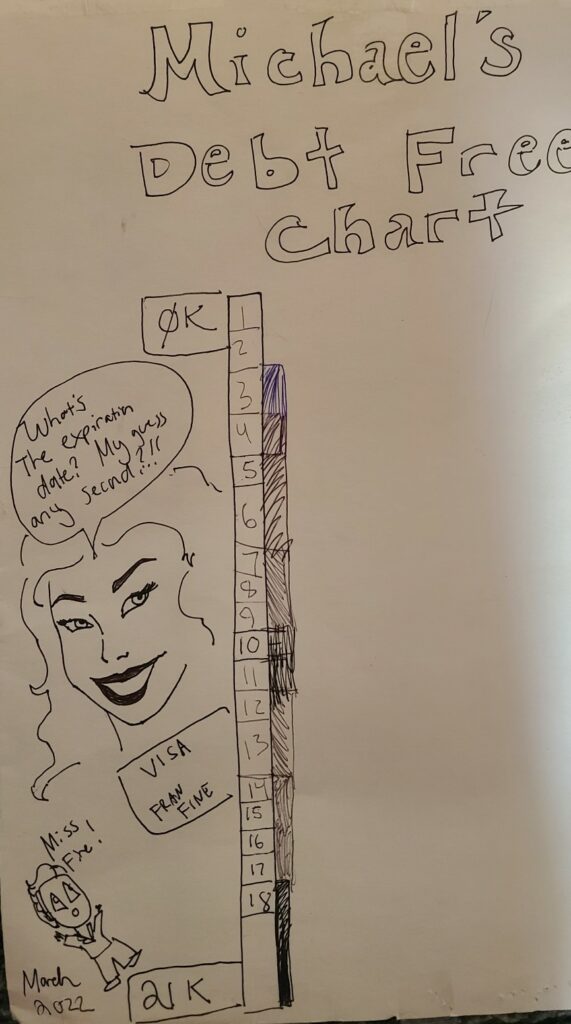
The math is compelling: by reducing their current monthly expenditure of $8,035 down to a proposed $6,665, the couple could potentially allocate upwards of $4,400 monthly toward their debt. At this velocity, they could achieve complete consumer debt freedom in roughly six months.
Prioritizing Security Before Homeownership
A critical point of the consultation addresses the couple’s desire to purchase a home. Frugalwoods advises against this in the immediate term. Instead, she posits a clear hierarchy of priorities:
- Eliminate high-interest debt.
- Build a robust emergency fund. An emergency fund is the firewall against the very debt cycles that have plagued them.
- Maximize retirement contributions. Given the "triple crown" of benefits available to them (403b, 457, and pension), they have the opportunity to shelter significant income from taxes while building a retirement cushion.
The Education Question
Regarding Brian’s interest in a graduate degree, the expert advice is stark: unless the degree provides an iron-clad, guaranteed, and significant increase in salary, it should be viewed as an "unhelpful detour." For a couple already struggling with debt and a desire for homeownership, the opportunity cost of time and tuition is too high to justify without a clear, immediate professional return on investment.
Implications for the Future
The case of Brian and Michael reflects a broader economic reality for many millennials. They are a demographic that values professional impact and stability, yet they are often forced to navigate a high-cost-of-living environment that punishes minor financial missteps.

The implications for their future are clear: success will not come from a single, dramatic windfall, but from the quiet, consistent application of financial discipline. By viewing their money as a tool to enable their values—rather than a source of shame—they can shift from a state of "feast and famine" to one of intentional, sustainable growth.
The couple’s next steps will be a test of their resolve. As they move into the final quarter of the year, their success will depend on their ability to resist the urge to "make up for lost time" through excess, and instead commit to the methodical, boring, yet incredibly effective process of living below their means.

For readers watching this case study unfold, the lesson is universal: financial adulthood is not defined by the size of one’s home or the lack of past mistakes. It is defined by the courage to face the numbers, the discipline to change the trajectory, and the wisdom to prioritize long-term peace over short-term gratification. As Brian and Michael approach their 10th anniversary, they have the potential to make it their most transformative year yet—not by acquiring more, but by strategically refining what they already have.