Mid-Air Terror: Passenger Pulled from Ryanair Jet in Rare Decompression Incident
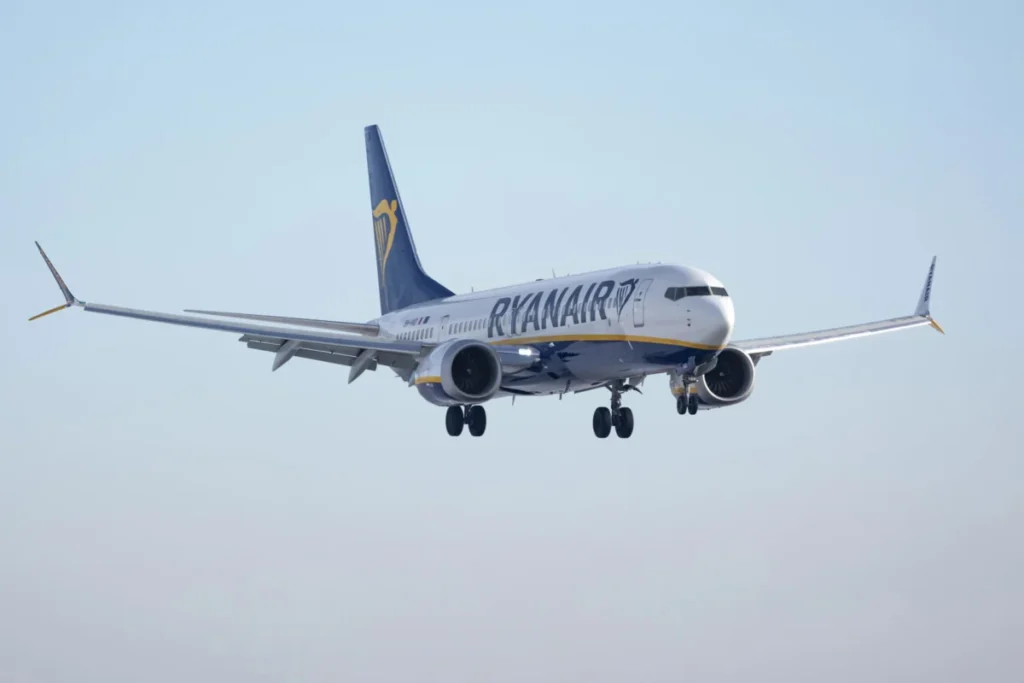
THESSALONIKI, Greece — A routine flight turned into a harrowing struggle for survival on July 10, when a Ryanair aircraft departing from Thessaloniki, Greece, suffered a catastrophic structural failure, leading to a mid-air emergency that left one passenger partially ejected from the fuselage. The incident, which is currently the subject of an intense multi-national investigation, has raised serious questions regarding aviation safety protocols, engine maintenance, and the psychological toll of one of the most frightening occurrences in modern commercial aviation.
The Main Facts: A Flight Turned Nightmare
The flight, which was bound for Germany, was in the early stages of its journey when a violent, ear-splitting explosion shattered the calm of the cabin. Svetlana Maksimovic, who was seated alongside her 61-year-old husband, Ljubisa Karovic, described a scene of absolute chaos. Within seconds of the deafening bang, the cabin suffered a rapid loss of pressure.
In a terrifying turn of events, the window adjacent to Karovic’s seat dislodged entirely. The physics of rapid cabin decompression exerted a massive force, pulling the 61-year-old passenger toward the jagged opening. For several agonizing minutes, Karovic was suspended partially outside the aircraft at cruising altitude, his head and right arm exposed to the freezing, high-velocity slipstream.
The emergency necessitated an immediate return to the Thessaloniki airport, with the pilot successfully landing the aircraft using only one functioning engine. Karovic remains hospitalized with severe neck and arm injuries, his recovery process described by his wife as uncertain and arduous.
Chronology of the Incident: July 10
The sequence of events on that July afternoon has been reconstructed through passenger testimony and preliminary reports from aviation authorities.
Pre-Flight and Takeoff
The couple had settled into their seats for what they expected to be a standard commute. According to Maksimovic, her husband was relaxed and had likely drifted off to sleep, oblivious to the mechanical tragedy that was about to unfold. The flight departed Thessaloniki without incident, reaching its initial climb phase over North Macedonian airspace.
The Catastrophic Failure
At an altitude where air pressure differentials are at their most extreme, a loud bang pierced the hum of the jet engines. Preliminary findings suggest that a component of one of the plane’s engines suffered a mechanical failure, ejecting debris at high speed. This debris is believed to have struck the fuselage, specifically impacting the window panel near Karovic’s seat. The impact caused the window to shatter and dislodge, resulting in an immediate decompression of the cabin.
The Struggle to Save a Life
As the air rushed out of the cabin, the pressure differential began to drag Karovic toward the void. Maksimovic witnessed her husband’s body being pulled toward the window. "I’ve never heard anything louder in my life before," she recounted to Reuters. "I just turned around and saw that part of his body had already gone out the window."
A fellow passenger, seated beside Karovic, instinctively grabbed his left arm in an attempt to anchor him. The struggle was desperate, as the wind resistance and the cabin’s rapid depressurization made it nearly impossible to pull him back in. It was only after a second passenger intervened, lending their strength to the effort, that they were able to drag Karovic back into the safety of the cabin.
The Descent and Landing
As the aircraft began its emergency descent, Maksimovic abandoned her own seat to reach her husband. Amidst the chaos and the lack of oxygen, she managed to place an oxygen mask over his face, while another passenger assisted her with her own. By the time the aircraft touched down in Thessaloniki, Karovic was suffering from extensive trauma. Maksimovic described his condition as harrowing: "His face was completely disfigured, there was blood everywhere and his ears, eyes, nose were completely deformed."
Supporting Data and Technical Investigation
The investigation into the incident is complex, involving multiple international bodies. The aircraft is currently being held in Greece, where Greek air accident investigators are combing through the wreckage.
The Role of Boeing and Global Regulators
Boeing, the manufacturer of the aircraft, has issued a brief statement confirming their cooperation with the investigation. The North Macedonian authorities are leading the probe, given the location of the incident, with support from the U.S. National Transportation Safety Board (NTSB) and the European Union Aviation Safety Agency (EASA).
Evidence of Engine Damage
Ryanair executive Eddie Wilson confirmed on Wednesday that photographic evidence shows clear damage to the engine. While he declined to confirm the direct link between the engine debris and the window failure pending the final report, the timeline of the explosion and the structural damage to the window are strongly correlated. The fact that the plane was forced to return to base on a single engine highlights the severity of the mechanical failure.
Official Responses and Corporate Stance
The response from Ryanair has been met with both professional scrutiny and public outcry. Eddie Wilson, speaking to the Irish state broadcaster RTE, emphasized the airline’s safety record while addressing the incident as a statistical anomaly.
"When you’re doing 1.2 million flights per year, things happen from time to time," Wilson stated. "But people can be assured that we’ve got the best-trained crews, and that was demonstrated last week."
While the airline credits the crew’s training for the successful emergency landing, the victims and their legal representation are focusing on the catastrophic failure of the aircraft’s structural integrity. Vassilis Tsiaras, the lawyer representing the couple, has signaled that the firm is preparing for a legal challenge. "What happened was extremely serious," Tsiaras said. "The pending results of the probe are pivotal to determining liability and ensuring such a failure never happens again."
Implications for Aviation Safety
The incident has reignited debates regarding the "window seat" safety paradox and the rigorousness of maintenance checks for aging or high-cycle aircraft.
Structural Integrity and Maintenance
The fact that an engine component could potentially penetrate the fuselage is a significant concern for the aviation industry. Modern aircraft are designed with "fail-safe" mechanisms intended to prevent such occurrences. Investigators will be tasked with determining if the engine failure was caused by a manufacturing defect, a maintenance oversight, or a freak mechanical fatigue issue.
The Human Toll
Beyond the legal and technical implications, the incident has highlighted the profound psychological and physical trauma experienced by those caught in aviation disasters. Maksimovic’s testimony serves as a stark reminder that passengers are not just statistics in an airline’s annual report.
"The consequences remain for him and for me," Maksimovic told reporters. "How we’re going to heal and how long that treatment will last and in what way, we’ll see."
Industry Outlook
As the investigation continues, the aviation industry will be watching closely for any mandatory service bulletins or design modifications that may result from this incident. If the probe concludes that engine debris is a recurring risk factor for window structural integrity, airlines globally may be required to implement enhanced shielding or inspection protocols for engine housings.
For now, the focus remains on the recovery of Ljubisa Karovic and the pursuit of answers. The flight on July 10 will likely be remembered as one of the most frightening near-fatal incidents in recent memory—a moment where a routine journey turned into a testament to the fragile line between everyday travel and a life-or-death struggle at 30,000 feet.