Legislative Impasse: Senate Stalls Clarity Act, Leaving Crypto Regulation in Regulatory Limbo
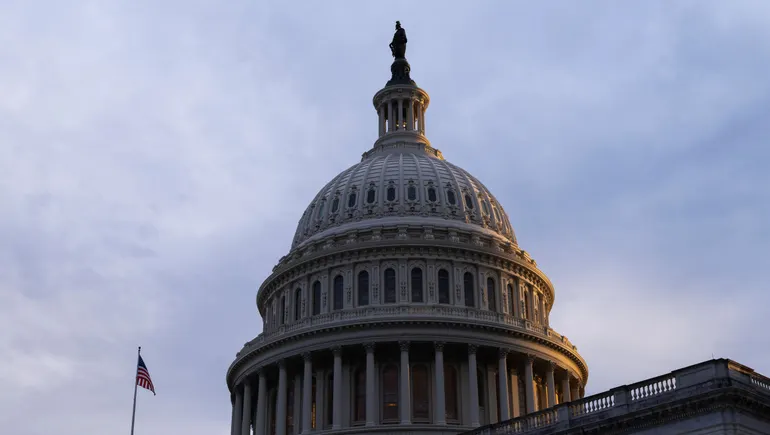
In a significant setback for the digital asset industry and its proponents in Congress, the U.S. Senate blocked the advancement of the Clarity Act this past Tuesday. The bill, a cornerstone of the Republican-led effort to establish a comprehensive federal regulatory framework for cryptocurrency, failed to secure the necessary 60-vote supermajority required to move forward, effectively stalling the legislative process as lawmakers prepare to break for the upcoming midterm elections.
The 50-49 vote reflected a starkly divided chamber. No Democrats crossed the aisle to support the measure, and a strategic defection from a handful of Republicans—including Senators Josh Hawley (R-MO), Susan Collins (R-ME), Jerry Moran (R-KS), and Thom Tillis (R-NC)—sealed the bill’s fate. While Senator Tillis subsequently filed a motion to recommit, which would technically allow the bill to return to the Senate floor, the parliamentary calendar suggests that any such effort is purely academic. With the Senate scheduled to recess in early October and not return until after the November midterms, the political landscape is likely to shift, rendering the current version of the legislation a relic of the outgoing session.
A Chronology of Conflict: From House Success to Senate Stagnation
The failure of the Clarity Act is the culmination of months of friction. Having passed a version of the bill in the House of Representatives last year, supporters had hoped for a smooth transition through the upper chamber. However, the Senate proved to be a far more difficult arena for consensus.
Throughout the summer, the debate was dominated by the technical and economic complexities of "stablecoin yield." Critics of the initial proposal argued that allowing crypto firms to offer rewards on stablecoin balances—rewards functionally equivalent to interest-bearing bank deposits—could trigger a destabilizing exodus of capital from the traditional banking system.
In response to these concerns, Senator Tillis and Senator Angela Alsobrooks (D-MD) collaborated on refined language aimed at curbing such practices. The revised text included provisions that would have explicitly barred crypto firms from issuing rewards for stablecoin balances that mirrored bank deposit interest, with a further safeguard allowing the Treasury Secretary to intervene if community banks reported measurable "deposit flight." This compromise, however, was designed with a 18-month sunset clause, a feature that failed to appease skeptics on either side of the aisle.
As autumn approached, the focus shifted from technical stability to the personal financial entanglements of high-ranking officials. The spotlight turned squarely on President Donald Trump, who reported $1.4 billion in income from family-linked crypto ventures. Democrats seized on this, demanding more robust ethics provisions to prevent conflicts of interest. Republicans attempted to mitigate these concerns by introducing updated ethics rules that would have permitted state attorneys general to ban public officials from issuing or holding significant interests in digital assets. Yet, these measures were criticized as insufficient, particularly because they failed to extend restrictions to the President’s adult sons, who currently oversee the family’s crypto business operations.
The Regulatory Gap: Who Governs the Digital Frontier?
The demise of the Clarity Act effectively returns the governance of the digital asset market to the hands of federal regulators—specifically the Securities and Exchange Commission (SEC) and the Commodity Futures Trading Commission (CFTC).
For years, these agencies have relied on existing, often outdated, statutory authority to enforce compliance within the crypto space. The SEC has been particularly active, recently proposing new rules that would provide a pathway for startups to raise capital through tokens without triggering traditional securities registration. Simultaneously, the CFTC has signaled its intent to assert its jurisdiction, with the agency’s chair confirming that the CFTC will continue to codify rules through administrative action rather than waiting for congressional guidance.
However, industry experts warn that this "regulation by enforcement" is far from ideal. Austin Campbell, an adjunct professor at New York University, noted that while agencies have the power to create administrative rules, these frameworks lack the permanence and stability of federal law. "While they can make rules, those are less stable and permanent than legislation," Campbell told Bloomberg.
This reliance on agency discretion leaves the industry vulnerable to the "Biden-era" trend of high-profile enforcement actions, where the definition of what constitutes a "security" remains a subject of intense litigation. Without a clear statutory roadmap, the courts—rather than the legislature—may ultimately decide the rules of the road for the next decade of digital finance.
Voices of Dissent: Ethics and State Authority
The failure of the bill was not merely a result of partisan gridlock but also the consequence of strong opposition from state-level regulators and ethics watchdogs. On Monday, just a day before the vote, New York Attorney General Letitia James led a coalition of over a dozen state attorneys general in a letter to the Senate Banking Committee. The coalition argued that the Clarity Act would preempt state-level consumer protection laws, effectively stripping states of their ability to prosecute crypto fraud and protect their citizens from scams.
Simultaneously, the advocacy group Democracy Defenders Action leveled harsh criticism at the bill’s ethics provisions. They described the language as riddled with "wide loopholes," arguing that the bill was drafted in a way that would grant the President and other officials ample time to restructure their holdings to evade transparency requirements. Senator Richard Blumenthal (D-CT) echoed these concerns on the Senate floor, dismissing the bill as a "charade" that favored political optics over substantive reform.
Implications for the Future of American Finance
The immediate impact of the bill’s defeat is a period of continued uncertainty. For companies operating in the crypto sector, the lack of legislative clarity acts as a brake on institutional investment and acquisition. The legislative stumble suggests that the window for meaningful federal crypto regulation has closed for the current session, leaving the industry to navigate a patchwork of state and federal agency actions.
For some, the disappointment is profound. Patrick Witt, executive director of Donald Trump’s council of advisers for digital assets, characterized the vote as "a major disappointment—and, I believe, a failure of American leadership." Witt emphasized that the void left by Congress might not remain empty for long, warning that if the U.S. does not establish a clear, pro-innovation framework, the global standards for financial markets will eventually be set in Brussels or Beijing.
Conversely, others in the industry remain optimistic, viewing the delay as a temporary hurdle rather than a permanent barrier. Brian Dixon, CEO of Off the Chain Capital, articulated a sentiment shared by many in the venture capital space: the transition to a regulated market is inevitable. "We are going to get regulatory clarity; it’s just the timeline," Dixon stated.
Conclusion: The Long Road to Consensus
The Senate’s failure to pass the Clarity Act underscores the difficulty of legislating in an era of deep political polarization, especially when dealing with a fast-evolving and politically sensitive asset class like cryptocurrency. While the bill aimed to provide a "roadmap" for the future, it instead became a lightning rod for concerns regarding financial stability, executive ethics, and federalism.
As the nation looks toward the November midterm elections, the future of crypto regulation remains a high-stakes variable. Whether the next Congress will prioritize a bipartisan consensus on digital assets or whether the courts will continue to serve as the primary arbiters of crypto law remains to be seen. For now, the "Clarity Act" has failed to bring clarity, and the digital asset market must continue to operate in the gray zones of American law.