IRS Proposes Strict Investment Guardrails for ‘Trump Accounts,’ Limiting Growth-Phase Holdings to Low-Fee U.S. Equity Funds
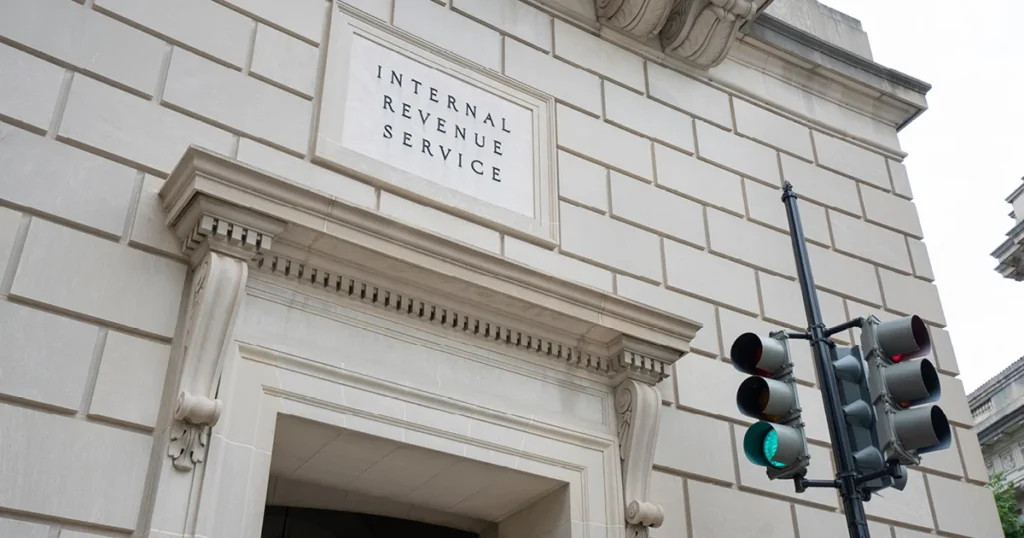
WASHINGTON — In a major regulatory step that will shape the financial futures of millions of American children, the Internal Revenue Service (IRS) and the Department of the Treasury released long-anticipated proposed regulations governing "Trump accounts." The newly unveiled framework—detailed in regulatory document CC-00349938-26—seeks to impose stringent investment limitations during the foundational growth phase of these accounts, restricting holdings exclusively to low-fee stock index funds and exchange-traded funds (ETFs) that track major U.S. equities.
According to federal officials, the core objective of these guardrails is to maximize long-term compound growth by systematically driving down investment management costs while enforcing broad, diversified market exposure. Under the proposed rules, high-fee investment products, speculative assets, and leveraged vehicles will be barred from the accounts until beneficiaries reach late adolescence.
The proposal marks a critical implementation milestone for the specialized individual retirement accounts (IRAs) created under Section 530A of the Internal Revenue Code, established via H.R. 1, Public Law 119-21—widely known as the OBBBA legislation. As federal agencies field public feedback ahead of a formal implementation target of January 1, 2026, financial advisors, parents, and banking institutions are scrutinizing what these rules mean for the next generation of American savers.
Main Facts
The newly proposed regulatory framework introduces a targeted, highly restrictive investment environment designed to protect young savers from wealth erosion caused by high expense ratios and undue market volatility during their formative years.
Key Pillars of the Proposed Regulations:
- Eligible Asset Classes: During the designated "growth period," investments are strictly capped at mutual funds and ETFs that track an equity index composed primarily of U.S. companies (such as the S&P 500).
- Leverage Prohibition: Funds utilizing leverage or derivative strategies to amplify returns or risk are strictly prohibited.
- Expense Ratio Cap: Eligible funds must maintain annual fees and expenses of no more than 0.1% (10 basis points) of the fund’s total balance. This strict cap, however, does not exempt or apply to administrative trustee fees charged by financial institutions for managing the account structure itself.
- The Growth Period Timeline: The investment restrictions are temporal. They begin the exact moment an eligible beneficiary’s initial account is established and remain in full effect until December 31 of the calendar year in which the beneficiary turns 17 years old. Once the calendar year of the beneficiary’s 18th year begins, these prescriptive investment limitations sunset, and account holders gain broader asset allocation flexibility.
- Default Investment Standards: Previously, the Treasury Department designated the State Street SPDR Portfolio S&P 500 ETF (ticker: SPYM) as the initial default investment vehicle for Trump accounts. Alongside SPYM, regulators identified four other low-cost index ETFs that parents or legal guardians may actively select. If an account beneficiary or their responsible party fails to make an active investment choice from the trustee’s approved menu, funds are automatically swept into an eligible default investment chosen by the trustee.
Chronology of Events
The path toward establishing a formalized regulatory framework for Trump accounts has moved at a rapid pace, reflecting the administration’s emphasis on youth asset-building programs.
- Legislative Genesis: The framework began with the passage of H.R. 1, P.L. 119-21 (the OBBBA legislation), which officially authorized Section 530A Trump accounts as a novel vehicle for individual retirement savings for eligible children.
- The Pilot Launch and Section 6434: To jumpstart participation, a pilot program under Section 6434 was authorized to provide a $1,000 direct federal government contribution for eligible children born after December 31, 2024, and before January 1, 2029.
- Early Guidance via Notice 2025-68: Laying the groundwork for the current rules, federal agencies issued Notice 2025-68, soliciting initial public and institutional feedback regarding account administration, custodial requirements, and eligible asset universes. The Notice offered the public a first glimpse into how the Treasury envisioned balancing parental choice with fiduciary protection.
- March 2026 Preliminary Announcements: The Treasury department officially spotlighted early operational parameters, identifying low-cost market vehicles—notably the State Street SPDR Portfolio S&P 500 ETF (SPYM) and a short list of peer funds—as the baseline standard for automatic enrollments.
- The August 2026 Notice of Proposed Rulemaking (NPRM): On Thursday, the IRS formally published its comprehensive proposed regulations (CC-00349938-26) in the Federal Register, setting strict boundaries on fees, eligible indexes, and the mechanics of the growth period.
- Current Public Comment Phase: The IRS has established a strict public comment window closing on October 20, inviting feedback from financial institutions, consumer advocates, and tax professionals.
- Projected Effective Date: Subject to revisions following the public comment period, the regulations are slated to formally apply to all applicable tax years beginning on or after January 1, 2026.
Supporting Data and Eligibility Criteria
Understanding who qualifies for a Trump account and how the math of a 0.1% expense cap impacts long-term wealth accumulation requires a close look at the statutory guidelines and financial mechanics.
Eligibility and Funding Mechanics
To qualify for the establishment of a Trump account under Section 530A:
- Age and Calendar Year Limits: The individual must not have turned 18 years old before the close of the calendar year in which the election to open the account is made.
- Identification: The child must have been issued a valid Social Security number (SSN).
- Pilot Program Parameters: Children born between January 1, 2025, and December 31, 2028, are eligible for the federally funded $1,000 seed contribution under Section 6434, though accounts may theoretically be established or funded for other eligible youth via private contributions depending on broader statutory provisions.
The Power of Low Fees: A 10-Basis-Point Ceiling
The Treasury’s hard ceiling of 0.1% in annual fund expenses is designed to prevent investment management fees from nibbling away at compounding returns over a 17-year timeline.
Consider the mathematics of compound interest over nearly two decades: On an account growing from infancy to age 17, paying a traditional mutual fund expense ratio of 0.75% versus an ultra-low-cost index ETF fee of 0.05% or 0.10% can save a portfolio thousands of dollars in cumulative drag. By narrowing the eligible investment universe to broad-market passive index funds, regulators are effectively forcing accounts to capture the equity premium of the broader American economy while insulating young savers from the high turnover costs, advisory loads, and management fees typical of actively managed retail funds.
Official Responses and Stakeholder Perspectives
The rollout of the proposed regulations has elicited reactions from fiscal policy experts, banking trade associations, and consumer advocates, highlighting a broad consensus on the virtue of low costs alongside debates over personal financial autonomy.
Treasury and IRS Rationale
In official releases accompanying the proposed rules, Treasury officials emphasized that the regulatory framework was engineered to strike an optimal balance between hands-off simplicity and stringent consumer protection.
"Account balances must be allowed to compound organically over the long term without being undermined by excessive fee erosion or high-risk speculation," a Treasury spokesperson noted in the department’s announcement. By anchoring the default and permissible options to transparent, market-tracking benchmarks like the S&P 500, the government aims to ensure that children’s initial capital is tethered to the sustained productivity of blue-chip American enterprises.
Industry and Financial Institution Reactions
Financial institutions and brokerage firms tasked with serving as custodians and trustees for Trump accounts are currently reviewing the operational impact of the 0.1% fee cap. While many large fund providers already offer ultra-low-cost index ETFs that easily clear the 10-basis-point hurdle, compliance departments are building out automated screening filters to ensure that accounts do not inadvertently drift into non-compliant asset classes during the 17-year growth window.
Independent financial planners have also weighed in on the dual nature of the restrictions. While certified financial planners (CFPs) universally praise the low-fee emphasis, some have expressed caution regarding the rigidity of barring alternative asset classes or international equities entirely during the growth phase. Proponents of the rule, however, counter that simplicity is paramount when dealing with accounts intended for minors, where the primary goal is predictable, equity-market participation with minimal behavioral interference.
Implications
The implementation of these proposed regulations carries profound structural implications for the financial services industry, family wealth planning, and the future financial literacy of American youth.
1. Market Impact on Low-Cost ETF Providers
The restriction limiting growth-period assets to U.S.-focused index funds and ETFs with expense ratios under 0.1% creates a massive structural advantage for the world’s largest passive asset managers—firms capable of scaling ultra-low-cost index funds. With millions of potential beneficiaries entering the system over the coming decades, these accounts represent a massive, sticky pool of long-term capital that will flow directly into foundational market indexes.
2. Administrative Burdens for Trustees
Trustees and financial custodians face heightened compliance responsibilities. Because the investment restrictions lift automatically on December 31 of the year the beneficiary turns 17, systems must be engineered to either flag accounts for structural transitions or communicate new asset allocation choices to beneficiaries as they reach adulthood. Furthermore, trustees must maintain clear disclosures distinguishing between the underlying fund’s capped expense ratio (0.1%) and any allowable administrative trustee fees.
3. Long-Term Wealth Accumulation and Behavioral Norms
By embedding low-cost indexing as the default and mandatory standard for the first 17 years of life, the policy effectively normalizes passive investing as the foundational building block of American household wealth. Beneficiaries who grow up with accounts tracking the S&P 500 at minimal cost may carry these lessons into their adult investing lives, shifting the retail financial landscape further away from high-fee, active trading products.
Next Steps for the Public
As the IRS reviews commentary submitted ahead of the October 20 deadline, stakeholders await the publication of the final regulations. With the rules expected to take full effect for tax years beginning on or after January 1, 2026, parents, financial institutions, and advisory practices have a narrow window to align their operational readiness with the Treasury’s vision for the next generation of American investors.
To submit comments regarding regulatory document CC-00349938-26 or to suggest news coverage related to Trump accounts and OBBBA implementation, contact Martha Waggoner at [email protected].