IRS Issues Final Regulations Aligning Backup Withholding Thresholds with OBBBA Legislation
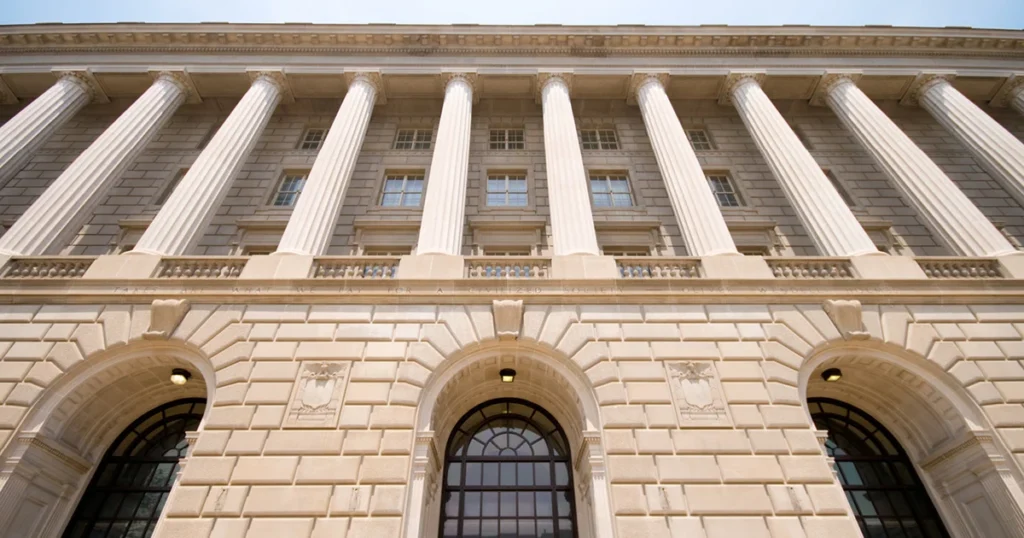
WASHINGTON — The Internal Revenue Service (IRS) has officially published final regulations (Treasury Decision 10053) that formalize sweeping adjustments to Section 3406 backup withholding thresholds. The regulatory update comes in direct response to legislative modifications introduced under H.R. 1, Public Law 119-21—widely recognized as the OBBBA.
By adopting previously issued proposed regulations from January without modification, the IRS has cemented a return to pre-pandemic reporting and withholding baselines for third-party settlement organizations (TPSOs) such as PayPal, Venmo, and other digital payment platforms. The final rule provides much-needed legal certainty for millions of gig economy workers, small-business owners, casual online sellers, and digital platform operators navigating the complexities of modern tax compliance.
Main Facts
The publication of T.D. 10053 marks a permanent harmonization of tax administration rules following legislative updates enacted by Congress. The core components of the newly finalized regulations include:
- Restoration of Legacy Thresholds: Third-party settlement organizations are generally no longer required to execute backup withholding on payments processed through third-party networks unless two distinct conditions are concurrently met: the gross amount of reportable payment transactions to a specific payee exceeds $20,000, and the aggregate number of transactions exceeds 200.
- Direct Statutory Alignment: The final regulations incorporate statutory changes mandated by H.R. 1, P.L. 119-21 (OBBBA), ensuring that Section 3406 regulations perfectly mirror the operational framework established for information reporting under Section 6050W.
- Form 1099-K Consistency: Because previous legislative adjustments to Section 6050W had already aligned Form 1099-K filing requirements with the $20,000-and-200-transaction standard, the corresponding reporting regulations required no further textual alterations.
- Effective Date: The final rules apply formally to calendar years beginning after December 31, 2024, providing retroactive and prospective clarity for the ongoing tax year.
- Taxability Distinction: The IRS reiterated a foundational principle of federal tax law: the absence of a Form 1099-K or the lack of backup withholding does not exempt a taxpayer from their legal obligation to report and pay taxes on all generated income.
Chronology of Regulatory and Legislative Events
The path to T.D. 10053 represents the culmination of years of legislative back-and-forth, administrative pauses, and taxpayer confusion regarding digital transactions.
1. The Pre-2022 Landscape
For years, the statutory threshold governing both Form 1099-K reporting and backup withholding for TPSOs remained steady at a gross volume of $20,000 across more than 200 transactions. This standard was designed to capture high-volume commercial sellers while sparing casual garage-sale vendors, occasional item resellers, and peer-to-peer personal transfers from burdensome tax paperwork.
2. The American Rescue Plan Act of 2021 (ARPA)
The landscape shifted dramatically with the enactment of the American Rescue Plan Act of 2021 (P.L. 117-2). ARPA aggressively lowered the threshold for third-party network reporting under Section 6050W to a mere $600 in aggregate gross payments, regardless of transaction volume.
This drastic reduction immediately sparked widespread panic and administrative chaos. Millions of casual users who occasionally sold used furniture, concert tickets, or split dinner bills through digital apps suddenly faced the prospect of receiving Form 1099-Ks, creating unprecedented burdens for both taxpayers and payment processors.
3. Transitional Relief and IRS Deferrals
Recognizing the massive compliance hurdles, systemic confusion, and technological strain the $600 threshold would place on the tax ecosystem, the IRS issued a series of transitional notices. These notices effectively delayed full implementation of the $600 rule, treating the intervening years as a phase-in period while Congress debated legislative fixes.
4. Enactment of H.R. 1, P.L. 119-21 (OBBBA)
Responding to intense bipartisan pressure from taxpayers, consumer advocates, and tax professionals, Congress passed H.R. 1 (P.L. 119-21), commonly referred to as the OBBBA. This legislation officially rolled back the aggressive $600 reporting mandate, permanently restoring the dual requirement of $20,000 and 200 transactions for both Section 6050W reporting and Section 3406 backup withholding.
5. Proposed Regulations (January 2026)
In January 2026, the IRS and the Treasury Department moved swiftly to harmonize administrative rules with the new statute by publishing proposed regulations amending the Section 3406 backup withholding framework. These proposals opened a mandatory public comment period, allowing stakeholders, CPAs, and industry groups to weigh in on administrative clarity and compliance logistics.
6. Promulgation of Final Regulations (T.D. 10053)
Concluding the rulemaking process, the IRS published T.D. 10053. By adopting the January proposed regulations without amendment, the agency finalized the transition back to the legacy thresholds, bringing formal closure to a multi-year regulatory saga.
Supporting Data and Threshold Mechanics
Understanding how backup withholding operates requires a close look at the mechanics of Section 3406 and Section 6050W. Backup withholding is a mechanism designed to ensure that the federal government collects income taxes on payments that might otherwise go unreported.
When a payee fails to provide a correct Taxpayer Identification Number (TIN)—such as a Social Security Number (SSN) or Employer Identification Number (EIN)—to a payer or TPSO, or when the IRS notifies the payer that the payee has underreported interest or dividend income, the TPSO is legally obligated to withhold a flat statutory percentage (currently 24%) from gross payments and remit it directly to the IRS.
The Dual-Trigger Requirement
Under the finalized regulations, backup withholding by a TPSO is triggered only when both statutory prongs are satisfied within a calendar year:
- Gross Payment Volume: Total reportable payments to the payee exceed $20,000.
- Transaction Count: The number of discrete transactions processed through the third-party network exceeds 200.
+-----------------------------------------------------------------+
|               SECTION 3406 BACKUP WITHHOLDING TRIGGER           |
+-----------------------------------------------------------------+
|                                                                 |
|   [ Gross Payments > $20,000 ]   AND   [ Transactions > 200 ]   |
|                                                                 |
|                                 │                               |
|                 ┌───────────────┴───────────────┐               |
|                 ▼                               ▼               |
|       [ WITHHOLDING REQUIRED ]      [ NO WITHHOLDING REQUIRED ] |
|            (Flat 24%)                   (Unless TIN is Missing) |
+-----------------------------------------------------------------+
If a user processes $25,000 across only 50 transactions (e.g., high-value freelance design work), the second prong (transaction count > 200) is unmet. Consequently, unless the user has failed to provide a valid TIN, the TPSO is not required to execute backup withholding. Conversely, if a user processes 250 transactions totaling $5,000 (e.g., high-frequency sales of low-cost handmade crafts), the first prong ($20,000 gross amount) is unmet, exempting them from TPSO backup withholding.
Official Responses and Public Comments
During the public comment window following the publication of the January proposed regulations, tax professionals and industry stakeholders submitted feedback. One notable submission came from a prominent professional commenter who urged the IRS to expand the preamble of the final regulations.
The Commenter’s Proposal
The commenter recommended that the IRS explicitly incorporate a dedicated section addressing compliance and enforcement implications directly within the regulation’s preamble. The objective was twofold:
- To reduce ongoing tax controversy and taxpayer disputes.
- To provide explicit, unequivocal clarification that the underlying taxability of income is entirely independent of whether a Form 1099-K is issued or whether backup withholding is enforced on third-party network settlements.
The IRS Response
While the IRS ultimately declined to formally alter the text of the regulations to accommodate this request—noting that procedural guidance on general tax liability falls outside the narrow statutory scope of Section 3406 backup withholding rules—the agency formally addressed the underlying concern.
In the preamble to T.D. 10053, the IRS agreed with the sentiment, emphasizing that:
"It is important to emphasize that the taxability of payments and the reportability of income on an income tax return are not determined by whether the IRS or the taxpayer receives a Form 1099-K, or by whether backup withholding is required with respect to a third-party network transaction."
This official stance underscores a crucial compliance tenet: the absence of informational paperwork does not convert taxable business or platform income into tax-exempt revenue.
Implications for Taxpayers, Platforms, and Professionals
The finalization of T.D. 10053 carries profound practical ramifications across the financial and technological sectors.
1. Relief for Casual Sellers and Gig Workers
For casual online sellers who offload old personal possessions, clothes, or electronics on peer-to-peer marketplaces, the final regulations provide immense relief. Millions of individuals who feared being inundated with tax forms or facing erroneous backup withholding will no longer face unnecessary administrative hurdles, provided their volume remains below the statutory thresholds.
2. Operational Stability for Third-Party Settlement Organizations
TPSOs—including major payment processors like PayPal, Venmo, Cash App, and Stripe—avoided a massive operational overhaul that would have been required to track, process, and withhold taxes for millions of low-volume accounts under the abandoned $600 threshold. Platforms can maintain their existing compliance infrastructure geared toward the higher $20,000/200-transaction limit, reducing administrative overhead and software engineering costs.
3. Persistent Compliance Responsibilities for Taxpayers
Despite the higher reporting and withholding thresholds, CPAs and tax practitioners emphasize that legal tax compliance obligations remain unchanged. All income derived from trades, businesses, freelancing, or the profitable sale of goods must be reported on federal income tax returns (such as Schedule C or Form 1040), regardless of whether a Form 1099-K is generated by a platform.
As tax professionals advise clients ahead of upcoming filing seasons, taxpayers must maintain meticulous internal financial records of their digital commercial activities, separating personal reimbursements and capital losses on personal items from genuine income-generating ventures.
Conclusion
The release of Treasury Decision 10053 brings regulatory closure to a turbulent chapter in federal tax administration. By permanently aligning Section 3406 backup withholding regulations with the OBBBA legislative framework, the IRS has successfully restored operational stability for third-party payment networks while reaffirming the timeless legal principle that all earned income remains taxable—with or without an information return.