Inside the FBI’s "Kinetic Cyber Range": A High-Stakes Training Ground for the Digital Age
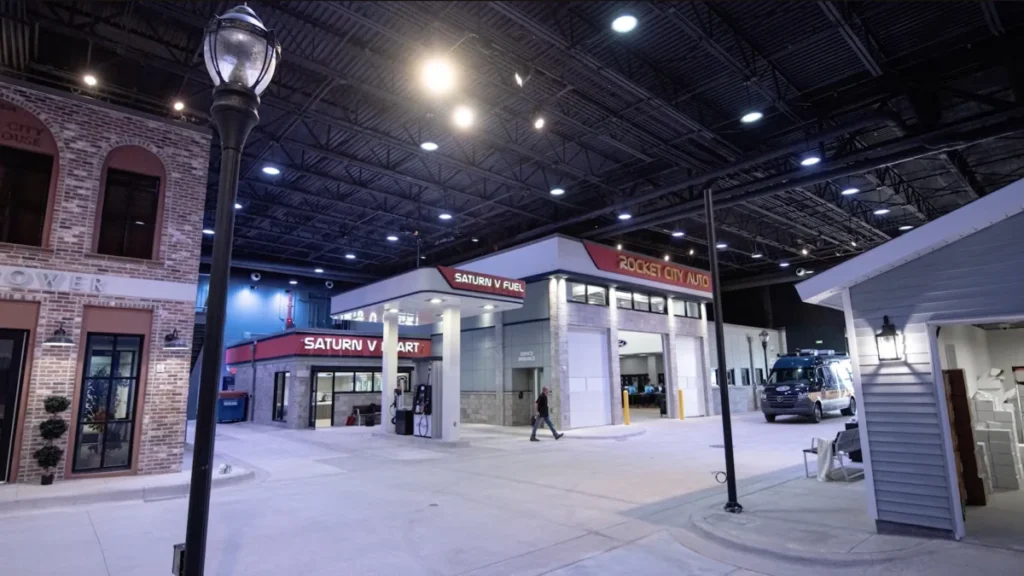
In the quiet sprawl of Huntsville, Alabama, the Federal Bureau of Investigation (FBI) has constructed a town that does not appear on any map. Spanning 22,000 square feet, this purpose-built replica community—complete with a bustling grocery store, a functioning gas station, a courthouse, a hospital, and a power grid—serves as the front line in a new, clandestine war. This is the "Kinetic Cyber Range," an immersive training facility designed to bridge the chasm between theoretical cybersecurity and the messy, high-pressure reality of modern digital crime.
As cyber threats evolve from simple data theft to life-threatening disruptions of critical infrastructure, the FBI is moving beyond the whiteboard. By placing agents and law enforcement partners in a physical environment where digital exploits have tangible, "kinetic" consequences, the agency aims to produce a new generation of investigators capable of navigating the complex, often dark, landscape of 21st-century warfare.
The Escalating Crisis: Why the Range Was Built
The impetus for the Kinetic Cyber Range is rooted in staggering statistics. According to the FBI’s 2025 Internet Crime Report, the United States is currently facing an unprecedented wave of digital malice. Drawing from more than one million consumer and enterprise complaints, the report revealed a record-breaking $20.9 billion in losses due to cybercrime—a 26% year-over-year increase.
Ransomware, in particular, has emerged as the primary threat to national stability. Unlike traditional hacking, which focuses on stealing data, modern ransomware syndicates target the "kinetic" world: they shut down hospital ventilators, freeze power grids, and stall municipal water systems. These are no longer just IT problems; they are public safety emergencies.
The Kinetic Cyber Range, which officially opened its doors in February 2025, was conceived to prepare law enforcement for this exact scenario. It provides a secure, isolated sandbox where the consequences of an attack can be simulated without risking real-world harm.
Chronology of a Cyber Battlefield: From Concept to Reality
The development of the Huntsville range marks a significant shift in federal training methodology. For decades, FBI cyber training was largely relegated to classrooms, labs, and simulated software environments. However, as the gap between digital systems and physical machinery narrowed—a phenomenon known as the "Internet of Things" (IoT) explosion—the need for a hybrid environment became undeniable.
- 2022–2023: Planning and initial construction phases focused on replicating municipal infrastructure. The goal was to build a site that mirrored the complexity of a mid-sized U.S. town.
- Late 2024: The facility underwent rigorous stress testing to ensure that the "cyber-air-gapping" was effective. Engineers verified that malicious payloads used during training exercises could not escape the range’s internal network to touch the public internet.
- February 2025: The Kinetic Cyber Range officially commenced operations.
- 2025–Present: Over 1,400 students, ranging from rookie FBI agents to seasoned task force officers from local and federal partners, have rotated through the facility. The curriculum is constantly updated to reflect the latest threat vectors identified by the IC3 (Internet Crime Complaint Center).
Supporting Data: Infrastructure and Capability
The Kinetic Cyber Range is not merely a stage set; it is a fully functioning network of integrated systems. Every building is wired with consumer and enterprise-grade hardware that behaves exactly as it would in a functioning community.
The Digital Backbone
Central to the range is a dedicated data center housing more than 200 physical servers. These machines are partitioned to run a variety of operating systems, including Windows and Linux, mimicking the heterogeneous environments found in modern corporate offices. This is crucial, as investigators often arrive at a crime scene to find a "Frankenstein" network of legacy hardware and modern cloud integrations.
The Kinetic Environment
The "kinetic" aspect of the range is what separates it from standard cyber ranges. When an instructor triggers a simulated ransomware attack on the hospital’s system, the lights don’t just flicker—the trainees must grapple with the logistical nightmare of patient triage while their digital tools are locked. They face the "noise, darkness, and misery" of a real incident, as program manager Dave Beachboard notes. By training in cramped, loud server rooms, investigators learn to maintain their composure and analytical rigor under conditions that mirror the chaos of a real-world breach.
Official Responses and Perspectives
The FBI has framed the range as a vital component of its broader effort to modernize. By simulating the full lifecycle of an investigation—from the initial intrusion to the forensic extraction of data—the agency is attempting to reduce response times.
"We are training for the reality of tomorrow," says one FBI spokesperson. "When a hospital is under ransomware attack, we don’t have the luxury of theorizing. We need people who understand the technical path of an attacker, but who also understand the human and physical consequences of that attack."
The program is also designed to foster better inter-agency cooperation. By bringing in local law enforcement, the FBI ensures that when a major cyber event occurs, the local police force is not standing by, confused by the technology, but acting as a coordinated part of the federal response.
Implications: Forensics, Ethics, and Future Challenges
While the Kinetic Cyber Range is a powerful tool for law enforcement, its existence highlights ongoing controversies in the field of digital forensics.
The "Unlock" Dilemma
A significant portion of the training involves digital forensics—specifically, methods used to bypass the security protections of encrypted devices. The FBI has long been vocal about the "Going Dark" challenge, where the encryption on smartphones prevents investigators from accessing evidence even with a valid warrant.
The range trains agents to utilize vulnerabilities in consumer technology to "crack" these devices. However, this raises ethical and legal questions. These forensic tools often rely on "zero-day" vulnerabilities—security flaws unknown to the manufacturers like Apple or Google. By keeping these vulnerabilities secret to use for law enforcement, the government arguably leaves the public at risk of those same vulnerabilities being exploited by malicious actors.
The Future of Kinetic Warfare
As the range continues to operate, its implications for national security will only grow. We are entering an era where a single line of code can trigger a physical disaster. The Kinetic Cyber Range acknowledges this reality by treating digital security as a branch of civil defense.
Looking ahead, the FBI plans to expand the range to include more complex simulations, such as the manipulation of smart-city sensors, autonomous vehicle networks, and advanced AI-driven infrastructure management systems.
Conclusion: A New Standard for Law Enforcement
The Kinetic Cyber Range represents a fundamental shift in how the United States prepares for the threats of the digital age. By moving from the abstract to the tangible, the FBI is acknowledging that the boundary between the "online" and "offline" worlds has effectively vanished.
While the use of controversial forensic tools and the secrecy surrounding the facility’s specific attack vectors will undoubtedly spark debate among privacy advocates and cybersecurity researchers, the practical utility of the range is clear. As cybercrime continues to evolve into a multi-billion dollar threat that hits closer and closer to home, the ability to train in a high-fidelity, high-stakes environment may well be the difference between a minor incident and a national catastrophe.
The town in Huntsville may be a fake, but the lessons learned there are increasingly vital for the protection of the real world.
Zack Whittaker is the security editor at TechCrunch and author of the weekly newsletter "This Week in Security." For secure communication, he can be reached via Signal at zackwhittaker.1337 or at [email protected].