IBM’s "Perfect Storm": A Deep Dive into the Tech Giant’s Historic Market Collapse
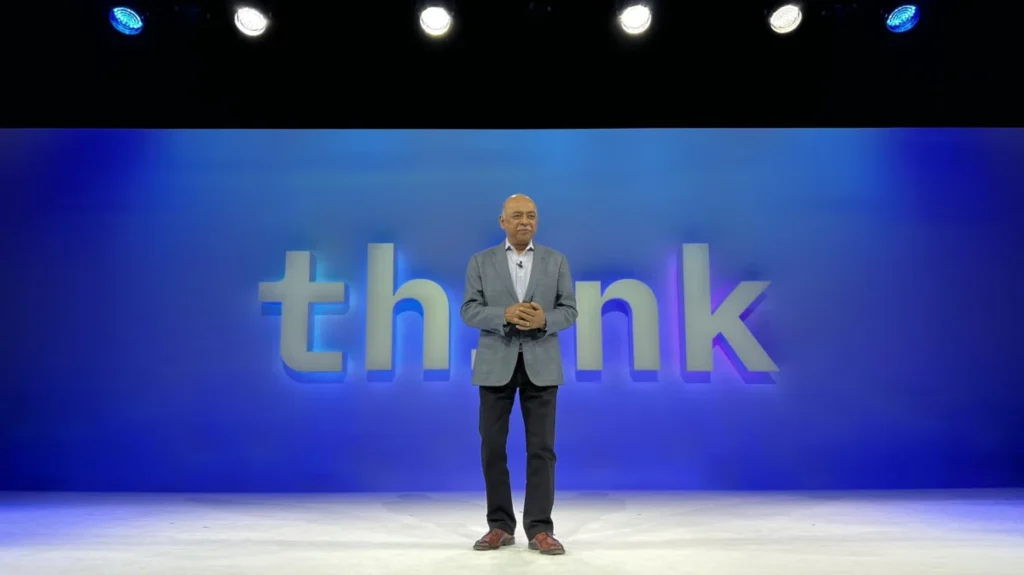
On Wednesday, IBM officially confirmed what investors had been dreading for over a week: a fiscal quarter that shattered the company’s recent momentum and sent shockwaves through the broader technology sector. For a 115-year-old institution that has weathered every economic cycle since the dawn of the computing age, this latest report represents one of the most jarring pivots in its modern history.
While the raw numbers remain staggering—$17.2 billion in quarterly revenue, $9.9 billion in gross profit, and a robust 58% margin—the figures fell significantly short of Wall Street’s high-altitude expectations. The result was not merely a miss; it was a fundamental disruption of the narrative that has defined CEO Arvind Krishna’s six-year tenure.
The Chronology of a Crisis: From AI Boom to Market Bust
The trouble began brewing long before Wednesday’s official filing. Recognizing the severity of the quarterly shortfall, IBM CEO Arvind Krishna and the board took the rare, near-unprecedented step of issuing a formal warning to shareholders ahead of the scheduled earnings release.
In a candid "letter to investors" published on July 14, 2026, Krishna laid out the preliminary results, signaling that the company’s all-important "infrastructure" division had underperformed to an "abysmal" degree. The market reaction was instantaneous and brutal: IBM’s stock plummeted 25% in a single trading session, marking the steepest single-day decline in the company’s history.
This collapse was particularly painful because it interrupted a period of sustained growth. Under Krishna’s leadership, IBM had successfully hitched its wagon to the global AI data center boom, a trend that had inflated the valuations of almost every major tech player. For years, the "AI tide" had lifted all boats, including IBM’s. Now, that same tide has revealed the vulnerabilities in IBM’s hardware-dependent business model.
Supporting Data: The Anatomy of the Miss
The primary culprit behind the earnings disaster is the company’s mainframe business, which saw a staggering 42% decline in revenue compared to the previous year. To understand why this is catastrophic for IBM, one must look beyond the hardware itself.
As CFO Jim Kavanaugh explained during the subsequent investor call, the mainframe is the "anchor" of the company’s ecosystem. IBM’s business model is predicated on a multiplier effect: for every $1 of mainframe hardware sold, the company traditionally realizes $3 in associated software revenue. By failing to move the hardware, IBM effectively locked itself out of the corresponding software service contracts that typically provide the company with its most predictable, high-margin income streams.
The Financial Snapshot
- Total Revenue: $17.2 billion.
- Gross Profit: $9.9 billion.
- Net Earnings: $2.2 billion.
- Mainframe Segment Performance: Down 42% year-over-year.
- Market Impact: 25% single-day stock price decline.
The company has subsequently lowered its full-year growth forecasts, acknowledging that this "horrible quarter" is not an isolated event but a drag that will suppress performance for the remainder of the 2026 fiscal year.
The "AI Paradox": Why the Boom Sunk the Mainframe
The irony of IBM’s current predicament is that the very technology driving the rest of the industry—the rapid expansion of Artificial Intelligence—is the direct cause of its recent woes.
During the quarterly call, Krishna explained that the company lost sales from "tens" of key enterprise customers. While the number of customers may sound small, the impact is massive. Mainframes are multi-million dollar investments; when a "handful" of these clients decide to defer a purchase, the impact on the bottom line is immediate and painful.
The reason for the deferral? Budgetary cannibalization. As companies scrambled to build out their AI-ready infrastructure, they were blindsided by a 15% to 30% spike in the cost of essential data center hardware and personal computing components. Faced with these ballooning costs, enterprise CIOs made the pragmatic, if painful, decision to prioritize the immediate procurement of AI-related hardware—such as high-end GPUs and specialized memory—at the expense of upgrading their core mainframe systems.
This phenomenon is not unique to IBM. Major hardware manufacturers including Dell, HP, and even Apple have reported similar pressures, warning investors that the astronomical costs of memory and processing components are forcing price hikes across the entire supply chain. As Krishna noted, when faced with limited capital budgets, clients opted to feed the "AI beast" rather than refresh their existing infrastructure.
Official Responses: Navigating the Recovery
Despite the grim numbers, both Krishna and Kavanaugh maintained a posture of aggressive optimism during the earnings call. Their message to investors was clear: this is a temporary atmospheric disturbance, not a structural failure.
"We see no evidence of clients moving off the mainframe," Krishna insisted, framing the issue as a "deferral" rather than a "cancellation." The leadership team pointed to internal data suggesting that some of the customers who skipped their upgrade in the second quarter have already begun to re-engage with the sales cycle.
The CFO echoed this sentiment, emphasizing that the "software stickiness" of the IBM ecosystem remains intact. The argument is that once the initial "AI fever" subsides and corporate IT budgets stabilize, the backlog of necessary mainframe upgrades will materialize, leading to a "catch-up" effect in late 2026 and early 2027.
Implications: The End of an Era or a Brief Lull?
The broader implications of this quarter are profound. For decades, the "death of the mainframe" has been a perennial prediction in the tech industry. Each time a new computing paradigm emerges—from the rise of client-server architecture to the cloud and now to AI—skeptics suggest that the mainframe is an obsolete relic.
Yet, the mainframe has survived every iteration. Its unique ability to handle high-volume, high-security transaction processing remains unmatched in the financial and governmental sectors. However, the 2026 earnings miss serves as a warning that even the most entrenched legacy systems are not immune to the volatility of the global hardware market.
If IBM is correct, this is merely a temporary hiccup caused by an unprecedented spike in component costs. If the skeptics are correct, this quarter marks the beginning of a long-term erosion of IBM’s dominance as companies move toward decentralized, AI-first architectures that prioritize speed and agility over the rock-solid stability of the mainframe.
For now, the investment community remains cautious. The "unprecedented" nature of the pre-earnings warning has shaken the trust of shareholders, and the company will need to provide concrete evidence of a "rebound" in the third and fourth quarters to regain the momentum that was lost in July.
As the tech industry moves forward, IBM’s fate will serve as a bellwether for the "Old Guard" of computing. The company remains, as ever, a titan of industry, but it has learned a hard lesson this quarter: in the age of AI, even the biggest players can find themselves outmaneuvered by the shifting priorities of their own customers. The world will be watching closely as the next two quarters unfold to see if the "Big Blue" giant can steer its massive ship back on course.