How 9/11 Fractured the Global Order
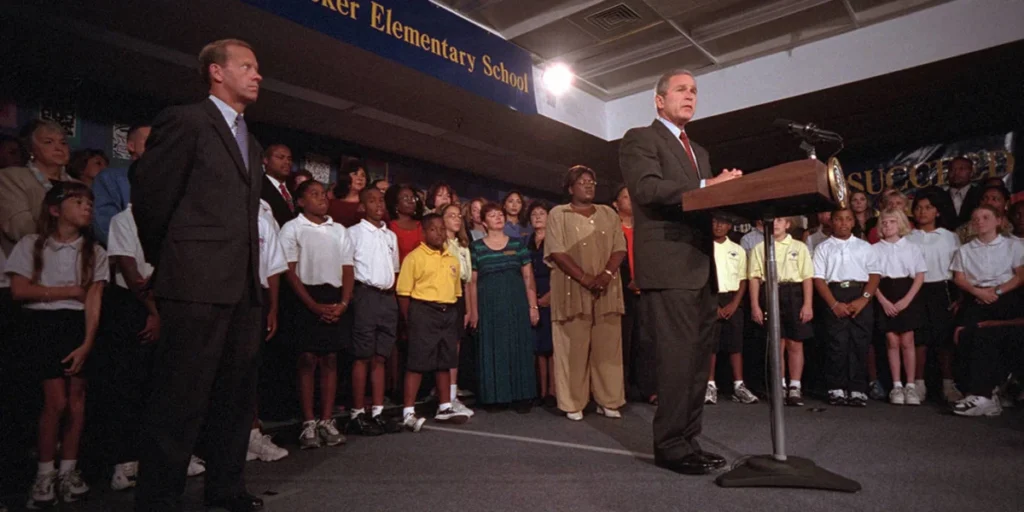
Yet, the coordinated terrorist attacks orchestrated by al-Qaeda on September 11, 2001, violently interrupted this post-Cold War equilibrium. The tragedy fundamentally altered the strategic trajectories of Washington, Moscow, and Beijing, setting in motion a complex chain of developments that directly produced the fractured, multipolar, and volatile geopolitical order we navigate today.
As we look back from the vantage point of September 2026, marking 25 years since that fateful Tuesday morning, the shadow of 9/11 remains long, deep, and defining. What began as an unprecedented transnational security crisis evolved into an ideological, economic, and military catalyst that reshaped global governance, reconfigured alliances, and ultimately dismantled the unipolar moment of American hegemony.
Main Facts
The events of September 11, 2001, were meticulously planned and executed by al-Qaeda, an Islamist extremist terrorist organization led by Osama bin Laden.
- The Attacks: Nineteen terrorists affiliated with al-Qaeda hijacked four commercial airliners traveling along domestic routes in the United States.
- The Targets: Two planes (American Airlines Flight 11 and United Airlines Flight 175) were flown into the Twin Towers of the World Trade Center in New York City, resulting in their catastrophic structural collapse. A third aircraft (American Airlines Flight 77) struck the Pentagon in Arlington, Virginia. The fourth plane (United Airlines Flight 93) crashed in a field in Somerset County, Pennsylvania, after passengers revolted against the hijackers, preventing it from hitting its intended target in Washington, D.C.—believed to be the U.S. Capitol or the White House.
- The Human Toll: The attacks resulted in 2,977 fatalities (excluding the 19 hijackers), making it the deadliest act of terrorism in human history. The victims included citizens of over 80 countries, office workers, first responders, and airline passengers.
- Immediate Policy Shifts: Domestically, the attack led to the creation of the Department of Homeland Security, the passage of the sweeping and controversial USA PATRIOT Act, and a massive expansion of the U.S. intelligence apparatus. Externally, it prompted the invocation of NATO’s Article 5 for the first time in history and triggered the launch of the "Global War on Terror."
Chronology of a Shifting Era
To understand how the world arrived at its current geopolitical impasse, it is essential to trace the historical arc from the immediate aftermath of the attacks through the subsequent two and a half decades.
Phase I: The Immediate Aftermath and the Global War on Terror (2001–2003)
In the hours and days following the attacks, global solidarity with the United States was near-universal. Traditional rivals and allies alike offered support.
- October 2001: Following the Taliban’s refusal to hand over Osama bin Laden, the United States, alongside a coalition of international partners, launched Operation Enduring Freedom, invading Afghanistan to dismantle al-Qaeda’s safe havens and depose the Taliban regime.
- March 2003: Buoyed by post-9/11 security doctrines—specifically the "Bush Doctrine" of preemptive self-defense—the U.S. and a coalition of the willing invaded Iraq, citing unproven allegations regarding weapons of mass destruction (WMDs) and ties to terrorism. This intervention fractured the transatlantic alliance and deeply destabilized the Middle East.
Phase II: The Rise of Asymmetric Threats and Superpower Divergence (2004–2014)
While the U.S. bogged itself down in protracted counterinsurgency campaigns in Iraq and Afghanistan, the broader geopolitical landscape began to shift beneath its feet.
- Russian Realignment: Initially, Russian President Vladimir Putin was the first foreign leader to call U.S. President George W. Bush to offer support after 9/11. However, U.S. unilateralism in Iraq, combined with NATO’s eastward expansion and Western support for the "Color Revolutions" in post-Soviet states, steadily poisoned relations, setting Moscow on a collision course with the West.
- China’s Quiet Rise: Absorbed by the Middle East and counterterrorism, Washington inadvertently afforded Beijing a strategic "window of opportunity." China joined the World Trade Organization (WTO) in late 2001, accelerating its economic integration into the global market. While the U.S. spent trillions of dollars on nation-building abroad, China invested heavily in infrastructure, technology, and domestic economic development.
Phase III: The Multipolar Fracture and the Post-Western World (2015–2026)
By the mid-2010s, the "War on Terror" paradigm was visibly collapsing under its own weight, culminating in chaotic disengagements and renewed great-power competition.
- August 2021: The chaotic U.S. military withdrawal from Afghanistan symbolized the definitive end of the post-9/11 era, leaving the Taliban back in power and severely denting perceptions of Western strategic competence.
- 2022–2026: The accumulated strains of the post-9/11 world order manifested in outright major-power conflict, notably Russia’s invasion of Ukraine and heightened tensions in the Indo-Pacific. The cooperative reflexes briefly seen in late 2001 were replaced by deep-seated rivalry, economic decoupling, and a fragmented international security architecture.
Supporting Data
The macroeconomic, demographic, and human metrics of the post-9/11 era reveal the staggering scale of the transformation:
- Cost of the "War on Terror": According to Brown University’s Costs of War project, the post-9/11 wars in Afghanistan, Iraq, Pakistan, Syria, and elsewhere have cost the U.S. taxpayer upwards of $8 trillion when accounting for direct military spending, care for veterans, and interest on debt.
- Human Displacement: The conflicts sparked directly or indirectly by the 9/11 response displaced an estimated 38 million to 60 million people globally, fueling the worst refugee crises since the Second World War and reshaping European and domestic American politics.
- Defense Budgets vs. Global GDP: U.S. defense spending surged from roughly $300 billion in 2001 to over $850 billion by 2026. Concurrently, China’s defense budget experienced a nearly tenfold increase over the same period, allowing Beijing to project naval power in the South China Sea and challenge American primacy in the Indo-Pacific.
- Intelligence Expansion: In the U.S. alone, the intelligence community expanded into a sprawling enterprise of 17 agencies, operating with drastically broadened surveillance authorities under legislation like the PATRIOT Act and the Foreign Intelligence Surveillance Act (FISA).
Official Responses
The 25th anniversary has elicited profound reflections from world capitals, highlighting how drastically perspectives have evolved since 2001.
- Washington, D.C.: U.S. official statements have emphasized national resilience, the enduring debt owed to first responders and veterans, and the ongoing evolution of counterterrorism to meet modern, decentralized threats. However, bipartisan consensus has largely shifted toward acknowledging that the "forever wars" diverted national resources away from managing the rise of peer competitors like China.
- Moscow: Russian official commentary has increasingly framed the post-9/11 era as a period of Western hubris. While acknowledging the initial tragedy of 2001, Moscow frequently argues that Washington squandered global goodwill by pursuing a unipolar foreign policy that ignored Russia’s legitimate security concerns.
- Beijing: Chinese leadership has long maintained that the distraction of American foreign policy in the Middle East provided Beijing with a crucial strategic breathing room. Official statements on the anniversary emphasize China’s commitment to peaceful development, multilateralism, and non-interference—implicit critiques of Western interventionism.
- European Capitals: European leaders continue to mourn the victims of terrorism while grappling with the long-term geopolitical and migratory fallout of Middle Eastern instability. The consensus in Brussels points to the erosion of the transatlantic consensus and the urgent need for European strategic autonomy in a fractured world.
Implications
What does the 25-year retrospective of 9/11 teach us about the world we inhabit today in 2026?
First, the attacks exposed the limits of military unilateralism. The belief that absolute security could be achieved through overwhelming force and nation-building in distant lands proved to be a strategic illusion. Instead, it overextended the world’s leading superpower and accelerated the diffusion of power to rising and revisionist states.
Second, 9/11 catalyzed a profound domestic transformation within Western democracies. The trade-off between liberty and security became a permanent feature of modern governance. Surveillance technologies originally developed to track transnational terrorists have gradually filtered into domestic law enforcement, raising persistent questions about the health of liberal democratic institutions.
Third, the psychological impact of 2001 broke the linear narrative of post-Cold War progress. Francis Fukuyama’s famous thesis of the "End of History" was decisively shattered by the return of religious fundamentalism, civilizational rhetoric, and violent geopolitical friction.
Finally, 9/11 set the structural preconditions for the return of great-power competition. By locking the United States into decades of asymmetric counterterrorism in the arid plains and mountains of Central Asia and the Middle East, history granted China the time and space to build an industrial, technological, and military apparatus capable of challenging the international status quo.
As the world marks a quarter-century since the towers fell, the legacy of September 11 is no longer merely an event to be commemorated with solemn remembrance. It is recognized as the tectonic fault line that split the modern era in two—leaving behind a fractured geopolitical landscape whose tremors we continue to feel every single day.