History’s Ultimate Warning: How 19th-Century Policy Blunders and the Panic of 1873 Offer a Stark Blueprint for Today’s AI-Driven Economy
By Financial News Desk
Published: September 20, 2026
Main Facts: The Echoes of 1873 in Modern Markets
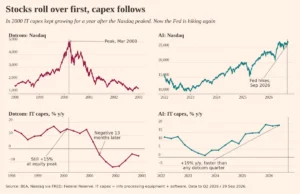
Financial history rarely repeats itself in exact brushstrokes, but it frequently rhymes with an unsettling precision. Today’s global economy finds itself intoxicated by a familiar cocktail: an unprecedented technological innovation boom, rampant corporate speculation, soaring stock valuations, an expansive credit market, and a cultural class of newly minted elites. Observers of modern markets have drawn direct parallels between the historic late-19th-century railway mania and today’s multi-billion-dollar artificial intelligence (AI) infrastructure buildout.
Yet, according to fresh economic research and financial historians, the true danger of our current economic cycle may not lie within the inevitable popping of a speculative bubble. Instead, the greatest systemic risk rests in how policymakers might respond to it.
Drawing from newly surfaced insights in financial historian Liaquat Ahamed’s acclaimed book 1873—as well as observations detailed by financial writer Ben Carlson in his upcoming work Risk & Reward—analysts are re-examining the Long Depression. Long before central banks managed modern economies, the world experienced an era of profound deflation. Between 1800 and 1940, the average annual inflation rate hovered at an astonishingly low 0.2%. Prices in 1940 were a mere 28% higher than they were at the dawn of the 19th century, interrupted by nearly 70 distinct periods of deflation.
However, the most catastrophic of these downturns was catalyzed not by the market crash of 1873 itself, but by a cascading series of monumental government policy errors that turned a routine economic correction into a multi-decade grind of falling prices, crushed business investment, and soaring unemployment.
Chronology: From Gilded Age Speculation to a Self-Inflicted Depression
To understand how a routine financial panic metastasized into the longest bear market in recorded history, financial historians point to a specific sequence of events spanning the late 19th century.
The Spark: The Panic of 1873
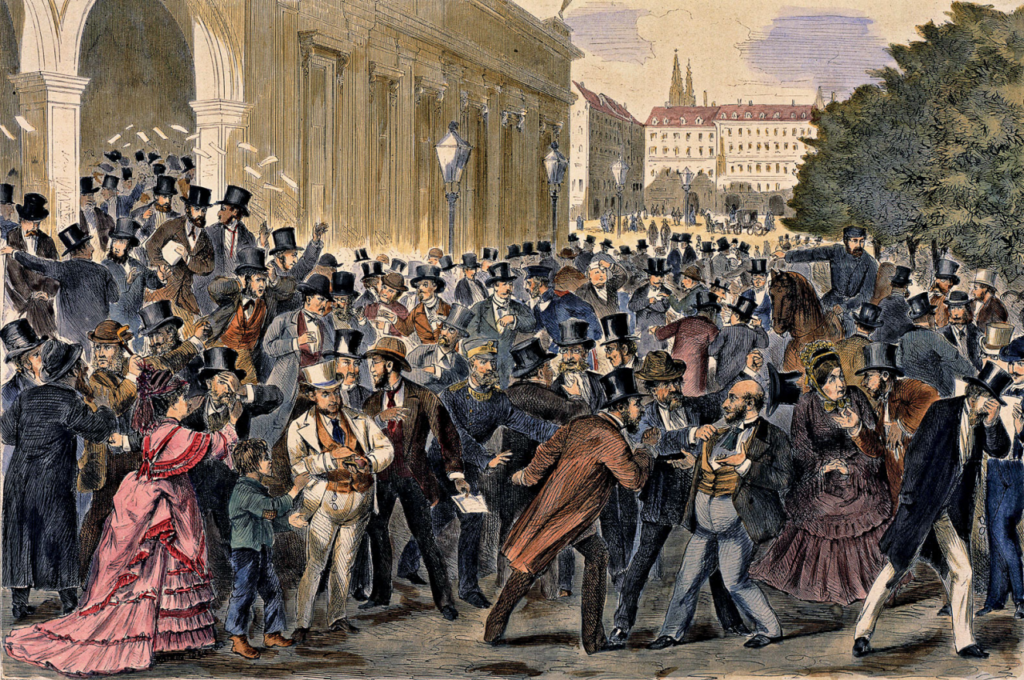
The crisis began in the autumn of 1873, rooted in the classic ingredients of human hubris: a runaway real estate bubble, unbridled stock market mania, excessive bond market speculation, lax credit underwriting standards, and predatory lending. At the center of the storm was the railroad industry—the cutting-edge technology of its day—which had absorbed vast amounts of capital before demonstrating sustainable profitability. When major banking houses overextended themselves financing these speculative ventures, the system seized up. Jay Cooke & Company, a premier investment banking firm, collapsed, triggering a chain reaction of bank runs and business failures.
The Initial Shock (1873–1875)
Remarkably, despite the severity of the financial fireworks, the initial macroeconomic impact across the globe was relatively mild. Although financial markets experienced a violent reset, the underlying global economy demonstrated structural resilience. Among the four major economic powers of the era—the United States, Great Britain, France, and Germany—only the United States suffered a significant domestic downturn, with industrial production registering a peak-to-trough decline of barely 6%. European powers experienced modest stagnation, but entirely avoided deep industrial contractions. Left alone, the Crisis of 1873 could have dissolved into history as a standard, minor business-cycle setback.
The Policy Blunder (1875–1879)
Instead of letting the market clear, governments around the globe intervened simultaneously in a catastrophic restructuring of the international currency system. In an effort to return to the gold standard or stabilize monetary units, major powers effectively engineered a historic contraction of the global money supply.
This self-inflicted wound triggered a severe liquidity squeeze. Over the subsequent six years, global prices plummeted by 20% to 25%. In the United States—still grappling with post-Civil War monetary adjustments—the deflationary spiral went much deeper, with wholesale goods dropping by 35%.
The Long Grind (1880–1896)
Though prices stabilized briefly during the early 1880s, the downward trajectory resumed, persisting relentlessly until the mid-1890s. By the time the cycle finally exhausted itself, overall price levels had dropped by one-third, and wholesale prices had been slashed in half. This prolonged period of value destruction formed the backbone of the Long Depression, cementing the era between 1880 and 1896 as the longest structural bear market in modern history.
Supporting Data: The Anatomy of Deflation and Economic Fallout
The mechanics of 19th-century deflation exposed a profound societal divide, demonstrating that falling prices are far from an unmitigated economic good.
- The Creditor’s Windfall: Bankers and institutional creditors—many of whom had actively stoked the speculative booms that preceded the crash—emerged largely unscathed. Because money increased in purchasing power over time, fixed debt obligations became progressively more expensive to pay off.
- The Debtor’s Ruin: Farmers and industrial laborers who had taken on leverage to expand operations found themselves crushed. Nominal incomes plummeted, while the real burden of their debts escalated.
- The Collapse of Innovation: As widespread deflation squeezed corporate profit margins, the economic incentive to fund new ventures, research, and capital investments vanished. Faith in the capitalist mechanism eroded, pessimism dominated corporate boardrooms, and unemployment rates surged.
- Modern Comparisons: Modern financial theorists point out that structural crashes do not inherently require decades-long depressions. For instance, the bursting of the dot-com bubble in 2000 resulted in a recession that lasted a mere eight months, with gross domestic product (GDP) declining by less than 1% and unemployment rising from 4% to 6%. The devastation of the 2000s tech crash was localized primarily to over-speculated equity valuations rather than a systemic failure of the broader economy—until subsequent monetary policy interventions altered the landscape.
Official Responses and Regulatory Reflections
As modern central bankers and fiscal authorities navigate the post-pandemic economic landscape, historical parallels are increasingly dominating academic and policy debates. Modern regulatory bodies are acutely aware of the dangers posed by asset bubbles, yet they remain vulnerable to the exact same traps that ensnared 19th-century policymakers.
Following the dot-com collapse, the U.S. Federal Reserve slashed interest rates to historic lows not seen in over forty years. Combined with overly relaxed lending standards, this monetary easing did not cure economic fragility; instead, it seeded the ground for the subprime mortgage market and one of the largest housing bubbles in human history, directly precipitating the Great Financial Crisis of 2007–2008.
Today, economists warn that central bank interventionism has reached unprecedented levels. Because financial markets are inextricably bound to everyday economic performance, public authorities feel immense political pressure to step in at the first sign of a market correction.
Whether the next major policy error manifests as monetary mismanagement, premature fiscal austerity, overly rigid trade barriers, or heavy-handed technology regulations (specifically regarding artificial intelligence), market historians argue that the danger of a heavy-handed government response dwarfs the risk of a natural market cleansing.
Implications: Preparing for the Next Economic Crossroads
As investors look toward the remainder of the 2020s, the lessons of 1873 offer a sobering framework for evaluating systemic risk.
- Bubbles are Inevitable, Policy Errors are Optional: Innovation cycles—whether railroads in the 1870s, internet stocks in the late 1990s, or artificial intelligence today—naturally attract speculative capital. The emergence of a bubble is a standard feature of human economic behavior. However, the depth and duration of the subsequent bust are almost always dictated by how clumsy or aggressive regulatory interventions prove to be.
- The Danger of Deflationary Spirals: Modern central banks are hyper-focused on avoiding deflation, having learned from the century-long scars of the 1800s and the Great Depression of the 1930s. Yet, structural changes driven by automation, globalized supply chains, and technological efficiencies continually push downward on prices. Mismanaging these shifts through rigid monetary tightening can recreate the liquidity squeezes of the past.
- Intertwined Systems Amplify Risk: Financial markets and the broader macroeconomy are more tightly integrated today than at any point in history. When governments step in to cushion every market hiccup, they risk creating moral hazards, inflating secondary asset bubbles, and setting the stage for more violent corrections down the road.
Ultimately, the history of the Long Depression serves as a reminder that markets possess a natural, self-correcting resilience. When policymakers panic and attempt to engineer the business cycle through top-down mandates and structural currency manipulations, they risk transforming a routine market correction into a generational economic crisis. As current capital expenditure booms in tech and AI mature, the ultimate test for modern leaders will not be whether they can prevent a downturn, but whether they have the discipline to avoid making it worse.